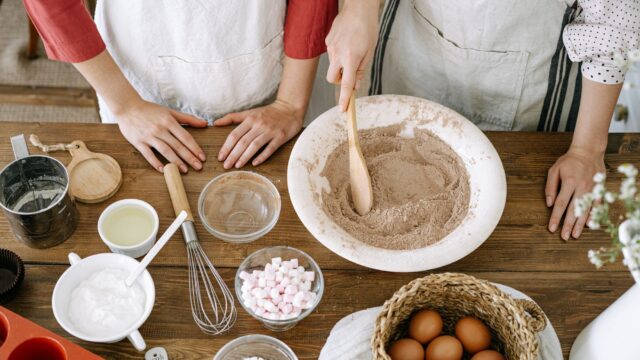
How to Halve or Double a Baking Recipe: Eggs, Leavening, Pans and Bake Time
Scaling a recipe is simple arithmetic until you hit 1/3 cup, a single egg or a 9x13 pan. Here is how to handle each of those cleanly.
Scaling a recipe is simple arithmetic until you hit 1/3 cup, a single egg or a 9x13 pan. Here is how to handle each of those cleanly.
Gluten is why bread is chewy and why overmixed muffins turn tough. Knowing how flour type, water and mixing build it lets you choose the right flour and the right stir.
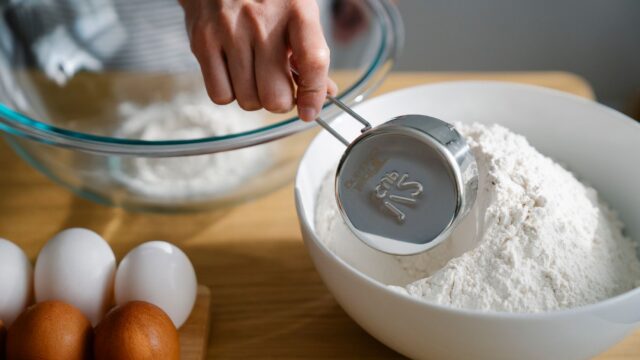
Most measuring mistakes come from using the wrong cup or the wrong technique. Here is how to get volume measurements right.
Resolution, capacity, tare, units and power: how to read a kitchen scale's spec sheet and get consistent bakes from it.
The same cup of flour can weigh 20 percent more depending on how you fill it. That gap is behind many dense muffins, dry cakes and stiff cookie doughs.
Fully baked muffins and cakes are not the concern. Raw batter, no-bake desserts and soft custards are, and the fixes are simple.
One cup is a volume, not a weight, so every ingredient converts differently. Here is a practical chart for the ingredients muffin and cake recipes use most.
Cold eggs can make creamed butter seize and curdle, and cold milk can firm up melted butter into streaks. A few minutes of warming solves both.
A practical comparison of stand and hand mixers: tasks, bowl size, attachments, why wattage misleads, and which bakes are better by hand.
Most people worry about raw eggs in cookie dough, but the flour carries its own risk. Here is why, and what to do instead of licking the bowl.
We use analytics cookies to see which articles are read. No ads cookies. Privacy policy