Choosing a Kitchen Scale for Baking: The Specs That Actually Matter
Resolution, capacity, tare, units and power: how to read a kitchen scale's spec sheet and get consistent bakes from it.
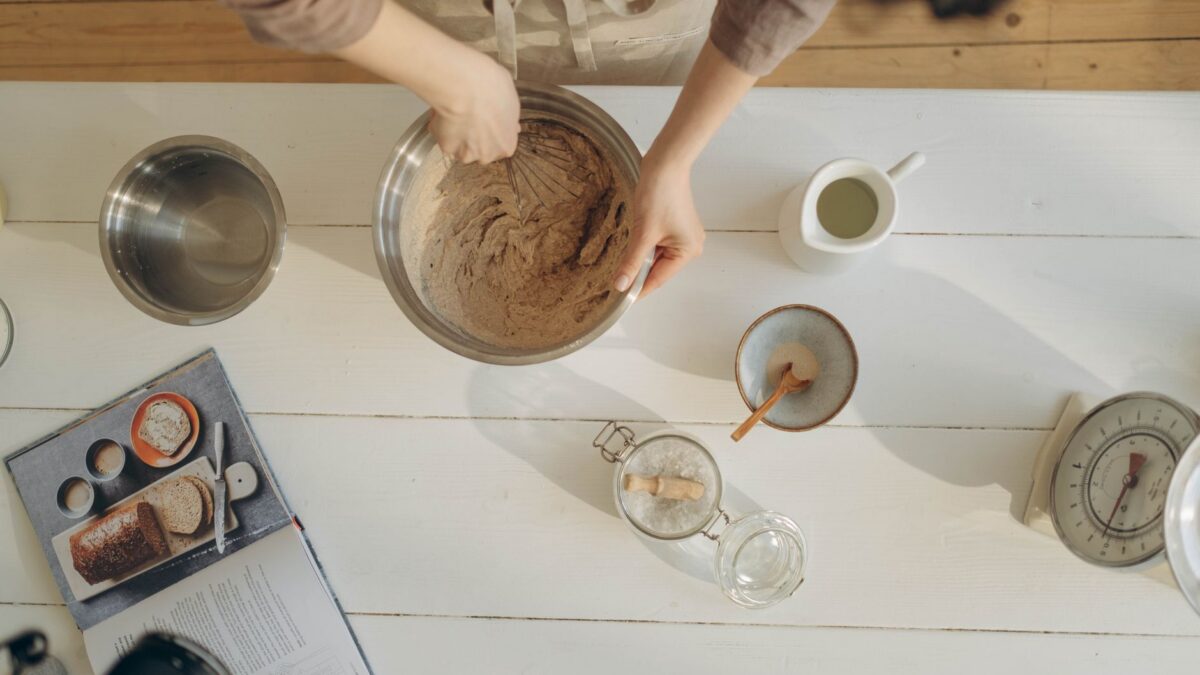
For baking, look for a digital scale with 1-gram resolution, a capacity of around 5 kg (11 lb), a reliable tare button and a grams setting. That covers almost every home recipe, from a teaspoon of salt to a big bowl of dough. Extras like a backlit display or rechargeable battery are nice, but they do not affect your results.
Weighing removes the biggest variable in baking: how much flour ends up in a cup. The National Institute of Standards and Technology calls measuring by weight a best practice for recipe accuracy in its culinary measurement tips. Here is what to check before you buy.
Why a scale makes such a difference
A cup of all-purpose flour can weigh noticeably more when it is scooped and packed than when it is spooned in and leveled. That extra flour is one of the most common reasons muffins turn out dense or dry. King Arthur’s ingredient weight chart uses 120 g per cup of all-purpose flour; recipes on this site follow the same convention. With a scale, 240 g is 240 g every time.
A scale also means fewer dishes: you set one bowl on the platform and add each ingredient in turn, pressing tare in between.
The specs, one by one
| Spec | What to look for | Why it matters |
|---|---|---|
| Resolution (graduation) | 1 g, or 0.1 oz | Fine enough for flour, sugar, butter and liquids |
| Capacity | About 5 kg (11 lb); 3 kg minimum | Room for a heavy mixing bowl plus ingredients |
| Tare | Large, responsive button that works repeatedly | Zeroes out the bowl and each added ingredient |
| Units | Grams, ounces, pounds; ml is optional | Grams are the most precise and the easiest to scale |
| Platform | Wide and flat, ideally removable or wipeable | A big bowl should not hide the display |
| Display | Large digits, readable with a bowl in place | Some models have a pull-out or angled display |
| Auto-off | Long delay, or a way to switch it off | Short timers can shut off mid-recipe and lose your tare |
| Power | Coin cell, AAA or USB rechargeable | Replaceable batteries are simple; rechargeables avoid waste |
Resolution vs accuracy
Resolution is the smallest step the display shows. Accuracy is how close the reading is to the true weight. A scale can display 1 g steps and still be off by a few grams. For most baking, a few grams on 250 g of flour is harmless; it is the 30 to 40 g swings from volume measuring that cause trouble.
Small amounts: leavening, salt and yeast
A 1 g scale is not precise for very small quantities. Half a teaspoon of baking soda weighs only a few grams, so a 1 g reading can be off by a large percentage. For leavening and salt, measuring spoons are fine, or use a separate pocket scale with 0.1 g resolution if you want to weigh them.
Capacity
Remember that the bowl counts. A glass or ceramic bowl can weigh well over a kilogram on its own. A 5 kg scale leaves room for the bowl plus a full batch of batter or bread dough.
How to check a scale’s accuracy
- Place the scale on a hard, level counter away from drafts and vibration.
- Turn it on with nothing on the platform and let it settle at zero.
- Weigh an object of known weight. A US nickel is minted at 5 grams, so ten nickels should read about 50 g. Sealed packages labeled by net weight are a rougher check, since packaging adds a little.
- Weigh the same item several times in different spots on the platform. Readings should match within a gram or so.
- If readings drift, replace the batteries first. Low batteries are the most common cause of erratic numbers.
Some scales have a calibration mode in the manual that uses a specific weight. Follow the manufacturer’s instructions rather than guessing.
How to use a scale for baking
- Switch the scale on before you set the bowl down so it starts at zero.
- Place the bowl and press tare.
- Add the first ingredient to the stated weight, then press tare again.
- Continue with each ingredient. If you overshoot, spoon some out rather than starting over.
- Weigh sticky ingredients like honey or molasses straight into the bowl to skip scraping a measuring cup.
- Note the weight of your empty favorite bowls; it helps if the scale switches off mid-recipe.
Converting a cups recipe? Our cups to grams chart lists common baking ingredients, and how to measure flour explains why different methods give different weights.
Care
- Wipe the platform with a damp cloth; never submerge an electronic scale.
- Do not store heavy items on top of it, which can strain the load cell.
- Remove batteries if you will not use it for months.
- Keep it away from the oven and stovetop; heat can affect readings.
Bottom line
A basic digital scale with 1 g resolution, around 5 kg capacity, a dependable tare and gram units is all most home bakers need. Check it with a known weight, keep fresh batteries in it, and use spoons or a 0.1 g scale for tiny amounts of leavening and salt.
FAQ
Grams or ounces?
Grams. They are smaller units, so readings are more precise, and recipes are easier to scale up or down.
Can I weigh liquids?
Yes. Water and milk weigh close to 1 g per ml. King Arthur lists 1 cup of milk at 227 g. Oils weigh less per cup.
Why does my scale switch off mid-recipe?
Many scales have an auto-off timer. Look for a model with a long delay or a setting to disable it, and note your bowl’s weight as a backup.
Do I still need measuring cups?
They are useful for recipes written only in cups and for small amounts. Our measuring cups and spoons guide covers how to use them accurately.