How to Measure Flour Correctly: Spoon and Level, Scoop or Scale?
The same cup of flour can weigh 20 percent more depending on how you fill it. That gap is behind many dense muffins, dry cakes and stiff cookie doughs.
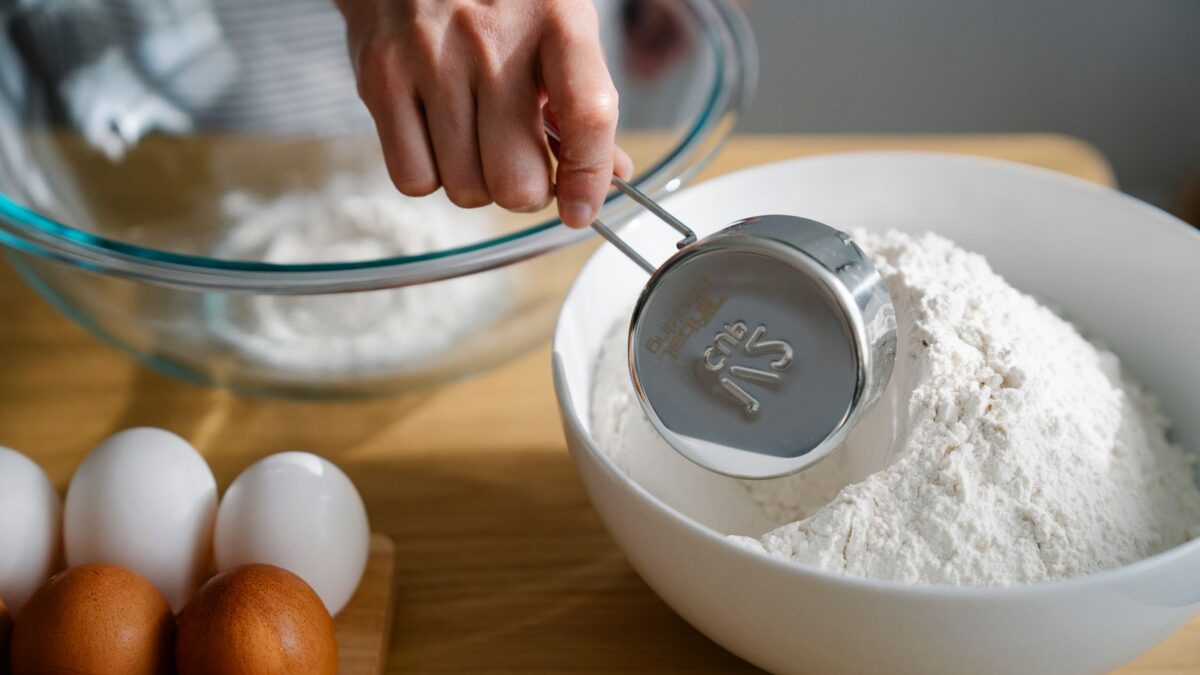
The most accurate way to measure flour is to weigh it on a digital kitchen scale. If you only have cups, use the spoon-and-level method: fluff the flour, spoon it lightly into a dry measuring cup until it overflows, then sweep off the excess with a straight edge. King Arthur Baking counts one cup of all-purpose flour measured this way as 120 grams, while scooping straight from the bag packs in noticeably more.
Why the method matters so much
Flour is compressible. When you push a cup into the bag, you pack the flour down, and the cup can hold far more than the recipe writer intended. Baking guides commonly put the extra at up to about a quarter more flour per cup. In a muffin recipe with two cups of flour, that can mean an extra half cup of flour, and nothing else in the batter has changed to balance it.
Extra flour shows up in predictable ways:
- Thick, stiff batter and dense, heavy muffins
- Dry, crumbly cake that stales quickly
- Cookies that barely spread and bake up cakey
- Peaked or cracked tops because the batter could not flow before setting
Three ways to measure, compared
| Method | How it works | Accuracy | Best for |
|---|---|---|---|
| Digital scale | Tare the bowl, add flour to the gram weight | Most accurate and repeatable | All baking, especially cakes and breads |
| Spoon and level | Spoon flour into the cup, level with a knife | Close to recipe intent for US recipes | Recipes written in cups |
| Dip and sweep (scoop) | Dip the cup in the bag, level off | Packs in extra flour; varies a lot | Only recipes that say to measure this way |
A few recipe writers do develop their recipes with the dip-and-sweep method and say so. If a recipe states its gram weight per cup or names its method, follow that. Otherwise, spoon and level.
How to spoon and level, step by step
- Fluff the flour in its container with a spoon or whisk to loosen anything that settled in storage.
- Use a dry measuring cup, the kind with a flat rim, not a glass liquid cup with a spout.
- Spoon flour into the cup until it mounds above the rim. Do not tap, shake or press the cup.
- Level it by sweeping the straight back of a knife across the rim.
- For partial cups, use the matching cup size (1/2, 1/3, 1/4) rather than guessing in a larger cup.
Measuring cups and spoons sold in different countries vary in size, so if you bake from UK or Australian recipes, read the guide to spoon and cup sizes by country.
How to measure flour with a scale
- Place the empty bowl on the scale and press tare (or zero).
- Spoon or pour in flour until the display reaches the weight in the recipe.
- Press tare again before adding the next ingredient to the same bowl.
A scale with 1-gram resolution is enough for flour and sugar. It also means fewer cups to wash. For converting a cups-only recipe, see the full cups to grams chart.
How much does a cup of flour weigh?
Weights below follow the King Arthur Baking ingredient weight chart, which assumes the spoon-and-level method. Other publishers use slightly different figures (some count all-purpose flour at 125 or even 130 g per cup), which is one reason a recipe’s own gram weights are always the best guide.
| Flour | 1 cup | 1/2 cup | 1/4 cup |
|---|---|---|---|
| All-purpose flour | 120 g | 60 g | 30 g |
| Bread flour | 120 g | 60 g | 30 g |
| Cake flour (unbleached) | 120 g | 60 g | 30 g |
| Whole wheat flour | 113 g | 57 g | 28 g |
Does sifting change the measurement?
Yes. Sifted flour is lighter per cup because more air is trapped in it. Pay attention to wording:
- “1 cup sifted flour” means sift first, then measure. The cup will weigh less.
- “1 cup flour, sifted” means measure first, then sift. The weight stays the same.
With a scale, the distinction disappears: weigh the flour, then sift it if the recipe asks, for example to remove lumps from cake flour or to blend cocoa evenly.
What to do if you already scooped
If the batter looks noticeably thicker than the recipe describes, and you have not added the leaveners yet, you can loosen it with a tablespoon or two of the recipe’s liquid. Once the batter is mixed, stir as little as possible; extra mixing develops gluten and makes a tough crumb worse. Next time, spoon and level or weigh.
Measuring other dry ingredients
- Granulated sugar: scoop and level is fine; it does not compress much. King Arthur lists 198 g per cup.
- Brown sugar: pack it firmly into the cup unless the recipe says otherwise; King Arthur lists 213 g per packed cup.
- Cocoa and confectioners’ sugar: spoon and level; both pack and clump.
- Baking powder, soda and salt: dip a measuring spoon and level it with a straight edge.
Bottom line
Weighing is the simplest way to get the same result every time. Without a scale, spoon and level, never pack, and use 120 g per cup of all-purpose flour as the reference when a US recipe does not say otherwise. If your bakes regularly come out dense or dry, measuring flour is the first thing to check.
FAQ
Why do different charts give different weights for a cup of flour?
Each publisher measures its own way and rounds differently, so figures from 120 to 130 g per cup are common. Use the weight given by the recipe you are following, or 120 g if none is stated.
Can I use a liquid measuring cup for flour?
It is not recommended. You cannot level flour in a cup with a spout and headroom, so the amount varies.
Should I weigh liquids too?
You can. Water weighs about 1 g per ml, and milk is close to that. Many bakers weigh everything in one bowl to save washing up.
Do UK recipes use cups?
Most UK recipes give flour by weight in grams, which removes the measuring problem entirely.