How to Halve or Double a Baking Recipe: Eggs, Leavening, Pans and Bake Time
Scaling a recipe is simple arithmetic until you hit 1/3 cup, a single egg or a 9x13 pan. Here is how to handle each of those cleanly.
Scaling a recipe is simple arithmetic until you hit 1/3 cup, a single egg or a 9x13 pan. Here is how to handle each of those cleanly.
Switching pans is mostly a geometry problem. Compare surface area, keep the batter depth similar and adjust the bake time, and most recipes move over cleanly.
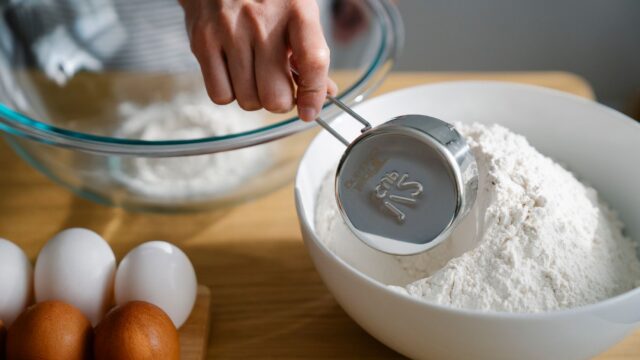
Most measuring mistakes come from using the wrong cup or the wrong technique. Here is how to get volume measurements right.
Self-rising flour is just flour with leavening and, in the US, salt already mixed in. Here is the standard DIY blend, how UK self-raising compares, and how to swap either way.
A fan changes how heat reaches your muffins and cookies. Here is how to adjust recipes and when to switch the fan off.
Lower air pressure makes batters rise fast and then collapse. A few small, standard adjustments fix most problems, and muffins need the fewest.
Spoons and cups are not the same size everywhere. The differences are small for milk and big for baking powder, so here is how to read a recipe from abroad.
The same cup of flour can weigh 20 percent more depending on how you fill it. That gap is behind many dense muffins, dry cakes and stiff cookie doughs.
One cup is a volume, not a weight, so every ingredient converts differently. Here is a practical chart for the ingredients muffin and cake recipes use most.
Recipes from the US, UK and Australia speak different oven languages. This chart translates them, with the fan and convection adjustments that trip people up.
We use analytics cookies to see which articles are read. No ads cookies. Privacy policy