Tablespoons, Teaspoons and Milliliters: US, UK and Australian Measures Explained
Spoons and cups are not the same size everywhere. The differences are small for milk and big for baking powder, so here is how to read a recipe from abroad.
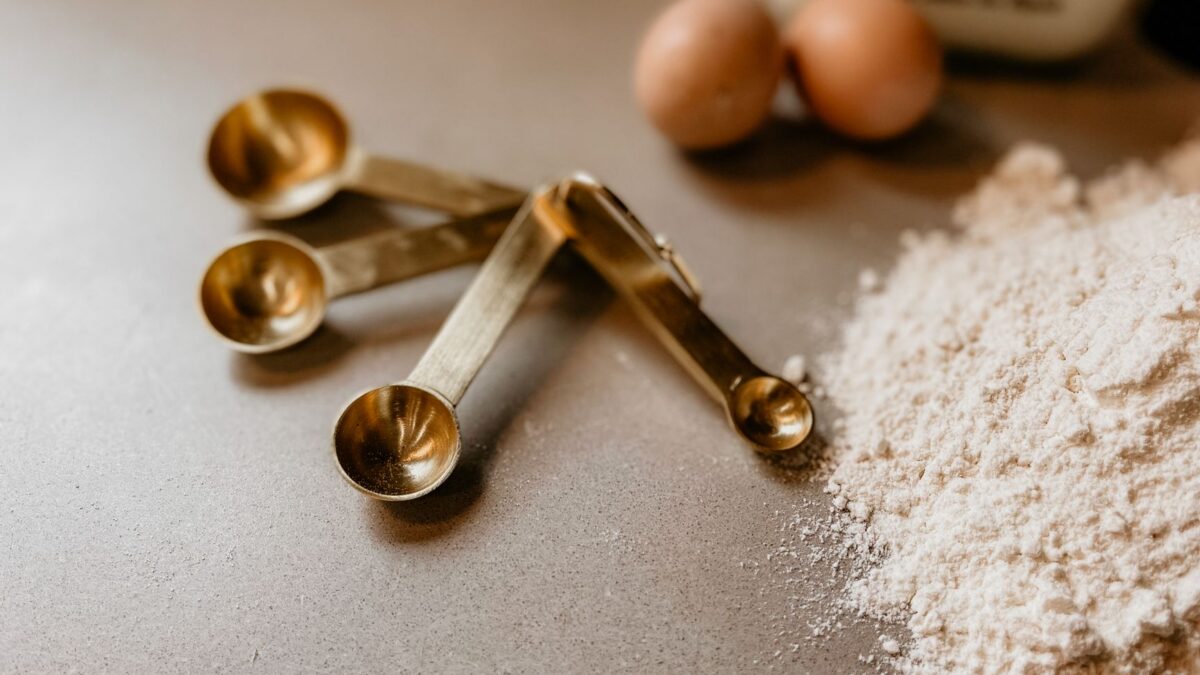
A US teaspoon is about 5 ml and a US tablespoon is about 15 ml (3 teaspoons), the same as the metric spoons used in the UK, Canada and New Zealand. The big exception is Australia, where a tablespoon is 20 ml, or 4 teaspoons. Cups differ too: a US cup is about 240 ml, while Australia, New Zealand and Canada use a 250 ml metric cup.
For milk or water, those gaps barely matter. For baking powder, salt and spices, an Australian tablespoon holds a third more than an American one, which is enough to change a recipe.
Spoon and cup comparison
| Measure | US customary | UK / metric | Australia |
|---|---|---|---|
| 1 teaspoon | 4.93 ml (about 5) | 5 ml | 5 ml |
| 1 dessertspoon | not used | 10 ml | 10 ml |
| 1 tablespoon | 14.79 ml (about 15) | 15 ml | 20 ml |
| Teaspoons per tablespoon | 3 | 3 | 4 |
| 1 cup | 236.6 ml (240 on nutrition labels) | 250 ml if used | 250 ml |
| 1 fluid ounce | 29.6 ml | 28.4 ml (imperial) | not used |
| 1 pint | 473 ml (16 US fl oz) | 568 ml (20 imperial fl oz) | not used in recipes |
US customary values are exact conversions, rounded. For US nutrition labeling, a cup is defined as 240 ml and a tablespoon as 15 ml, which is why packaging and many converters use round numbers. The Australian 20 ml tablespoon and 250 ml cup are the metric standard used in Australian recipes and spoon sets; UK cookbooks generally use a 15 ml tablespoon.
Where the differences matter
Leaveners, salt and spices
These are measured in small amounts with big effects. An Australian recipe that calls for “1 tablespoon baking powder” means 20 ml, which is 1 US tablespoon plus 1 teaspoon. Using a US tablespoon gives you 25% less, enough for a noticeably flatter cake. The reverse is worse: using an Australian tablespoon in an American recipe adds a third more baking soda or salt.
Liquids and flour
A 250 ml cup is about 13 ml (roughly 2 1/2 teaspoons) larger than a US cup, around 5%. In most muffin and cake recipes that is within normal measuring error. If you want to be exact, remove about 2 teaspoons from each metric cup when following an American recipe, or weigh dry ingredients instead using our cups to grams chart.
Pints and fluid ounces
An imperial pint is 20 fluid ounces, while a US pint is 16, and each imperial fluid ounce is slightly smaller than a US one. Older British recipes using pints of milk or cream need converting by milliliters, not by name.
Handy milliliter conversions (US spoons)
| US measure | Milliliters (approx.) |
|---|---|
| 1/8 teaspoon | 0.6 ml |
| 1/4 teaspoon | 1.2 ml |
| 1/2 teaspoon | 2.5 ml |
| 1 teaspoon | 5 ml |
| 1 tablespoon | 15 ml |
| 2 tablespoons (1 fl oz) | 30 ml |
| 1/4 cup (4 tbsp) | 59 ml |
| 1/3 cup | 79 ml |
| 1/2 cup | 118 ml |
| 3/4 cup | 177 ml |
| 1 cup | 237 ml |
Reading a recipe from another country
- Check where it was written. Australian sites, magazines and cookbooks usually mean 20 ml tablespoons. Some international publishers note “15 ml tablespoon” or “20 ml tablespoon” in the front matter.
- Look for grams first. Most UK, Australian and New Zealand recipes weigh flour, sugar and butter. Use a scale for those and you only need to worry about the spoons.
- Convert tablespoons of leavener, salt and spice carefully. For an Australian tablespoon, use 1 US tablespoon plus 1 teaspoon, or 4 US teaspoons.
- Ignore small cup differences for liquids unless the recipe is very precise, such as some candy or custard recipes.
- Butter is often given in grams or blocks abroad; see butter sticks to grams.
Measuring accurately
- Level dry ingredients. Dip or spoon, then sweep the excess off with a straight edge. A heaped teaspoon of baking powder can hold close to double a level one.
- Use the right cup. Dry cups are for leveling; liquid cups with a spout are read at eye level. NIST lists mixing the two up as a common source of error in its culinary measurement tips.
- “Pinch” and “dash” are not standardized; they mean a small amount, usually well under 1/8 teaspoon.
- Cutlery is not a measure. Table spoons and teaspoons from a drawer vary widely in size.
For choosing a set that is accurate and easy to level, see our guide to measuring cups and spoons.
Canada and New Zealand
Canadian recipes often mix systems: many use US-style cups and spoons, while others give metric measures with 250 ml cups and 15 ml tablespoons. New Zealand uses metric 250 ml cups and 15 ml tablespoons. In both cases, the spoon difference from US measures is negligible, so only the cup size is worth a second look in precise recipes.
Bottom line
Teaspoons are 5 ml almost everywhere, and tablespoons are 15 ml everywhere except Australia, where they are 20 ml. Cups differ by about 5%, which rarely matters. When a foreign recipe calls for tablespoons of baking powder, salt or spice, convert them exactly; for everything else, weighing beats guessing.
FAQ
Is a tablespoon 15 ml or 20 ml?
Both, depending on the country. US, UK, Canadian and New Zealand tablespoons are about 15 ml; Australian tablespoons are 20 ml.
How many teaspoons are in a tablespoon?
Three in the US and UK, four in Australia.
Is a UK cup the same as a US cup?
The UK rarely uses cups in modern recipes. When it does, it generally means a 250 ml metric cup, slightly larger than the US cup of about 240 ml.
How many ml is 1/4 teaspoon?
About 1.2 ml. Most measuring spoon sets include a 1/4 teaspoon, which is easier than measuring by milliliters.