Raw Eggs in Baking: Salmonella Risk, Pasteurized Eggs and Safe Temperatures
Fully baked muffins and cakes are not the concern. Raw batter, no-bake desserts and soft custards are, and the fixes are simple.
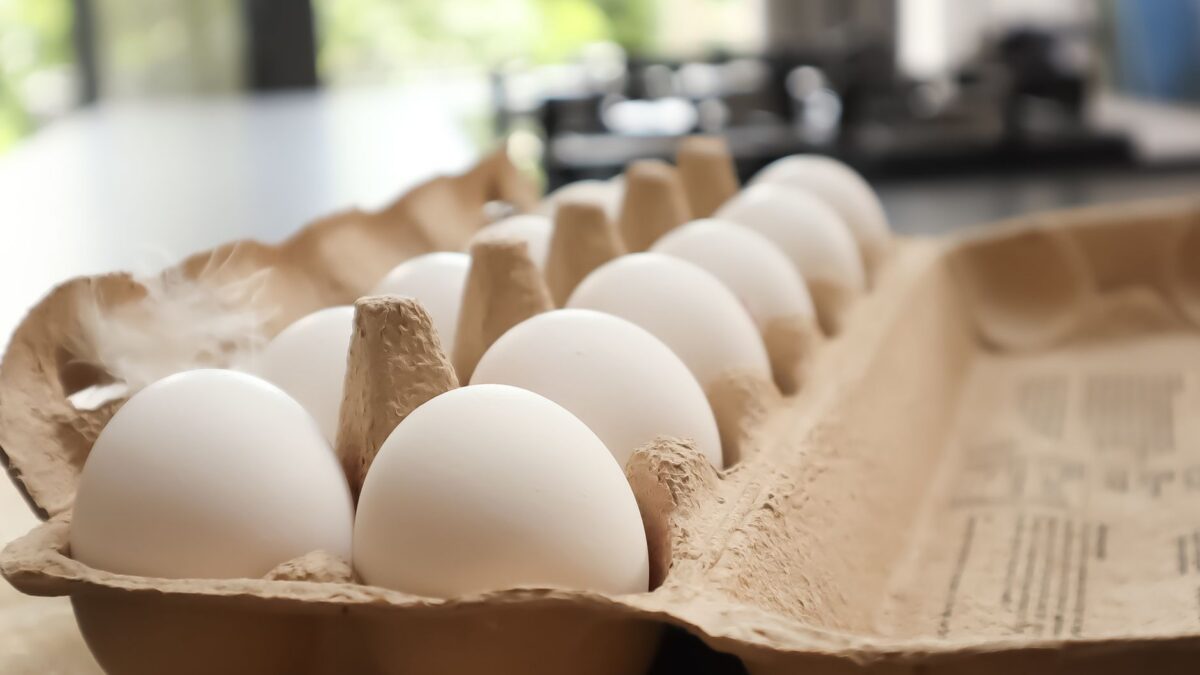
Raw and lightly cooked eggs can contain Salmonella, even when the shell is clean and uncracked. Baking destroys it, so fully baked muffins, cakes and cookies are not the concern. The risk lies in raw batter, no-bake desserts and soft-set custards. U.S. food safety guidance is simple: keep eggs refrigerated at 40°F (4°C) or below, cook egg dishes to 160°F (71°C), and use pasteurized eggs for recipes that stay raw or lightly cooked.
Why eggs carry a risk
Salmonella can be present on the shell and, less often, inside an intact egg, because an infected hen can pass the bacteria into the egg before the shell forms. You cannot tell by looking or smelling. That is why U.S. egg cartons that have not been treated to destroy Salmonella carry a safe handling statement telling buyers to keep eggs refrigerated, cook eggs until the yolks are firm and cook foods containing eggs thoroughly.
According to the FDA, people at greater risk of severe illness include children, older adults, pregnant women and people with weakened immune systems. For them in particular, avoiding raw or undercooked eggs matters.
Where raw eggs show up in baking
| Use | Risk | Safer approach |
|---|---|---|
| Muffin, cake and cookie batter (tasting) | Raw egg plus raw flour | Do not taste; bake a test muffin instead |
| Fully baked muffins, cakes, quick breads | Very low once baked through | Bake to the recipe’s doneness cues |
| Mousse, tiramisu, no-bake cheesecake | Eggs not cooked | Use pasteurized eggs or a cooked-egg recipe |
| Royal icing, meringue buttercream | Raw or lightly heated whites | Pasteurized whites or meringue powder; heat-based methods checked with a thermometer |
| Custards, curds, custard pies | Undercooked if not set | Cook to 160°F (71°C); refrigerate |
Even egg-free raw dough is not safe to eat, because flour is a raw ingredient too. See is raw flour safe.
The key numbers
- 40°F (4°C) or colder: store eggs in the refrigerator, ideally in their carton, and check the temperature with a fridge thermometer.
- 3 weeks: the FDA’s guidance for using raw shell eggs for best quality after you bring them home.
- 2 hours: do not leave cooked egg dishes at room temperature longer than this, or more than 1 hour above 90°F (32°C).
- 160°F (71°C): the safe internal temperature for casseroles and other egg dishes, measured with a food thermometer.
- 3 to 4 days: how long to keep leftover cooked egg dishes in the refrigerator.
These figures come from the FDA’s consumer guide to egg safety.
Pasteurized eggs: when and how to use them
Pasteurized shell eggs are gently heated in the shell to destroy Salmonella without cooking them. In the U.S., cartons usually say that the eggs have been treated; untreated eggs carry the safe handling statement instead. Liquid pasteurized egg products and pasteurized egg whites in cartons are also widely sold.
- Use them for: no-bake desserts, mousse, homemade ice cream bases you do not cook, eggnog, royal icing, and buttercreams that use raw whites or yolks.
- Keep them cold. The FDA recommends refrigerating in-shell pasteurized eggs to keep their shelf life.
- Expect small differences. Pasteurized whites can take longer to whip to stiff peaks; a pinch of cream of tartar and patience usually help.
- Egg-free options work for some recipes; see egg substitutes for baking.
Safe egg habits for bakers
- Buy eggs from a refrigerated case and check that none are cracked or dirty. Discard cracked eggs.
- Warm eggs safely. Many recipes ask for room-temperature eggs. Rather than leaving them out for hours, set whole eggs in a bowl of warm tap water for about 10 minutes.
- Crack eggs into a separate small bowl first, so shell fragments and any bad egg do not end up in the batter.
- Wash hands and surfaces with hot, soapy water after handling raw eggs or raw batter.
- Do not lick the spoon or beaters. Raw batter contains both raw egg and raw flour.
- Refrigerate egg-rich bakes. Custard pies, pumpkin pie, cheesecake and cream-filled pastries need the fridge after cooling. Planning ahead for the holidays? See make-ahead pumpkin pie.
Outside the U.S.
Egg handling differs by country. In the UK, the Food Standards Agency revised its advice in 2017 to say that eggs produced under the British Lion Code of Practice can be eaten raw or lightly cooked, including by pregnant women, babies and older people, while other eggs should be cooked thoroughly for those groups. UK supermarkets typically sell eggs unrefrigerated. If you live outside the U.S., follow your national food safety agency’s current guidance.
Bottom line
Baked goods that are fully baked are not a raw-egg problem. Raw batter, no-bake desserts and soft custards are. Keep eggs cold, bake or cook egg dishes to 160°F, use pasteurized eggs for anything that stays raw, and taste your baking after it comes out of the oven.
FAQ
Is it safe to lick the spoon after mixing batter?
No. Raw batter contains raw eggs, which can carry Salmonella, and raw flour, which can carry E. coli and Salmonella.
Do baked muffins reach a safe temperature?
Yes. A muffin or cake baked until a toothpick comes out clean is well above 160°F in the center.
Are pasteurized eggs safe to eat raw?
They are the recommended choice for raw or lightly cooked recipes in the U.S. Keep them refrigerated and follow the carton’s dates.
Can I leave eggs out to come to room temperature?
Briefly, yes, but no more than 2 hours. A bowl of warm water brings them to temperature in about 10 minutes.