Make-Ahead Pumpkin Pie: How Far Ahead to Bake, How to Store It and How to Prevent Cracks
Pumpkin pie is a custard, so it is a natural make-ahead dessert as long as it stays refrigerated. Here is the classic ratio, the doneness test and how to keep the surface smooth.
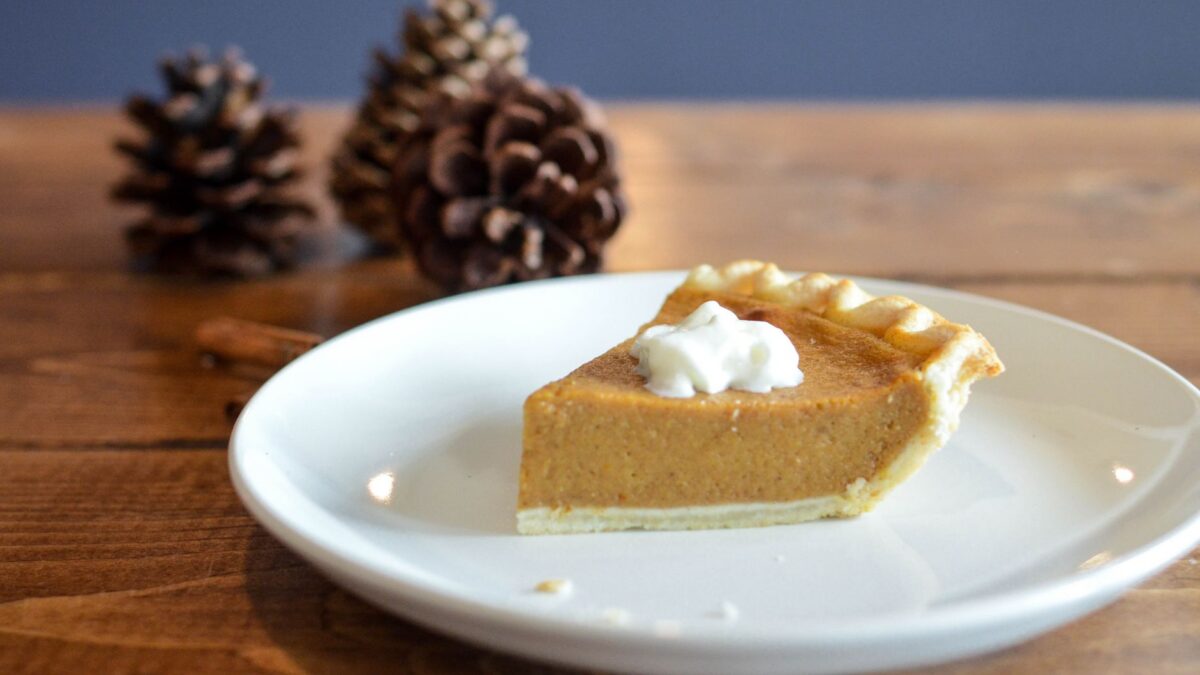
Pumpkin pie is one of the best desserts to make ahead: bake it one to two days before serving, let it cool on a rack, then cover it and keep it in the refrigerator. Because the filling is an egg-and-milk custard, it should not sit at room temperature for more than about 2 hours. To prevent cracks, take the pie out of the oven when the edges are set but the center still jiggles slightly, and let it cool gradually.
The flavor actually improves after a night in the fridge as the spices settle, and the filling slices more cleanly when cold.
The classic filling ratio
Most pumpkin pie recipes follow the same long-standing formula for one 9-inch deep-dish pie:
- 1 can (15 oz, about 425 g) pumpkin purée, not pie filling
- 3/4 cup (149 g) granulated sugar, or part brown sugar
- 1 teaspoon ground cinnamon
- 1/2 teaspoon ground ginger
- 1/4 teaspoon ground cloves or nutmeg
- 1/2 teaspoon fine salt
- 2 large eggs
- 1 can (12 fl oz, about 354 ml) evaporated milk
- One 9-inch deep-dish crust, unbaked or partly blind-baked
Method
- Heat the oven to 425°F (220°C), gas mark 7. Place the pie plate on a rimmed baking sheet.
- Whisk the sugar, spices and salt, then whisk in the pumpkin and eggs. Gradually whisk in the evaporated milk until smooth. Avoid whipping in lots of air.
- Pour into the crust.
- Bake 15 minutes at 425°F, then lower the oven to 350°F (175°C), gas mark 4, and bake 40 to 50 minutes more.
- The pie is done when the outer 2 inches are set and the center 1 to 2 inches still wobble slightly, like set gelatin, when you nudge the pan. A knife inserted about an inch from the edge should come out mostly clean. An instant-read thermometer in the center reads roughly 175–180°F (79–82°C). That is well above the 160°F (71°C) the USDA recommends for egg dishes.
- Cool on a rack at room temperature for about 2 hours, then cover and refrigerate.
Check early if your oven runs hot; an accurate oven temperature makes the biggest difference to a smooth custard.
How far ahead can you make it?
| Stage | How far ahead | Storage |
|---|---|---|
| Pie dough | Weeks ahead | Frozen discs, thaw overnight in the fridge |
| Blind-baked crust | 1–2 days | Cooled, covered, room temperature |
| Filling (mixed, unbaked) | Up to 1 day | Covered in the fridge; whisk before pouring |
| Baked pie | 1–2 days ideal; about 3–4 days in total | Covered in the fridge |
| Baked pie, frozen | Up to about 1–2 months | Wrapped tightly; texture softens |
The refrigerator and freezer times above follow the USDA’s general guidance for egg-based pies; you can check individual foods in the FoodKeeper app.
Why pumpkin pie must be refrigerated
Pumpkin pie is a baked custard: eggs and milk thickened by heat. Moist, low-acid, protein-rich foods like this support bacterial growth at room temperature, which is why food safety agencies treat custard, cream and pumpkin pies as perishable. Practical rules:
- Refrigerate within 2 hours of coming out of the oven, or within 1 hour if the room is above 90°F (32°C).
- Cover loosely at first so condensation doesn’t drip on the surface, then cover fully once cold.
- On the day, bring the pie out shortly before serving and return leftovers to the fridge promptly.
- Store-bought pumpkin pies sold refrigerated also need refrigeration at home. Some shelf-stable commercial pies are formulated differently; follow the label.
Do not taste the raw filling: it contains raw eggs. The same goes for raw pie dough, which contains raw flour.
Why pumpkin pie cracks, and how to prevent it
Cracks are almost always a sign of overbaking. As egg proteins get too hot, they tighten and squeeze out moisture; the filling shrinks and splits, often in a ring or across the center. Rapid cooling makes it worse.
| Cause | What happens | Fix |
|---|---|---|
| Baked until the center is firm | Proteins overcook and shrink | Pull it while the center still wobbles |
| Oven too hot | Edges overcook before center sets | Verify with an oven thermometer |
| Cooled in a cold place or fridge right away | Surface contracts quickly | Cool at room temperature first |
| Too much air whisked in | Bubbles rise and the surface puffs, then falls | Whisk gently; tap the plate before baking |
| Thin filling in a shallow crust | Cooks through faster | Use a deep-dish plate or check earlier |
If a pie does crack, it still tastes fine. Cover the crack with whipped cream just before serving. Like a cracked cake top, it is a cosmetic issue rather than a failure.
Keeping the crust crisp
A pie made ahead can develop a soft bottom crust as the custard sits on it. A few ways to limit that:
- Partly blind-bake the crust for about 15 minutes with weights, then 5 minutes without, before adding the filling.
- Bake on a preheated baking sheet on a lower rack so the bottom gets more direct heat.
- Store the pie uncovered in the fridge for the first hour, then cover; trapped steam is what softens the crust most.
Freezing pumpkin pie
Baked pumpkin pie can be frozen, but it is a compromise: the filling may weep a little and the crust loses some crispness. If you must freeze it, cool the pie completely, chill it, wrap it tightly in plastic and foil, and thaw it in the refrigerator overnight. Do not freeze the unbaked filling in the crust; it separates.
Allergens
Classic pumpkin pie contains wheat (gluten) in the crust, eggs and milk. Dairy-free versions can use full-fat coconut milk in place of evaporated milk; gluten-free crusts need certified ingredients and care with cross-contact. Anyone managing allergies or celiac disease should follow their doctor’s or dietitian’s advice.
Bottom line
Bake pumpkin pie one to two days ahead, take it out while the center still jiggles, cool it at room temperature for about 2 hours and then refrigerate it. Cold storage keeps it safe, the slower cooling keeps it smooth, and the flavor is better the next day.
FAQ
Can pumpkin pie sit out overnight?
No. A homemade pumpkin pie is a custard and should be refrigerated within about 2 hours after baking.
Should pumpkin pie be served cold or at room temperature?
Either. Many people let it sit out for 30 to 60 minutes before serving for a softer texture, then refrigerate leftovers.
Why did my pumpkin pie turn watery?
Weeping usually comes from overbaking, which squeezes liquid out of the custard, or from condensation when the pie was covered while still warm.
Can I bake pumpkin pie three days ahead?
You can, but quality is best within one to two days. Keep it covered in the fridge and eat it within the recommended storage time.