Baking Powder vs Baking Soda: How Each Works and Why Some Recipes Use Both
Both release carbon dioxide to lift your batter, but only one carries its own acid. Knowing which is which explains flat muffins, metallic aftertastes and recipes that call for both.
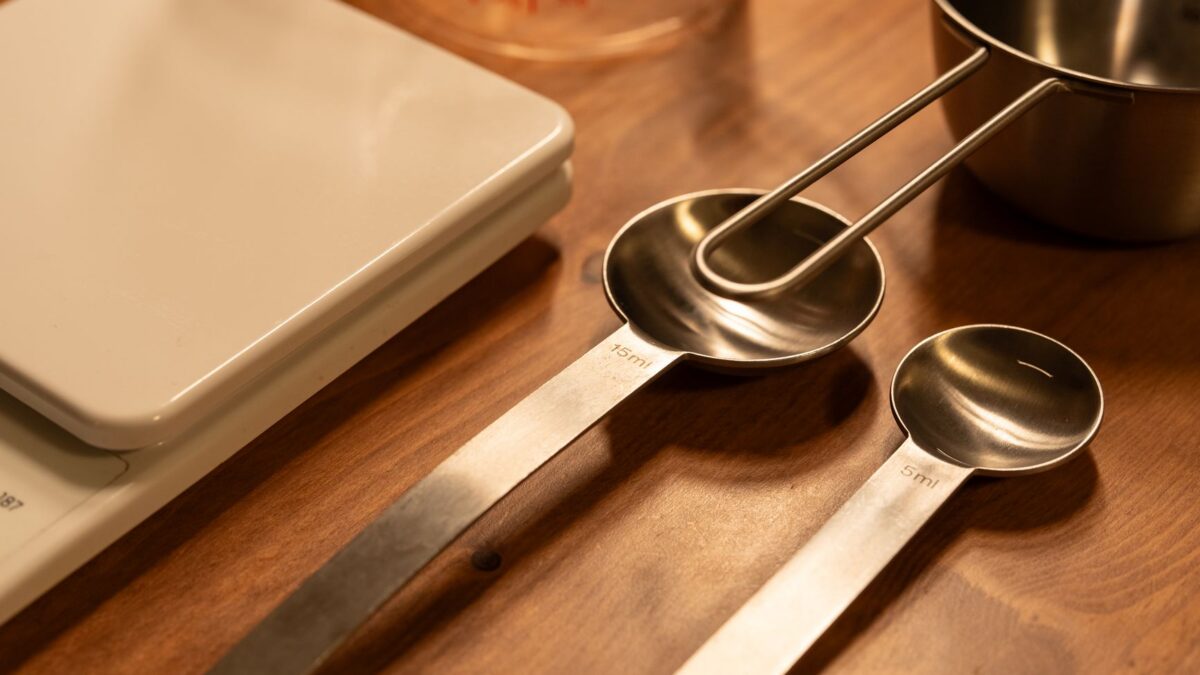
Baking soda is pure sodium bicarbonate, a base that only produces lift when it meets an acid in the batter, such as buttermilk, yogurt, brown sugar, honey or natural cocoa. Baking powder is baking soda already mixed with one or more dry acids and a little starch, so it rises with nothing more than liquid and heat. Soda is roughly three to four times stronger, which is why the two are not interchangeable spoon for spoon.
What each leavener actually does
Both work the same way at the chemical level: bicarbonate plus acid makes carbon dioxide gas. The gas inflates tiny air pockets that you created when you mixed the batter, and the oven’s heat sets the structure around them before the bubbles escape.
Baking soda
Soda reacts the moment it is wet and in contact with an acid. That fast reaction is why soda batters, like many muffin and quick bread batters, are usually meant to go into the oven soon after mixing. Soda also does two other jobs:
- It neutralizes acid. Buttermilk or yogurt batters taste less sour and more balanced with soda in them.
- It encourages browning. A slightly alkaline batter browns faster and more deeply, which is why a pinch of soda shows up even in recipes that also use powder.
Too much soda leaves a soapy or metallic taste and an overly dark, coarse crumb, because there is not enough acid to use it all up.
Baking powder
Baking powder contains its own acid, so it works in batters made with plain milk and white sugar that have little acidity of their own. Most supermarket baking powder in the US is double-acting: one acid (often monocalcium phosphate) reacts when the powder gets wet, and a second, slower acid (such as sodium aluminum sulfate or sodium acid pyrophosphate) releases most of its gas only once the batter heats up in the oven. That second burst is forgiving: batter can sit a little while before baking without losing all its lift.
Why some recipes use both
Many muffin, pancake and cake recipes list both, and it is not redundancy. Each leavener is doing a different job:
- Soda balances the acid. A recipe with buttermilk, sour cream or brown sugar uses just enough soda to neutralize that acidity and help browning.
- Powder provides the rest of the lift. If the amount of soda that suits the acid is not enough to raise the batter fully, baking powder tops it up without adding more alkalinity.
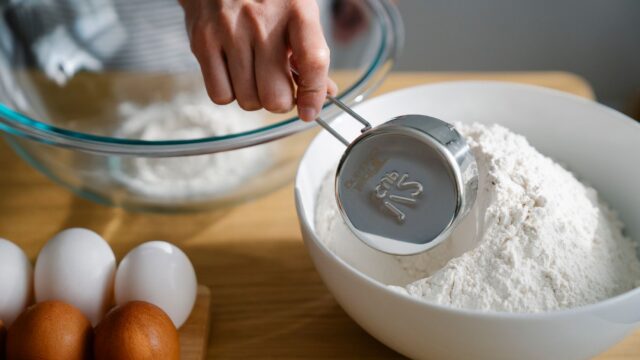
A commonly cited rule of thumb is about 1 teaspoon of baking powder per cup of flour for cakes and muffins, or about 1/4 teaspoon of baking soda per cup of flour when there is enough acid to react with it. Recipes vary around those figures, so treat them as a sanity check rather than a formula.
Baking soda vs baking powder at a glance
| Baking soda | Baking powder | |
|---|---|---|
| What it is | Sodium bicarbonate only | Bicarbonate + dry acid(s) + starch |
| Needs an acid in the recipe? | Yes | No |
| When it reacts | Immediately when wet with acid | Partly when wet, mostly in the oven (double-acting) |
| Relative strength | About 3–4 times stronger | Milder |
| Effect on browning | Increases browning | Neutral |
| Typical amount | About 1/4 tsp per cup of flour | About 1 tsp per cup of flour |
| Sign of too much | Soapy or metallic taste, dark crumb | Bitter taste, coarse crumb, rise then collapse |
Common acidic ingredients that activate soda
- Buttermilk, yogurt, sour cream and kefir
- Lemon juice, vinegar and orange juice
- Brown sugar, molasses, honey and maple syrup
- Natural (non-alkalized) cocoa powder and chocolate
- Applesauce, mashed banana and pumpkin puree (mildly acidic)
- Cream of tartar
Dutch-process cocoa has been treated to reduce its acidity, so it does not react with soda in the same way. That is why chocolate recipes written for Dutch-process cocoa usually lean on baking powder.
Can you swap one for the other?
Sometimes, with adjustments:
- Out of baking powder: for each teaspoon, use 1/4 teaspoon baking soda plus 1/2 teaspoon cream of tartar, or 1/4 teaspoon soda with an acidic liquid already in the recipe. The full method is in the guide to baking powder substitutes.
- Out of baking soda: about three times as much baking powder can stand in, but the acid in the recipe is no longer neutralized and the flavor and browning will change. See baking soda substitutes for when this works and when it does not.
Never swap them one for one. Using soda in place of the same amount of powder means roughly three to four times the leavening and a strong off taste.
How to test whether they are still fresh
Leaveners lose strength over time, especially once the container is open and exposed to humid air. Old baking powder is one of the most common reasons for flat muffin tops. King Arthur Baking describes quick checks in its guide to testing leaveners:
- Baking powder: stir about 1/2 teaspoon into 2 tablespoons of warm water. It should bubble and foam within seconds, a little less vigorously than soda in vinegar.
- Baking soda: stir about 1/2 teaspoon into 1 tablespoon of vinegar. It should fizz right away and vigorously.
- If either barely bubbles, replace it.
Keep both tightly closed in a cool, dry cupboard, and write the opening date on the lid. Use a dry spoon so moisture does not get into the tin.
Troubleshooting leavening problems
| Problem | Likely leavening cause | Fix |
|---|---|---|
| Flat, dense bake | Old powder, or soda without enough acid | Test freshness; check the recipe has an acid if it uses only soda |
| Rose, then sank | Too much leavening | Measure with level spoons; do not round up |
| Soapy or metallic taste | Too much soda for the acid | Reduce soda; whisk it evenly into the flour |
| Brown specks or bitter pockets | Soda not evenly mixed | Sift or whisk leaveners with the dry ingredients first |
| Pale, sour bake | Soda left out of an acidic batter | Add the soda the recipe calls for |
Excess leavening is also one of the reasons muffins sink in the middle: the bubbles grow too large, merge and collapse before the crumb sets.
Bottom line
Use soda when the recipe has an acid to react with and you want extra browning; use powder when the batter is not acidic or you need lift that waits for the oven. When a recipe calls for both, keep both. Measure with level spoons, whisk leaveners into the flour, and test any container that has been open for a long time.
FAQ
Is baking soda the same as bicarbonate of soda?
Yes. “Bicarbonate of soda” or “bicarb” is the common name in the UK and Australia for the same ingredient, sodium bicarbonate.
Why does my baking powder say aluminum-free?
It uses a different slow-acting acid, often a phosphate, instead of sodium aluminum sulfate. Some bakers prefer it because aluminum-based acids can leave a faint metallic taste in large amounts. It works the same way in recipes.
Can I mix batter the night before?
Batters relying only on baking soda lose lift as they sit, because the reaction starts immediately. Double-acting powder holds up better, and many muffin batters can rest in the fridge for a while, but follow the recipe’s guidance.
How long does baking powder last?
Check the best-by date on the container. Once opened, its strength fades with humidity and time, so a quick water test before baking is the most reliable check.