Why Do Muffins Sink in the Middle? 6 Causes and the Fix for Each
A sunken muffin is almost always a structure problem: the center collapsed before it set. Find your cause in the table, then fix it on the next batch.
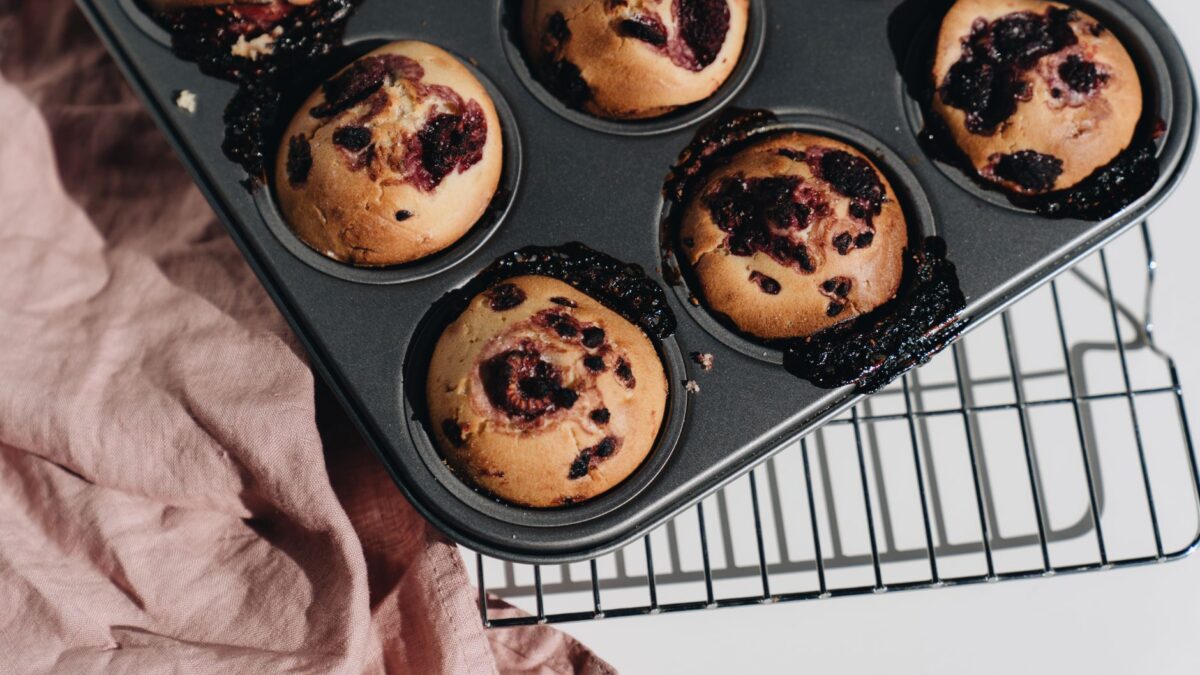
Muffins sink in the middle when the center rises but collapses before its structure sets. The most common reason is underbaking, followed by too much leavening, an oven running cooler than the dial says and opening the oven door too early. Each cause leaves slightly different clues, so it is worth diagnosing before you change the recipe.
What is actually happening when a muffin sinks
A muffin rises because gas bubbles from baking powder or baking soda expand in the heat, while steam pushes from inside. That rise is only temporary. To keep its shape, the batter has to turn from a soft foam into a firm crumb: proteins from the eggs and flour set, and starch absorbs water and gels. If the gas pressure drops before that happens, the center falls back down.
The edges set first because they touch hot metal. The center is the last part to firm up, which is why the dip almost always appears in the middle rather than at the sides.
Cause → fix table
| Cause | Clues | Fix |
|---|---|---|
| Underbaked center | Dense, damp or gummy band under the dip; toothpick comes out wet | Bake until a toothpick comes out clean or with a few dry crumbs; check internal temperature |
| Too much baking powder or soda | Fast, tall rise that collapses; coarse crumb; soapy or bitter taste | Measure leavening with level spoons; check the recipe ratio |
| Oven running cool | Pale tops, long bake times, sinking across the whole batch | Check the oven with a standalone thermometer |
| Door opened too early | Muffins looked fine, then dropped after you checked them | Wait until at least two-thirds of the bake time has passed |
| Overmixed batter | Peaked then sunken tops, tunnels, chewy texture | Stir only until no dry flour remains |
| Too much liquid or fruit | Wet, heavy batter; soggy pockets around fruit | Weigh flour; drain thawed or juicy fruit; keep add-ins moderate |
The six causes in detail
1. The center was underbaked
This is the cause in most cases. The top can look golden while the inside is still a wet foam. Once the muffins leave the oven, the steam inside cools, pressure drops and the soft center caves in. A toothpick inserted into the very center should come out clean or with a few moist crumbs, not wet batter. An instant-read thermometer is more reliable: King Arthur gives about 200–205°F (93–96°C) in the center as the doneness range for quick breads, and muffins are made from the same kind of batter. Our guide to how long to bake muffins has times by pan size.
2. Too much leavening
More baking powder does not mean more rise. Past a point, the bubbles grow too large, merge and escape, and the structure cannot hold them. The muffin balloons quickly and then deflates. A common sign is a coarse, crumbly texture and a slightly metallic or soapy aftertaste. Use measuring spoons leveled with a knife, not heaped, and do not scale leavening up when you double a recipe without checking the ratio. If you are unsure which leavener a recipe needs, see baking powder vs baking soda.
Altitude has the same effect. At high elevation, lower air pressure lets gas expand more easily, so recipes developed at sea level often rise and fall. Extension services recommend reducing leavening above about 3,000 feet; see our high-altitude baking adjustments.
3. The oven runs cool
Home ovens often drift from the temperature on the dial. If the oven is too cool, the batter rises slowly and keeps rising before the center sets, so the structure is weak when it finally firms up. An inexpensive oven thermometer placed on the middle rack will tell you whether your oven runs hot or cool. Our guide to oven temperature accuracy explains how to check and adjust.
Preheating matters too. Many ovens signal “ready” before the walls and racks are fully heated. Giving the oven an extra 10–15 minutes after the preheat signal produces a more even start.
4. Opening the oven door too soon
Opening the door lets a burst of hot air escape and cooler air in. Early in the bake, when the center is still liquid, that drop can stop the rise and cause a collapse. Use the oven light for the first two-thirds of the bake time, then check quickly.
5. Overmixing
Stirring muffin batter vigorously develops gluten and works in large air bubbles. The muffin can rise into a sharp peak, then sink or tunnel inside. Muffin batter should be mixed just until no streaks of dry flour remain; a few small lumps are normal and disappear in the oven.
6. Too much liquid, sugar or fruit
A batter that is too wet or too sweet sets more slowly. Sugar raises the temperature at which egg proteins set and starch gels, and extra liquid means more water to drive off. The most common source of extra liquid is actually too little flour: scooping flour loosely or using an inaccurate cup. King Arthur’s ingredient weight chart uses 120 g per cup of all-purpose flour; weighing removes the guesswork. Thawed frozen fruit, very ripe banana or extra yogurt can also tip a batter over the edge.
Quick checklist before your next batch
- Check the date on your baking powder; an opened can is best used within about six months, according to manufacturer guidance.
- Measure flour by weight, or spoon it into the cup and level it.
- Level every spoonful of baking powder and soda.
- Preheat fully and confirm the temperature with an oven thermometer.
- Stir wet into dry only until combined.
- Keep the door closed for most of the bake.
- Test the center with a toothpick or thermometer before taking the pan out.
Can you save muffins that already sank?
If they are fully baked and only dipped a little, they are perfectly fine to eat. Fill the hollow with a spoonful of streusel, glaze or a thin layer of jam and nobody will notice. If the center is wet or gummy, the muffins are underbaked; you can return them to the oven for a few minutes, but the texture rarely recovers fully. Do not eat batter that is still raw: the FDA advises against eating raw batter or dough because flour and raw eggs can carry bacteria.
Bottom line
A sunken center means the structure was not set when the gas and steam pressure dropped. Start with doneness and oven temperature, which explain most cases, then look at leavening amounts and how wet the batter is. Fix one variable at a time so you can see what actually changed.
FAQ
Why do my muffins rise in the oven and then fall when I take them out?
The center was not fully set. As the muffins cool, the steam inside condenses and the soft middle collapses. Bake a few minutes longer and confirm doneness at the center.
Can expired baking powder make muffins sink?
Weak baking powder usually causes flat, dense muffins rather than sunken ones. Sinking is more often linked to too much leavening, underbaking or a cool oven.
Do dark pans affect sinking?
Dark pans brown the outside faster, which can tempt you to remove muffins before the center is done. Many pan and mix makers suggest lowering the temperature by about 25°F for dark pans.
Are sunken muffins safe to eat?
Yes, as long as they are fully baked through. If the center is still wet batter, bake it longer or discard that part.