Why Do Muffins Get Soggy Bottoms? Condensation, Juicy Fruit and the Cooling Fix
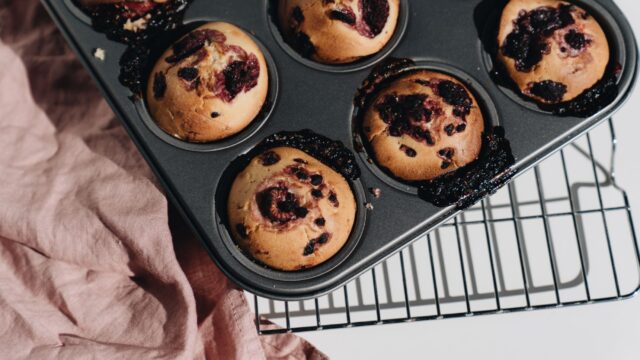
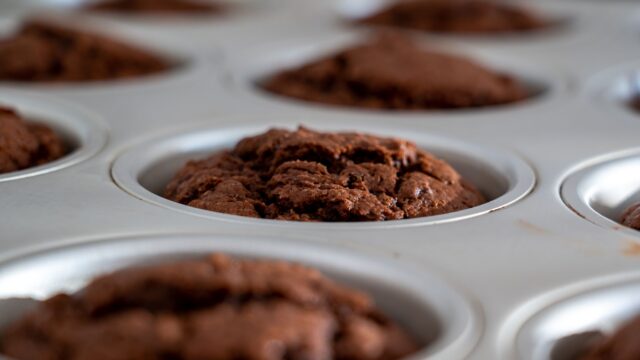
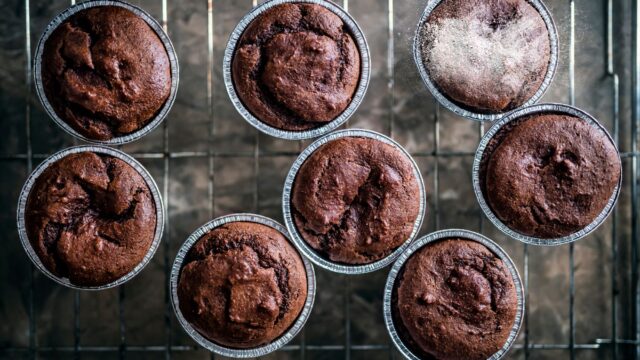
A wet, sticky base is mostly about steam with nowhere to go. Get muffins out of the pan on time and onto a rack, and most soggy bottoms disappear.
A wet, sticky base is mostly about steam with nowhere to go. Get muffins out of the pan on time and onto a rack, and most soggy bottoms disappear.
A peaked, split top on a layer cake is a heat problem you can fix. On a pound cake or loaf, the same crack is a sign the bake went right.
A sunken muffin is almost always a structure problem: the center collapsed before it set. Find your cause in the table, then fix it on the next batch.
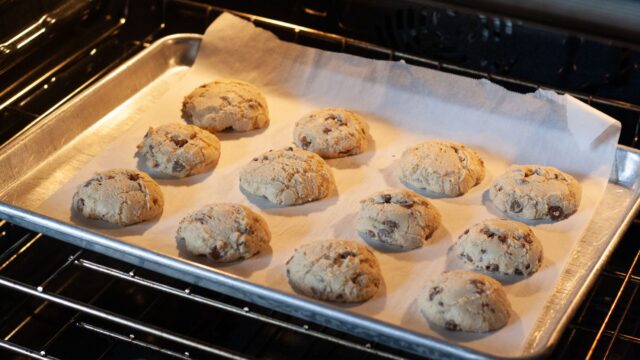
Thin, greasy cookies that run together on the sheet are almost always a fat-temperature or measuring problem. A short chill and a cool pan fix most batches.
Dry muffins come from a few predictable things: too long in the oven, packed flour, too little fat or sugar, and storage that lets moisture escape.
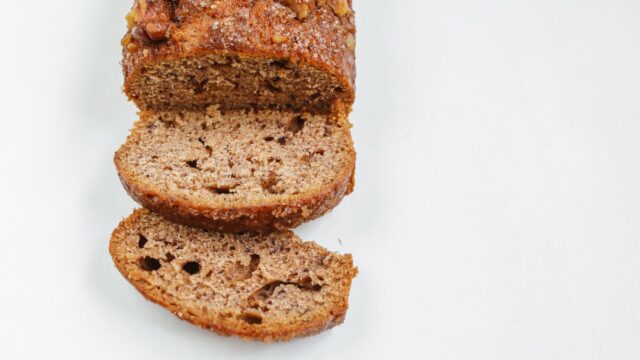
A golden crust can hide a wet, dense center. An instant-read thermometer, the right loaf pan and a foil tent solve most gummy banana bread.
Muffins that bake up flat are telling you something about leavening, batter thickness or heat. Check these five things in order.
Two cheap thermometers solve most baking mysteries: one tells you how hot the oven really is, the other tells you when the inside is done.
Lower air pressure makes batters rise fast and then collapse. A few small, standard adjustments fix most problems, and muffins need the fewest.
Tunnels running up through a muffin are a classic sign of overmixing. A gentler fold and a lumpy batter are the cure.
We use analytics cookies to see which articles are read. No ads cookies. Privacy policy