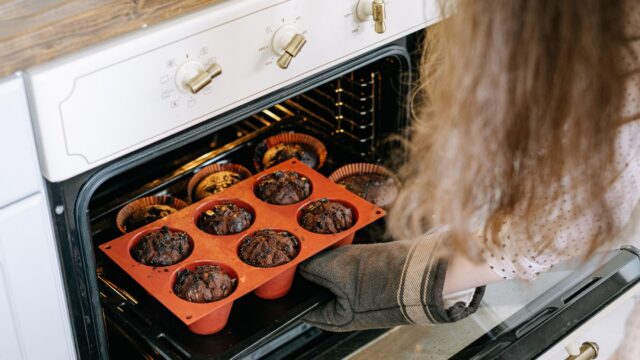
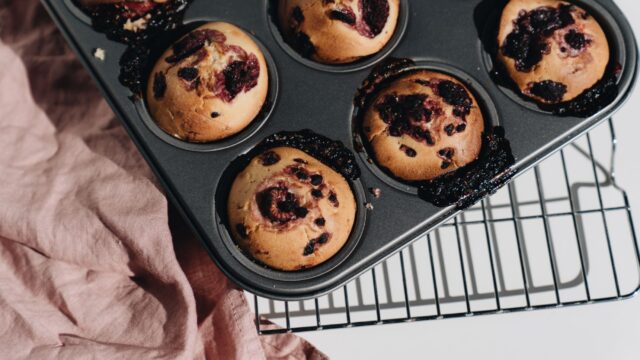
Why Do Muffins Get Soggy Bottoms? Condensation, Juicy Fruit and the Cooling Fix
A wet, sticky base is mostly about steam with nowhere to go. Get muffins out of the pan on time and onto a rack, and most soggy bottoms disappear.
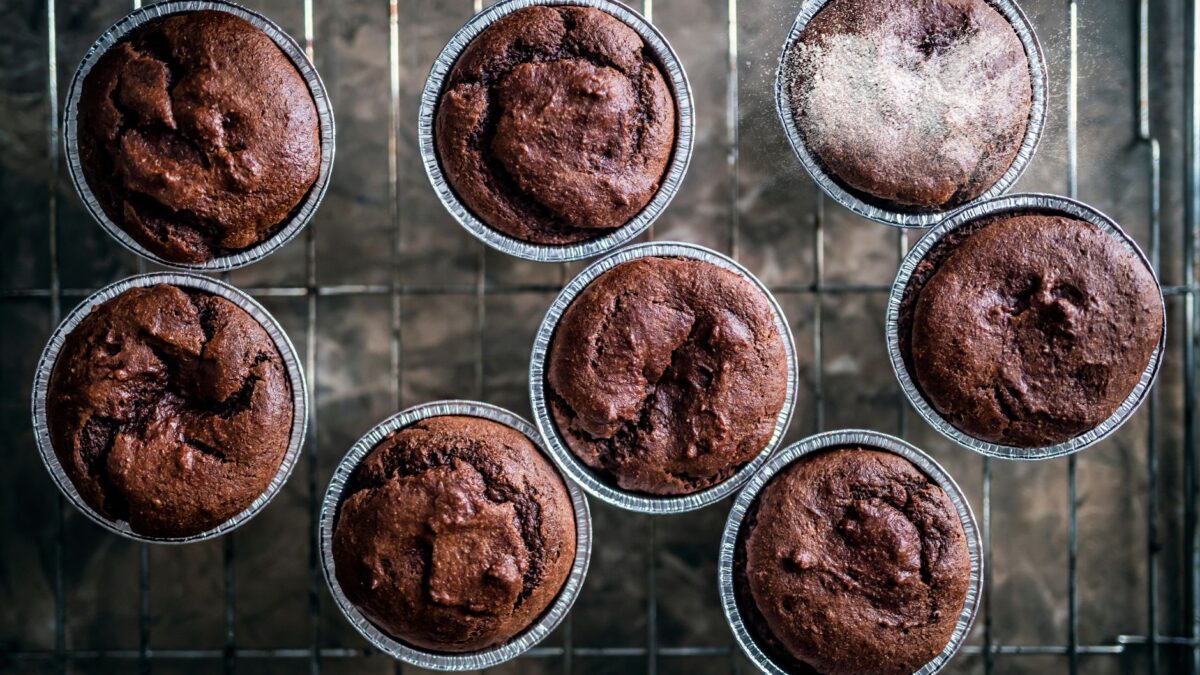
Muffins get soggy bottoms mainly because steam condenses against the pan or liner when they are left to cool in the tin. Juicy fruit that sinks to the base, underbaking and storing muffins while still warm make it worse. The fix is simple: rest muffins in the pan for about 5 minutes, then move them to a wire rack and let them cool completely before covering.
Where the moisture comes from
A freshly baked muffin is full of hot steam. As it cools, that steam escapes through the top and sides. If the muffin sits in a metal cup, the steam hits the cooler pan wall, turns back into water and soaks into the base and liner. The same thing happens in a closed container: warm muffins release steam, it condenses on the lid and walls, and the muffins reabsorb it. Paper liners can trap moisture against the crumb, which is why the problem often shows up as a damp liner peeling away from the base.
Causes and fixes
| Cause | What you notice | Fix |
|---|---|---|
| Cooling in the pan | Wet, sticky base; liner damp or peeling | Move to a rack after about 5 minutes |
| Covered while warm | Fine at first, damp tops and bottoms later | Cool completely before covering |
| Juicy or thawed fruit sinking | Wet, purple or streaky layer at the base | Use thicker batter; keep frozen fruit frozen; drain fruit |
| Underbaking | Gummy, dense band at the bottom | Bake until a toothpick in the center comes out clean |
| Thin batter or excess liquid | Heavy, wet bottom layer | Measure flour by weight; keep liquids to the recipe |
| Oven heat mostly from above | Browned tops, pale damp bottoms | Bake on the middle rack; check the lower element is working |
Cooling timing: the main fix
- Bake fully. Check the center with a toothpick or an instant-read thermometer (about 200–205°F, or 93–96°C, is the quick-bread range King Arthur gives).
- Rest in the pan about 5 minutes. The muffins firm up enough to lift without breaking.
- Lift onto a wire rack. Tip the pan or use a thin knife or offset spatula. If a muffin resists, tilt it in its cup so air can reach the base.
- Let air circulate underneath. A rack, not a plate or cutting board, lets steam escape from the bottom.
- Cool completely, usually 30–60 minutes for standard muffins, before you cover or stack them.
Some bakers tip each muffin on its side in the cup right away if they cannot remove them yet. It is a reasonable short-term option, but getting them onto a rack is better.
Juicy fruit and sinking berries
Fruit releases juice as it heats. If berries or chopped fruit sink to the bottom, the juice pools there and saturates the base. Thicker batter keeps fruit suspended, and adding a layer of plain batter to each cup before the fruit-studded batter can help. If you use frozen berries, add them straight from the freezer at the last moment so they release less juice into the batter. See why blueberries sink in muffins for more detail.
Very wet ingredients such as grated zucchini, apple or crushed pineapple are best squeezed or drained if the recipe allows, and kept to the amount listed.
Storing muffins so they stay dry on the bottom
Once muffins are completely cool, store them in a single layer in an airtight container. Lining the container with a paper towel, and laying another over the top, absorbs moisture that the muffins release over time. Some muffins with very moist add-ins can turn sticky on top after a day or so; replacing the paper towel helps.
For anything longer than a couple of days, freeze them. Wrap each muffin individually or freeze on a tray and then bag them, pressing out the air. Thaw at room temperature in the wrapping, then unwrap so condensation does not settle on the muffin. See how to freeze muffins and how long muffins last for storage times.
Liners vs no liners
Paper liners can hold moisture against the base, especially thin ones. Parchment or greaseproof liners resist that better. Baking in a well-greased pan without liners usually gives a drier, crisper bottom, provided you remove the muffins promptly. Silicone cups do not absorb moisture, but because silicone does not conduct heat as quickly as metal, muffins in silicone may need a few extra minutes and still cool best out of the cups.
Can you rescue soggy muffins?
If they are fully baked and just damp from steam, place them on a rack, unwrapped, for a while to dry. A few minutes in a 300–325°F (150–165°C) oven can also crisp the base. If the bottom is gummy because the muffins were underbaked, a short return to the oven helps only a little; next time, extend the bake.
Bottom line
Soggy bottoms are almost always steam with nowhere to go. Bake fully, take muffins out of the pan after about 5 minutes, cool them on a rack and store them only once they are completely cool. Thick batter and frozen-from-frozen berries handle the fruit side of the problem.
FAQ
How long should muffins cool in the pan?
About 5 minutes is typical. Long enough to firm up, short enough that steam does not condense in the cups.
Why are my muffins wet on the bottom the next day?
They were probably covered before they had cooled completely. Trapped steam condenses and is reabsorbed by the crumb.
Do paper towels really help when storing muffins?
Yes, they absorb moisture released by the muffins and reduce stickiness. Replace them if they become damp.
Can a dark or glass pan affect soggy bottoms?
Glass heats slowly and holds heat after baking, so remove muffins promptly. Dark metal browns bottoms faster, which can help, but may need a slightly lower temperature.