How Long to Bake Muffins: Time and Temperature Chart for Mini, Standard and Jumbo
Bake time depends on cup size, oven temperature and how heavy the batter is. Use the chart as a starting point, then trust the toothpick and thermometer.
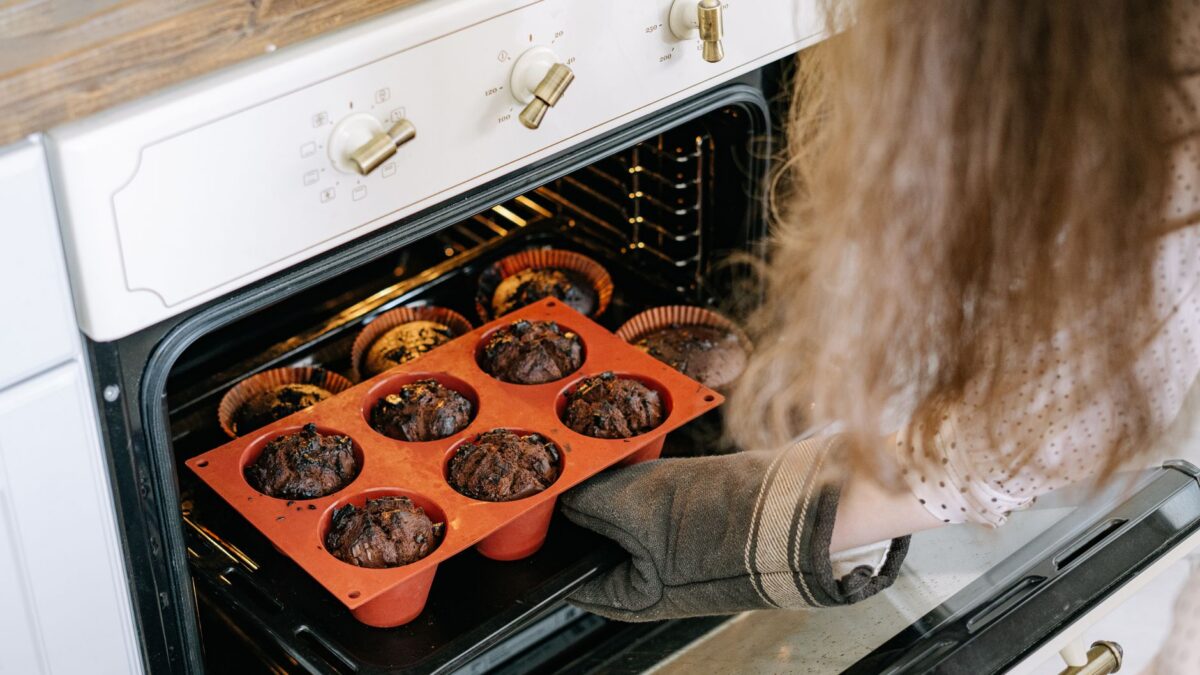
Standard-size muffins typically bake for 18 to 25 minutes at 375–400°F (190–200°C). Mini muffins usually need about 10 to 15 minutes, and jumbo muffins about 25 to 35 minutes. Treat these as starting points: muffins are done when a toothpick in the center comes out clean or with a few moist crumbs, the top springs back, and the center reads about 200–205°F (93–96°C).
Muffin baking chart
These are typical ranges for standard from-scratch muffin batters. Your recipe’s own times come first; use the chart when you change pan size or the recipe does not give a time for your size.
| Size | Common oven temperature | Typical bake time | Start checking at |
|---|---|---|---|
| Mini (24-cup pan) | 350–375°F / 175–190°C | 10–15 minutes | 8–9 minutes |
| Standard (12-cup pan) | 375–400°F / 190–200°C | 18–25 minutes | 15–16 minutes |
| Jumbo / Texas (6-cup pan) | 350–375°F / 175–190°C | 25–35 minutes | 22 minutes |
| Muffin tops (shallow pan) | 375°F / 190°C | 12–16 minutes | 10 minutes |
| Hot-start method, standard | 425°F / 220°C for 5 min, then 350°F / 175°C | 18–23 minutes total | 15 minutes |
Heavy batters loaded with fruit, pumpkin, banana or frozen berries usually sit at the longer end. Batters with a lot of sugar or honey brown faster, so the lower temperature in the range is safer. For capacities and how many cups a recipe fills, see muffin pan sizes and conversions.
Oven temperature conversions
| °F | °C (conventional) | °C fan (approx.) | Gas mark |
|---|---|---|---|
| 350°F | 175–180°C | 155–160°C | 4 |
| 375°F | 190°C | 170°C | 5 |
| 400°F | 200°C | 180°C | 6 |
| 425°F | 220°C | 200°C | 7 |
Fan ovens are commonly set about 20°C lower than conventional ovens, and US convection guidance is usually about 25°F lower. Follow your oven manufacturer’s instructions where they differ. More detail in oven temperature conversions and baking with a convection oven.
How to tell muffins are done
- Toothpick or skewer: insert it into the center of a muffin in the middle of the pan. Clean or a few moist crumbs means done; wet batter means more time. Avoid hitting a berry or chocolate chip, which can look wet even when the crumb is baked.
- Spring-back: press the top lightly. It should spring back instead of leaving a dent.
- Edges: the sides start to pull away slightly from the pan or liner.
- Color: golden on top, though color depends heavily on sugar and add-ins, so do not rely on it alone.
- Internal temperature: King Arthur gives 200–205°F (93–96°C) at the center as the doneness range for quick breads, and 205–210°F for gluten-free quick breads. Some extension charts list muffins at up to 210°F (99°C). An instant-read thermometer is the most objective check.
Why bake times vary so much
Oven accuracy
Home ovens commonly run hotter or cooler than the setting. If your muffins always take much longer or shorter than recipes say, check your oven with a standalone thermometer; see our oven thermometer guide.
Pan material and color
Dark and nonstick pans absorb more heat and brown faster; many manufacturers suggest lowering the temperature by about 25°F. Light aluminum or aluminized steel bakes evenly. Silicone heats more slowly, so expect a few extra minutes and paler sides. Glass holds heat and can over-brown the base.
How full the cups are
Fuller cups make bigger muffins and longer bake times. If you fill 10 cups instead of 12 with the same batter, add a few minutes.
Batter temperature
Batter rested in the fridge, or batter with frozen berries, starts colder and needs a little longer.
Rack position
Bake on the middle rack for even heat. If you bake two pans at once, rotate them top to bottom and front to back about two-thirds of the way through, working quickly to keep the door open as briefly as possible.
Converting a recipe to a different size
- Keep the same batter and the same temperature to start.
- For mini muffins, fill cups about three-quarters full and begin checking after 8 minutes.
- For jumbo muffins, consider lowering the temperature by about 25°F so the center bakes before the outside darkens, and begin checking after 22 minutes.
- Test with a toothpick and thermometer rather than counting on the clock.
Common bake-time mistakes
- Going by color alone. Muffins with honey, brown sugar or whole wheat flour darken early and can look done while the center is still wet.
- Testing a muffin at the edge of the pan. Outer muffins bake faster; test one from the middle.
- Opening the door too often. Each check lets heat escape and adds time. Wait until at least two-thirds of the bake has passed.
- Leaving muffins in the hot pan. They keep cooking and the bottoms steam. Move them to a rack after about 5 minutes.
- Ignoring altitude. At high elevation, extension services recommend recipe adjustments that can include a slightly higher oven temperature and shorter bake times.
Bottom line
Use 18–25 minutes at 375–400°F (190–200°C) for standard muffins, 10–15 for mini and 25–35 for jumbo as a guide. Start checking early and rely on a clean toothpick, a springy top and a center around 200–205°F (93–96°C).
FAQ
What temperature should I bake muffins at?
Most standard recipes use 375–400°F (190–200°C). Some start at 425°F (220°C) for a few minutes for taller tops, then lower the heat.
How long do mini muffins take?
Usually 10–15 minutes at 350–375°F (175–190°C). Start checking after about 8 minutes.
Can I bake muffins without a muffin pan?
Sturdy foil or parchment liners can stand on a baking sheet if packed closely together. Expect slightly lower tops and check a few minutes early.
Do muffins keep baking after I take them out?
Yes, a little. Carryover heat finishes the center over the next few minutes, which is why muffins that test barely done are usually perfect once rested.