Why Is My Banana Bread Gummy or Raw in the Middle? Causes and Fixes
A golden crust can hide a wet, dense center. An instant-read thermometer, the right loaf pan and a foil tent solve most gummy banana bread.
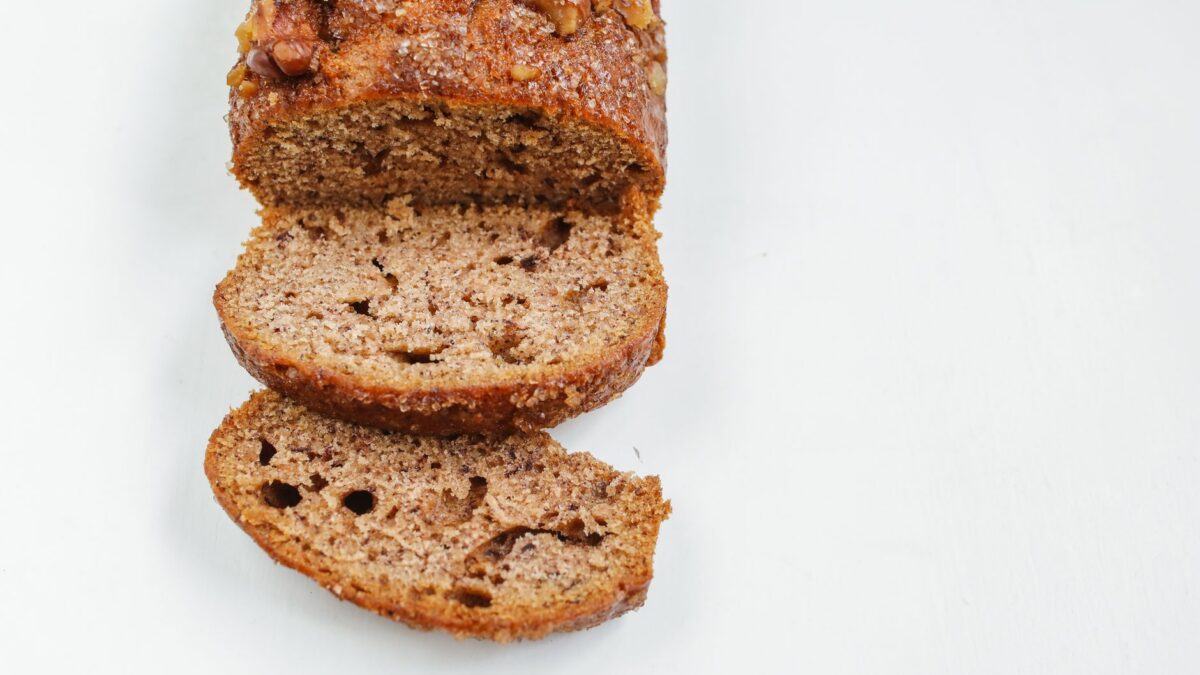
A gummy, dense or raw-looking middle in banana bread almost always means the loaf is underbaked in the center. Deep loaves take a long time to cook through, and the crust browns long before the middle is done. King Arthur Baking recommends baking until the center reaches 200–205°F (93–96°C) on an instant-read thermometer. Other common causes are too much banana, a smaller or deeper pan than the recipe expects, and slicing the loaf while it is hot.
Causes and fixes at a glance
| Cause | Clues | Fix |
|---|---|---|
| Underbaked center | Wet, shiny band in the middle; may sink as it cools | Bake until the center reads 200–205°F; tent with foil if the top browns early |
| Too much banana | Heavy, dense, wet crumb throughout | Measure mashed banana by cups or grams, not by number of bananas |
| Pan smaller or deeper than called for | Batter fills the pan high; long bake, raw middle | Use the stated pan size; fill no more than about two-thirds full |
| Oven running hot | Dark crust, raw center | Check with an oven thermometer; lower to the true recipe temperature |
| Oven running cool | Pale crust, very long bake, dense center | Verify oven temperature and preheat fully |
| Sliced while hot | Center compresses and looks gummy when cut | Cool in the pan briefly, then on a rack until at least warm, not hot |
| Overmixing | Tough, chewy, tunneled crumb | Stir the flour in just until no dry streaks remain |
| Too little leavening or old baking soda | Low, flat loaf with a dense band | Test baking soda in vinegar; level the measuring spoon |
Why banana bread is prone to a gummy center
Banana bread batter is heavy and wet. Mashed banana contributes a lot of moisture and sugar, and the loaf pan is deep and narrow, so heat has a long way to travel to reach the center. Sugar holds water, which slows how fast the starch sets. The crust can therefore look fully baked while the middle is still a thick, undercooked batter. The fix is patience, the right pan and checking doneness where it matters: the very center.
How to tell when banana bread is done
- Thermometer (most reliable): insert an instant-read thermometer into the center of the loaf, from the top, to the middle depth. King Arthur Baking says the center should read 200–205°F (93–96°C), or 205–210°F (96–99°C) for gluten-free quick breads, in its guide to banana bread doneness.
- Skewer: a long wooden skewer or cake tester should come out with a few moist crumbs, not wet batter. Test in the crack, which is often the last place to set, and in more than one spot.
- Touch: the top should feel firm and spring back when pressed lightly.
- Sides: the loaf should pull slightly away from the pan.
Melted chocolate chips or a pocket of banana can fool a skewer, which is why a thermometer reading is the best check.
Use a foil tent to finish the center
If the top is deep brown but the center has not reached temperature, loosely lay a sheet of aluminum foil over the loaf (shiny or dull side, either works) and keep baking. The foil slows browning on top while the middle catches up. Check every 5–10 minutes. Some loaves need 10–20 minutes beyond the recipe’s time, especially in glass or ceramic pans.
Pan size matters more than you think
Most US banana bread recipes are written for a 9 x 5-inch or an 8 1/2 x 4 1/2-inch loaf pan. The smaller pan holds noticeably less, so the same batter sits deeper and needs more time. If you use a different pan:
- Fill it no more than about two-thirds full and bake extra batter as muffins.
- Glass and ceramic heat more slowly but hold heat longer, so the loaf may need more time and the edges may brown more. Appliance makers often suggest lowering the oven about 25°F for glass.
- Two smaller loaves or a batch of muffins bake through much faster. See the pan size conversion guide for volumes.
Measuring banana correctly
Banana sizes vary a lot, so “3 bananas” can mean very different amounts. If a recipe gives a measurement, follow it: King Arthur Baking’s weight chart lists 1 cup of mashed banana as about 227 g. If you have extra banana, freeze it for the next loaf rather than adding it to the batter; extra fruit means extra moisture and sugar without extra flour to hold it.
Very ripe bananas, with lots of brown spots, are sweeter and softer, which is why they are preferred. They are also wetter, so measuring matters even more.
Cool before slicing
A hot loaf is still finishing its structure. Cutting it right away squashes the crumb and makes the center look gummy even if it was baked through. A common approach is to cool the loaf in the pan for about 10–15 minutes, turn it out onto a rack and let it cool until just warm or fully cool before slicing.
Can you rescue an underbaked loaf?
- If you notice right away and the loaf is still hot, return it to the oven, tented with foil, until the center reaches 200–205°F.
- If it has already cooled, the gummy band will not fully recover, but toasting slices in a skillet or toaster oven firms them up. Cut away any portion that is still raw batter; raw batter contains raw flour and eggs, which the U.S. FDA advises against eating.
Prevention checklist
- Measure mashed banana and flour (King Arthur counts 1 cup of all-purpose flour as 120 g). See how to measure flour.
- Use the recipe’s pan size and fill it no more than two-thirds.
- Verify your oven temperature; see oven temperature accuracy.
- Bake on the middle rack and tent with foil if needed.
- Check the center with a thermometer before taking it out.
- Cool before slicing.
A good starting point is the classic banana bread recipe, which lists amounts by cups and grams.
Bottom line
Gummy banana bread is underbaked banana bread in most cases. Measure the banana, use the right pan, tent the top with foil when it browns early, and bake until the center reads 200–205°F. Then let it cool before cutting.
FAQ
Why does my banana bread sink in the middle?
Usually the center was underbaked or there was too much banana or leavening. Checking the internal temperature solves most cases.
Can I bake banana bread at a lower temperature to stop browning?
A foil tent is the simpler fix. Lowering the temperature lengthens the bake and changes the rise; stay close to the recipe.
Is a slightly gummy center safe to eat?
If part of the loaf is still raw batter, do not eat it, because it contains raw flour and egg. Bake it longer or cut that part away.
Why is my banana bread gummy at the bottom?
Batter can settle if it was overmixed or very wet. Leaving the loaf in the pan too long can also trap steam; turn it out onto a rack after a short rest.