Basic Scones, US and UK Style: Cold Butter, Clean Cuts and Freezing Them Unbaked
American scones are rich and sweet; British scones are lighter rounds for jam and cream. Both rise tall on the same principles: cold fat, minimal handling and a hot oven.
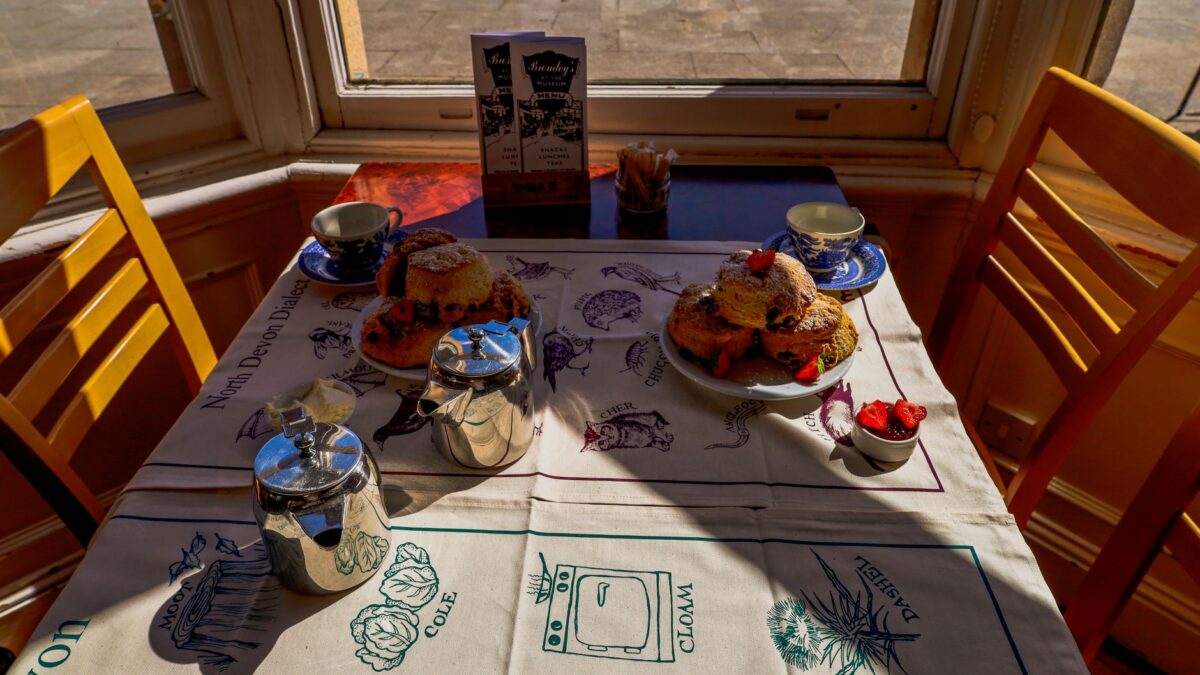
Scones are a quick bread made by rubbing cold butter into flour, sugar and baking powder, then binding it with milk or cream and baking at a high temperature, about 400–425°F (200–220°C). American scones are usually larger, sweeter and richer, often cut into wedges and loaded with fruit or chocolate. British scones are smaller rounds with less sugar and butter, served split with jam and clotted cream. The keys to both are keeping the fat cold, handling the dough briefly and cutting straight down.
Flour weights follow King Arthur Baking’s ingredient weight chart (120 g per cup).
American-style scones (8 wedges)
Ingredients
- 2 cups (240 g) all-purpose flour
- 1/4 cup (50 g) granulated sugar
- 1 tablespoon baking powder
- 1/2 teaspoon table salt
- 1/2 cup (113 g) cold unsalted butter, cut into small cubes
- 1 large egg
- 1/2 cup (113 g) cold heavy cream or whole milk, plus a little for brushing
- 1 teaspoon vanilla extract
- Optional: 3/4 cup add-ins (blueberries, chopped dried fruit or chocolate chips)
Method
- Heat the oven to 425°F (220°C; 200°C fan; gas mark 7). Line a baking sheet with parchment.
- Whisk flour, sugar, baking powder and salt. Add the butter and work it in with your fingertips or a pastry blender until the largest pieces are the size of peas.
- Whisk the egg, cream and vanilla. Add to the flour mixture and stir with a fork just until the dough holds together when squeezed. Fold in add-ins.
- Turn onto a lightly floured surface, pat into a 7-inch round about 3/4 inch thick and cut into 8 wedges with a sharp knife or bench scraper.
- Space on the sheet, brush tops with cream and sprinkle with sugar if you like. For the tallest rise, chill the shaped scones for 15–30 minutes.
- Bake 15–20 minutes, until golden and firm at the edges. Cool a few minutes before serving.
British-style scones (about 8 rounds, 2 1/2-inch cutter)
Ingredients
- 225 g (about 1 3/4 cups plus 2 tablespoons) self-raising flour
- 1 teaspoon baking powder
- Pinch of salt
- 55 g (4 tablespoons) cold unsalted butter, cubed
- 25 g (2 tablespoons) caster or granulated sugar
- 150 ml (about 2/3 cup) cold milk, plus a little for glazing
No self-raising flour? Use 225 g plain (all-purpose) flour with about 3 1/2 teaspoons baking powder in total (this replaces the extra teaspoon too). UK self-raising flour contains raising agent but no salt, unlike US self-rising flour, which includes salt; see self-rising flour substitutes.
Method
- Heat the oven to 220°C (200°C fan; gas mark 7; 425°F) and put a baking tray in to heat.
- Rub the butter into the flour, baking powder and salt until it looks like fine breadcrumbs. Stir in the sugar.
- Add most of the milk and mix with a table knife into a soft, slightly sticky dough. Add the rest only if needed.
- Pat gently, without rolling hard, to about 1 inch (2.5 cm) thick. Dip a floured cutter straight down and lift straight up; do not twist. Re-pat the scraps once.
- Place the rounds on the hot tray, brush only the tops with milk and bake 10–12 minutes, until risen and golden.
- Cool on a rack, wrapped in a clean tea towel for softer sides.
US vs UK at a glance
| Feature | American | British |
|---|---|---|
| Shape | Wedges or large drops | Small rounds, cut straight down |
| Sugar | About 20 g per 100 g flour | About 11 g per 100 g flour |
| Butter | Around 45–50% of flour weight | Around 25% of flour weight |
| Liquid | Cream and egg | Milk |
| Texture | Rich, slightly crumbly, biscuit-cake hybrid | Light, soft, splits cleanly |
| Served | As is, often glazed | Split with jam and clotted cream |
Why the butter must be cold
Cold, solid flecks of butter stay distinct in the dough. In a hot oven the water in them turns to steam and pushes the layers apart, giving lift and a tender, slightly flaky crumb. If the butter softens and blends fully into the flour, there is no steam pocket and the scones bake flat and dense. Practical habits: cube butter straight from the fridge, use cold liquid, work quickly with fingertips rather than warm palms, and chill the shaped scones if the kitchen is warm. King Arthur Baking also recommends a short chill of shaped scones before baking, noting that it relaxes gluten and firms the fat.
Cutting for a tall rise
- Press straight down. Twisting a cutter pinches and seals the edges, which can make scones rise lopsided.
- Use a sharp edge. A floured metal cutter or knife cuts cleanly; a blunt glass rim compresses the dough.
- Do not roll thin. Dough that is about 1 inch thick before baking gives a properly tall British scone.
- Place close together on the tray if you want soft sides and extra height; space them apart for crisp edges.
- Glaze only the tops. Egg or milk dripping down the sides can glue them and stop the rise.
Freezing unbaked scones
Scones freeze very well before baking, which is how many bakers keep fresh ones on hand.
- Shape and cut the scones, place them on a lined tray and freeze uncovered until solid.
- Wrap well and seal in a freezer bag, labeled with the date.
- Bake straight from frozen; do not thaw. Brush with cream or milk and bake at the same temperature, allowing extra time. King Arthur’s guidance for large frozen scones adds a significant amount of time, so judge by color and firmness.
Baked scones can also be frozen once cool and reheated in a moderate oven for a few minutes, but unbaked scones taste fresher.
Troubleshooting
| Problem | Cause | Fix |
|---|---|---|
| Flat and spread | Warm butter; dough too wet; old baking powder | Chill dough; hold back liquid; check powder freshness |
| Tough, bready | Overmixing or kneading | Stop as soon as the dough holds together |
| Dry and crumbly | Too much flour; overbaked | Weigh flour; pull when just golden |
| Lopsided | Twisted cutter; uneven thickness | Cut straight down; pat dough evenly |
Baking powder loses strength over time; the quick hot-water fizz test is described in why muffins have flat tops.
Food safety and allergens
Do not taste raw dough; flour and eggs are raw ingredients until baked. These scones contain wheat (gluten), milk and, in the US version, eggs. Gluten-free swaps need certified ingredients and care with cross-contact. People with allergies or celiac disease should follow their doctor’s or dietitian’s advice.
Bottom line
Keep butter and liquid cold, mix only until the dough holds, cut straight down and bake hot. Shape extra and freeze them unbaked so you can bake fresh scones straight from the freezer.
FAQ
Are scones and American biscuits the same?
They are close cousins. Biscuits usually have little or no sugar and no egg; scones are slightly sweeter and richer.
Can I use a food processor?
Yes, pulse the butter into the dry ingredients in short bursts, then mix in the liquid by hand to avoid overworking.
Why did my scones fall over?
Uneven thickness, a twisted cutter or glaze dripping down one side are the usual causes.
Can I make the dough the night before?
Shaped scones can be chilled, covered, overnight and baked in the morning, though freezing is the more reliable option for longer storage.