Classic Banana Bread: A Reliable Recipe With Weights, Pan Sizes and Doneness Temperature
Very ripe bananas, a light hand with mixing and a thermometer reading of 200–205°F are what separate a tender loaf from a gummy one.
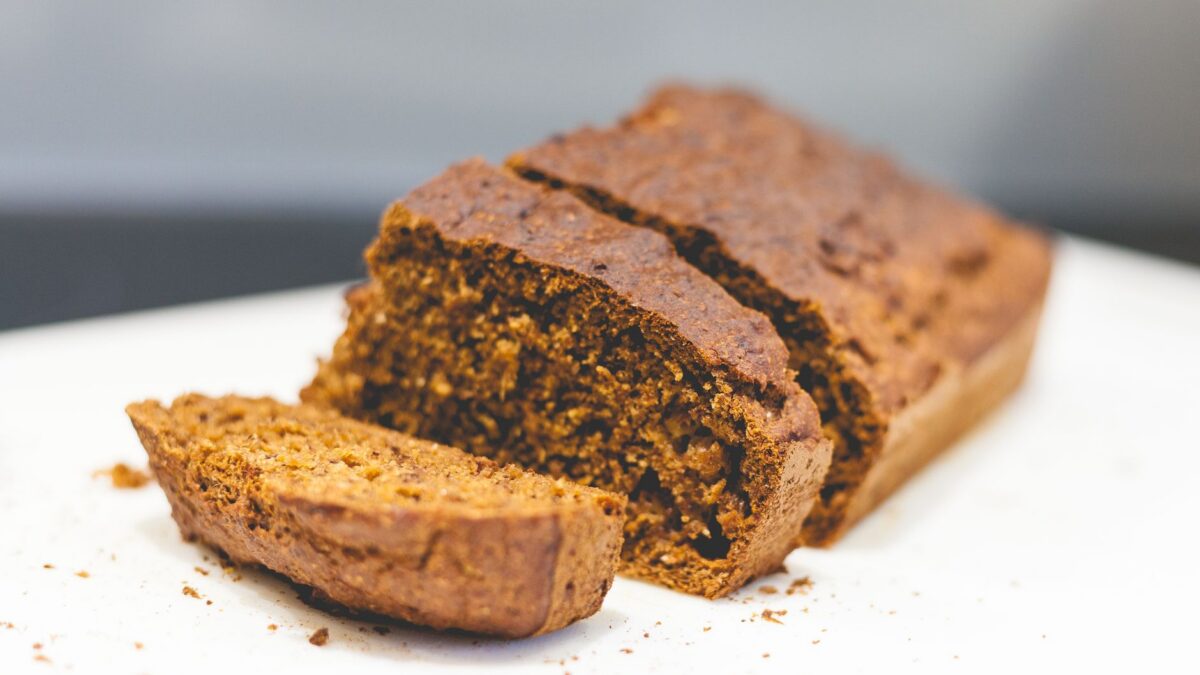
Classic banana bread is a quick bread: mashed very ripe bananas, flour, sugar, fat, eggs and baking soda, stirred together briefly and baked in a loaf pan at 350°F (180°C) for roughly 55–65 minutes. It is done when a toothpick from the center comes out clean and the middle reads about 200–205°F (93–96°C) on an instant-read thermometer.
The recipe below uses a standard ratio and King Arthur Baking’s weight convention of 120 g per cup of all-purpose flour. Weighing is the easiest way to avoid a dense or dry loaf.
Ingredients (one 9 x 5-inch loaf, about 10 slices)
- 2 cups (240 g) all-purpose flour
- 1 teaspoon baking soda
- 1/2 teaspoon table salt
- 1/2 teaspoon ground cinnamon (optional)
- 1/2 cup (113 g) unsalted butter, melted and slightly cooled
- 3/4 cup (160 g) packed light or dark brown sugar
- 2 large eggs, at room temperature
- 1 1/2 cups (340 g) mashed very ripe bananas, from 3 to 4 medium bananas
- 1 teaspoon vanilla extract
- Optional: 3/4 cup (85 g) chopped walnuts or 3/4 cup (128 g) chocolate chips
Method
- Heat the oven to 350°F (180°C; 160°C fan; gas mark 4) with a rack in the center. Grease a 9 x 5-inch metal loaf pan and line the long sides with a strip of parchment so you can lift the loaf out.
- Whisk the flour, baking soda, salt and cinnamon in a medium bowl.
- In a large bowl, whisk the melted butter and brown sugar until smooth. Whisk in the eggs one at a time, then the bananas and vanilla.
- Add the dry ingredients and fold with a spatula just until no dry flour shows. A few lumps are fine. Fold in nuts or chips with the last few strokes.
- Scrape the batter into the pan and level it. Bake 55–65 minutes. If the top is browning fast after 40 minutes, lay a sheet of foil loosely over it.
- Check doneness: a toothpick in the center should come out clean or with a few moist crumbs, and the center should read 200–205°F (93–96°C).
- Cool in the pan 10–15 minutes, then lift out and cool completely on a rack before slicing. The crumb finishes setting as it cools.
How ripe should the bananas be?
Use bananas with heavily speckled or mostly brown peels. As bananas ripen, starch converts to sugar and the fruit softens, so it mashes smoothly, tastes sweeter and adds more moisture. Yellow bananas with green tips give a starchy, mild loaf.
To speed things up, many bakers roast unpeeled bananas on a sheet pan at 300°F (150°C) until the skins turn black. This softens them but does not develop flavor as fully as natural ripening. Frozen overripe bananas work well: thaw them in a bowl and include the liquid that weeps out, since it is part of the banana.
Measure the mash rather than counting bananas. Banana sizes vary a lot, and too much banana is one of the most common reasons a loaf stays wet in the middle. See why banana bread turns gummy in the middle for the full list of causes.
Loaf pan size matters more than you think
This batter fills a 9 x 5-inch pan about two-thirds full. In a smaller 8.5 x 4.5-inch pan the batter sits deeper, so the center takes longer to cook and the top may dome higher and crack. Glass and dark pans absorb heat faster than light metal, so edges can overbrown before the middle is done.
| Pan | Bake at | Typical time | Notes |
|---|---|---|---|
| 9 x 5-inch light metal | 350°F / 180°C | 55–65 min | Standard choice for this recipe |
| 8.5 x 4.5-inch light metal | 350°F / 180°C | 60–75 min | Deeper batter; tent with foil if needed |
| 9 x 5-inch glass or dark metal | 325°F / 165°C | 60–70 min | Lower heat to protect the edges |
| Standard muffin cups (12) | 350°F / 180°C | 18–22 min | Fill cups about three-quarters full |
Times are starting ranges; ovens vary. Rely on the thermometer and toothpick, not the clock.
Why this recipe works
- Baking soda and bananas. Brown sugar and ripe bananas are mildly acidic, which lets baking soda produce carbon dioxide and also encourages browning. That is why many banana bread recipes use soda rather than baking powder alone.
- Melted butter and the muffin method. Mixing wet into dry with melted fat limits gluten development and gives a tender, moist crumb. The same approach is explained in the muffin method.
- Brown sugar. It holds moisture and adds a caramel note. White sugar works but gives a slightly drier, paler loaf.
Variations and swaps
- Oil instead of butter: use 1/2 cup (99 g) neutral oil. The loaf stays soft longer but tastes less buttery.
- Whole wheat: replace up to half the flour (120 g) with whole wheat flour for a heartier loaf.
- Sour cream or yogurt: 1/4 cup (57 g) added with the bananas makes the crumb richer.
- Less sugar: you can drop to 1/2 cup (107 g) brown sugar with very ripe bananas; the loaf will be less tender and brown less.
- As muffins: see banana muffins for a version scaled to a 12-cup pan.
Storing and freezing
Once completely cool, wrap the loaf or keep it in an airtight container at room temperature and eat it within a few days. Because it is moist, check for mold, especially in warm, humid kitchens. For longer storage, wrap the whole loaf or individual slices tightly in plastic and then foil or a freezer bag. Thaw wrapped at room temperature so condensation forms on the wrap rather than the bread.
Troubleshooting
| Problem | Likely cause | Fix |
|---|---|---|
| Gummy streak in the center | Underbaked, too much banana, small pan | Bake to 200–205°F; measure banana by weight |
| Dense, tough loaf | Overmixing; flour scooped and packed | Fold until just combined; weigh the flour |
| Dark, bitter crust | Dark or glass pan; oven runs hot | Lower heat 25°F; tent with foil; check with an oven thermometer |
| Sunken top | Underbaked or too much leavening | Measure soda level; do not pull the loaf early |
| Bland flavor | Under-ripe bananas; too little salt | Use heavily speckled bananas; keep the salt |
Food safety and allergens
Do not taste the raw batter. The U.S. Food and Drug Administration notes that flour is a raw agricultural product and that raw dough and batter can carry E. coli or Salmonella; baking is the step that makes them safe (FDA: Handling Flour Safely). This recipe contains wheat (gluten), eggs and milk, plus tree nuts if you add walnuts. Gluten-free or nut-free versions need certified ingredients and care with cross-contact; anyone managing an allergy or celiac disease should follow their doctor’s or dietitian’s advice.
Bottom line
Use very ripe bananas measured by weight, weigh your flour, mix briefly and bake in the right size pan until the center reads 200–205°F. Those four habits solve most banana bread problems before they start.
FAQ
Can I use frozen bananas?
Yes. Thaw them completely and use the bananas together with their liquid, then measure 1 1/2 cups (340 g) of the mash.
Why did my banana bread crack on top?
A crack down the center is normal for loaf cakes and quick breads. The outside sets first while the center keeps rising and pushes through.
Can I bake it without a thermometer?
Yes. Use a long toothpick or skewer in the very center and look for no wet batter, plus a top that springs back when pressed lightly.
How many bananas is 1 1/2 cups mashed?
Usually 3 to 4 medium bananas, but sizes vary, so measuring by volume or weight is more reliable than counting.