Why Are My Muffins Flat on Top? 5 Causes, Including the Baking Powder Fizz Test
Muffins that bake up flat are telling you something about leavening, batter thickness or heat. Check these five things in order.
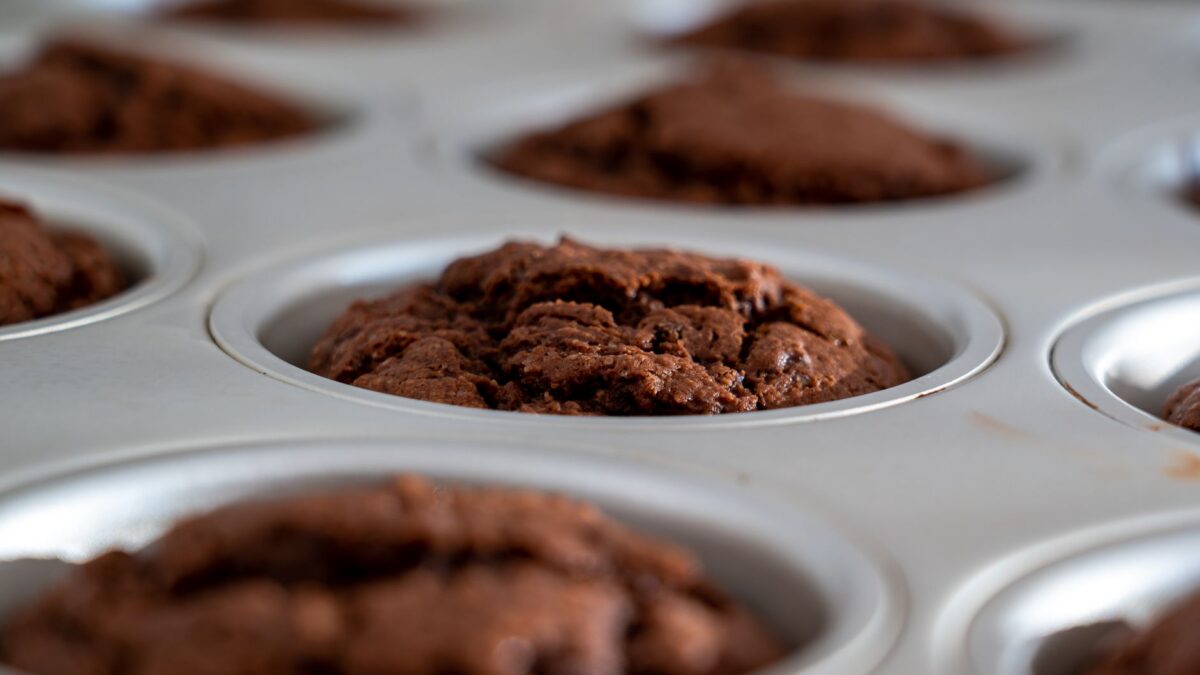
Muffins come out flat on top most often because the baking powder has lost strength, the batter is too thin, the oven is not hot enough or the cups are underfilled. A quick hot-water fizz test checks your baking powder in a minute, and a thicker batter in fuller cups baked in a properly preheated oven usually brings the dome back.
Diagnose your flat muffins
| Cause | Clues | Fix |
|---|---|---|
| Weak or old baking powder | Flat, dense, small muffins; whole batch affected | Fizz test; replace opened cans after about six months |
| Thin batter | Batter pours; tops spread level with the pan | Measure flour accurately; do not add extra liquid |
| Oven too cool | Pale tops, long bake times | Preheat fully; check with an oven thermometer |
| Underfilled cups | Small muffins that never reach the rim | Fill cups three-quarters full or more |
| Batter left standing (soda-only recipes) | Later pans flatter than the first | Bake soon after mixing |
| Wrong leavener or missing acid | Flat and slightly bitter or soapy | Follow the recipe’s soda/powder and acid pairing |
1. Baking powder that has lost strength
Baking powder is a mix of baking soda, one or more dry acids and a starch to keep it dry. Once the can is opened, humidity slowly lets the acid and base react, so less gas is left for your muffins. Clabber Girl, a baking powder manufacturer, says an opened can is best used within about six months, and unopened cans carry a best-by date.
The fizz test
- Stir about 1 teaspoon of baking powder into ⅓ cup (about 80 ml) of warm or hot water. Clabber Girl’s own suggestion uses these amounts.
- Fresh powder bubbles vigorously right away.
- Weak or no fizzing means replace it.
The test only shows that the powder still reacts, not exactly how much rise it will give. Testing by several cooking publications has found that powder can still fizz after it has started to lose rising power. Write the opening date on the can and replace it on schedule. For baking soda, a similar test uses a splash of vinegar or lemon juice. Our guide to baking powder vs baking soda explains how each works.
2. Batter that is too thin
A thin, pourable batter spreads out to fill the cup and rises evenly across the surface, giving a flat top. A thick batter mounds in the cup and pushes up into a dome. The usual reasons for thin batter are too little flour (from inaccurate measuring), extra liquid from fruit or yogurt, or melted butter that was too hot. King Arthur’s weight chart lists 120 g for a cup of all-purpose flour; weighing is the most reliable fix.
3. An oven that runs cool
Domes form when the outside sets quickly and the center keeps rising. In a cool oven, the whole muffin rises slowly and evenly, so the top stays level. Make sure the oven is fully preheated (many need 10–15 minutes beyond the preheat signal for the walls to heat through) and confirm the actual temperature with a thermometer on the middle rack. See oven temperature accuracy for how to check and correct it.
For a stronger lift, many bakers start at 425°F (220°C) for about 5 minutes, then lower the oven to 350°F (175°C) for the rest of the bake without opening the door.
4. Cups that are not full enough
A cup filled halfway produces a small muffin that rises but never crests over the rim, so it looks flat. Fill cups about three-quarters full for a gentle dome, or nearly to the top for bakery-style tops. If your batter does not stretch that far, fill fewer cups rather than spreading it thin. Our guide to tall muffin tops covers this along with the hot-start method.
5. Leavening and timing mistakes
Batter left to stand
Baking soda reacts as soon as it meets liquid and acid, so soda-only batters lose some lift if they sit before baking. Double-acting baking powder releases a second burst of gas in the oven, which makes it more forgiving.
Soda without acid
Baking soda needs an acid such as buttermilk, yogurt, sour cream, brown sugar, honey or natural cocoa. If you replace buttermilk with plain milk in a soda-leavened recipe, the muffins can bake flat and taste soapy. Use a buttermilk substitute instead of plain milk.
Overmixing
Overmixing usually makes peaked, tunneled muffins rather than flat ones, but heavy stirring can also knock out air and leave muffins short and dense.
Quick checklist
- Baking powder opened less than about six months ago, and fizzes in warm water.
- Flour weighed or spooned and leveled.
- Batter thick enough to mound on a spoon.
- Oven fully preheated and verified with a thermometer.
- Cups at least three-quarters full.
- Batter baked promptly after mixing, unless the recipe calls for a rest.
Bottom line
Flat muffins usually point to tired baking powder, thin batter or too little heat at the start. Test or replace the baking powder, measure flour by weight, fill the cups fuller and make sure the oven is truly at temperature.
FAQ
Can I just add more baking powder?
No. Too much leavening can make muffins rise fast and collapse, with a bitter taste. Use fresh powder at the amount the recipe calls for.
Does baking powder expire if unopened?
It lasts longer unopened, but it still has a best-by date. Clabber Girl gives a window of up to about two years from manufacture for unopened cans.
Why are some muffins in the batch flat and others domed?
Uneven filling, hot spots in the oven or the batter standing while you filled the last cups can all cause it.
Are flat muffins safe to eat?
Yes, as long as they are fully baked through. Flat tops are a texture and appearance issue.