Double Chocolate Muffins: Natural vs. Dutch-Process Cocoa and How Leavening Changes
Cocoa is not just flavor: natural cocoa is acidic and Dutch-process is not, which changes how the muffins rise. Here is a standard recipe that works with either.
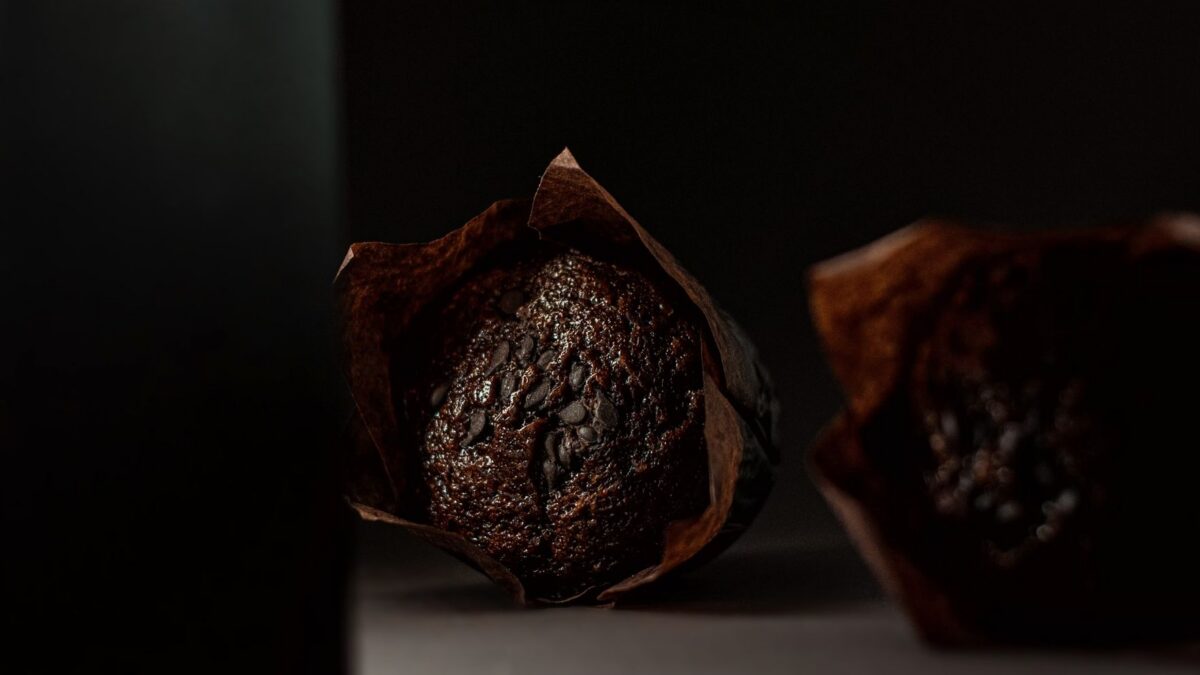
Double chocolate muffins combine cocoa powder in the batter with chocolate chips folded in. The type of cocoa matters because natural cocoa is acidic and Dutch-process cocoa has been alkalized. Baking soda needs an acid, so recipes that rely on soda alone are written for natural cocoa; recipes leavened mainly with baking powder work with either. The recipe below uses both leaveners plus buttermilk or sour cream, so it is forgiving with whichever cocoa you have. Bake at 375°F (190°C) for 18 to 22 minutes.
Weights follow the King Arthur chart: 120 g per cup of all-purpose flour, 42 g per half cup of unsweetened cocoa and 170 g per cup of chocolate chips.
Natural vs. Dutch-process cocoa
| Natural cocoa | Dutch-process cocoa | |
|---|---|---|
| Processing | Cocoa solids with most fat removed, ground | Treated with an alkalizing agent to lower acidity |
| Acidity | Acidic | Neutral to mildly alkaline |
| Color | Lighter reddish-brown | Darker brown to near black |
| Flavor | Sharper, fruitier | Smoother, more mellow and bittersweet |
| Pairs with | Baking soda (supplies the acid soda needs) | Baking powder (has its own acid) |
| Label clues | “Natural,” “unsweetened cocoa” | “Dutch-process,” “alkalized,” “processed with alkali” |
King Arthur’s rule of thumb is that if a recipe uses baking soda and nothing else acidic, choose natural cocoa. Swapping one for the other usually gives decent results in a recipe like this, which already includes buttermilk or sour cream. For a deeper look, see King Arthur’s guide to Dutch-process vs. natural cocoa, and for the leavener chemistry, baking powder vs. baking soda.
Ingredients (12 standard muffins)
- 1/2 cup (42 g) unsweetened cocoa powder, natural or Dutch-process
- 1/2 cup (113 g) hot coffee or hot water
- 1 3/4 cups (210 g) all-purpose flour
- 1 teaspoon baking powder
- 1/2 teaspoon baking soda
- 1/2 teaspoon fine salt
- 2/3 cup (132 g) granulated sugar
- 1/3 cup (71 g) packed light brown sugar
- 2 large eggs, at room temperature
- 3/4 cup (170 g) buttermilk or sour cream
- 1/2 cup (99 g) neutral oil
- 1 1/2 teaspoons vanilla extract
- 1 cup (170 g) semisweet chocolate chips, divided
Method
- Heat the oven to 375°F (190°C), gas mark 5, or about 170°C fan. Line or grease a 12-cup muffin pan.
- In a large bowl, whisk the cocoa with the hot coffee or water until smooth. This is called blooming: hot liquid dissolves the cocoa and releases more of its flavor. Let it cool for 5 minutes.
- In another bowl, whisk the flour, baking powder, baking soda and salt.
- Whisk both sugars into the cocoa mixture, then the eggs, buttermilk or sour cream, oil and vanilla.
- Add the dry ingredients and fold until a few streaks remain. Add 3/4 cup of the chips and fold until just combined.
- Fill the cups nearly full and scatter the remaining chips on top.
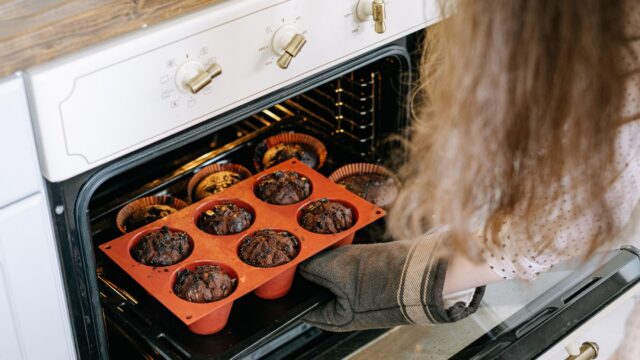
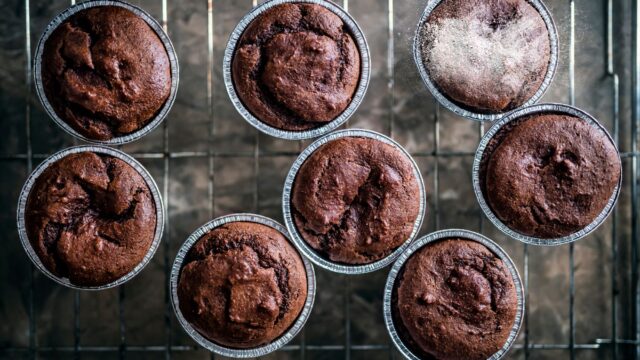
- Bake 18 to 22 minutes. Because the muffins are dark, color is not a reliable cue: they are done when the tops spring back and a toothpick in the crumb shows moist crumbs but no wet batter. An instant-read thermometer should read roughly 200–205°F (93–96°C).
- Cool 5 minutes in the pan, then move to a rack.
Why it works
Two leaveners cover both cocoas. With natural cocoa, the cocoa and buttermilk both react with the baking soda. With Dutch-process cocoa, the buttermilk still provides acid for the soda and the baking powder supplies dependable lift on its own.
Cocoa replaces some flour. Cocoa powder absorbs liquid like flour but adds no gluten, which is why chocolate muffins use less flour than plain ones. Too much cocoa with too little liquid gives a dry, crumbly muffin; the hot coffee in this recipe offsets that.
Oil keeps it moist. Cocoa batters can taste dry, and oil stays liquid at room temperature, so the crumb feels moister than with butter. Coffee does not make the muffins taste of coffee in this amount; it deepens the chocolate flavor. Use water if you prefer.
Swapping cocoas in other recipes
| Recipe leavening | Cocoa to use | If you only have the other one |
|---|---|---|
| Baking soda only, no other acid | Natural | With Dutch-process, replace the soda with roughly 2 to 3 times as much baking powder, or add an acidic ingredient such as buttermilk |
| Baking powder only | Dutch-process or either | Natural usually works; color will be lighter |
| Both, plus buttermilk or sour cream | Either | Swap 1:1 |
Going the other way, King Arthur suggests that when you use natural cocoa in a recipe written for Dutch-process and baking powder, and the recipe calls for more than 3 tablespoons of cocoa, you can replace the baking powder with half as much baking soda.
Variations
- Triple chocolate: use a mix of semisweet, milk and white chocolate chips.
- Mocha: keep the coffee and add 1 teaspoon instant espresso powder.
- Chocolate cherry: fold in 3/4 cup chopped dried cherries in place of half the chips.
- Cupcake style: for a lighter, sweeter cake, see chocolate cupcakes.
Storage and freezing
Store cooled muffins in a container lined with paper towel at room temperature for about 2 to 3 days. Freeze in an airtight bag for longer; warm briefly to soften the chips.
Troubleshooting
| Problem | Likely cause | Fix |
|---|---|---|
| Dry and crumbly | Too much cocoa, overbaked | Weigh cocoa; check at 18 minutes |
| Bitter or soapy | Excess baking soda with Dutch cocoa | Follow the leavening table above |
| Flat, dense tops | Not enough acid for soda; old leavener | Use buttermilk or sour cream; replace old powder |
| Dull flavor | Cocoa not bloomed, too little salt | Bloom in hot liquid; keep the salt |
| Raw middle under a dark top | Judged by color | Use the toothpick or a thermometer |
Food safety and allergens
Do not eat raw batter; the FDA advises that raw flour and raw eggs can carry harmful bacteria until baked. The recipe contains wheat, eggs and milk; many chocolate chips also contain milk and soy and may share equipment with nuts. Check labels and follow medical advice for allergies.
Bottom line
Natural cocoa is acidic and pairs with baking soda; Dutch-process is not and leans on baking powder. Use both leaveners and a cultured dairy, bloom the cocoa in hot liquid and judge doneness with a toothpick, not by color.
FAQ
Can I use hot chocolate mix instead of cocoa?
No. Drink mixes contain sugar, milk powder and other ingredients, so they cannot replace unsweetened cocoa.
Is black cocoa the same as Dutch-process?
It is a very heavily alkalized cocoa. It gives deep color but a drier result, so bakers usually blend it with regular cocoa.
Do I need coffee?
No. Hot water blooms the cocoa just as well. Coffee simply deepens the chocolate flavor.
Can I use melted chocolate in the batter?
You can add 2 ounces (57 g) melted bittersweet chocolate with the oil for extra richness; the muffins will be a little denser.