Can You Freeze Butter? How Long It Keeps, How to Wrap and Thaw It
Yes, butter freezes well. Learn how long it keeps, how to wrap it to prevent freezer odors, and how to thaw it properly for baking, creaming and pastry.
The why behind baking: leavening, gluten, sugar and fat, oven temperature, mixing methods, storage, freezing and food safety for raw flour and eggs.
Yes, butter freezes well. Learn how long it keeps, how to wrap it to prevent freezer odors, and how to thaw it properly for baking, creaming and pastry.
A standard pumpkin pie recipe using canned pumpkin and evaporated milk, with baking temperatures and the jiggle test that shows when the custard is set.
A classic all-butter pie crust with exact amounts, plus how to mix, chill and roll it, and the fixes for a tough, shrinking or soggy crust.
Pumpkin, apple, pecan and sweet potato pie compared by difficulty, with clear advice on which pies you can bake ahead and which are best fresh.
Gluten is why bread is chewy and why overmixed muffins turn tough. Knowing how flour type, water and mixing build it lets you choose the right flour and the right stir.
Both release carbon dioxide to lift your batter, but only one carries its own acid. Knowing which is which explains flat muffins, metallic aftertastes and recipes that call for both.
Muffins freeze better than almost any other bake. The two things that matter are cooling them fully first and keeping air away from them in the freezer.
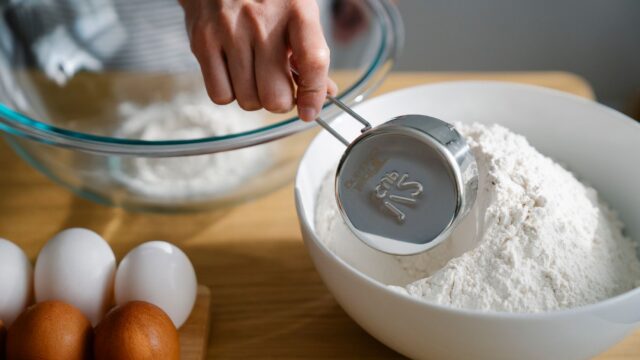
The same cup of flour can weigh 20 percent more depending on how you fill it. That gap is behind many dense muffins, dry cakes and stiff cookie doughs.
Fully baked muffins and cakes are not the concern. Raw batter, no-bake desserts and soft custards are, and the fixes are simple.
Cold eggs can make creamed butter seize and curdle, and cold milk can firm up melted butter into streaks. A few minutes of warming solves both.
We use analytics cookies to see which articles are read. No ads cookies. Privacy policy