Classic Pumpkin Pie With Canned Pumpkin and Evaporated Milk, and How to Tell It Is Set
A standard pumpkin pie recipe using canned pumpkin and evaporated milk, with baking temperatures and the jiggle test that shows when the custard is set.
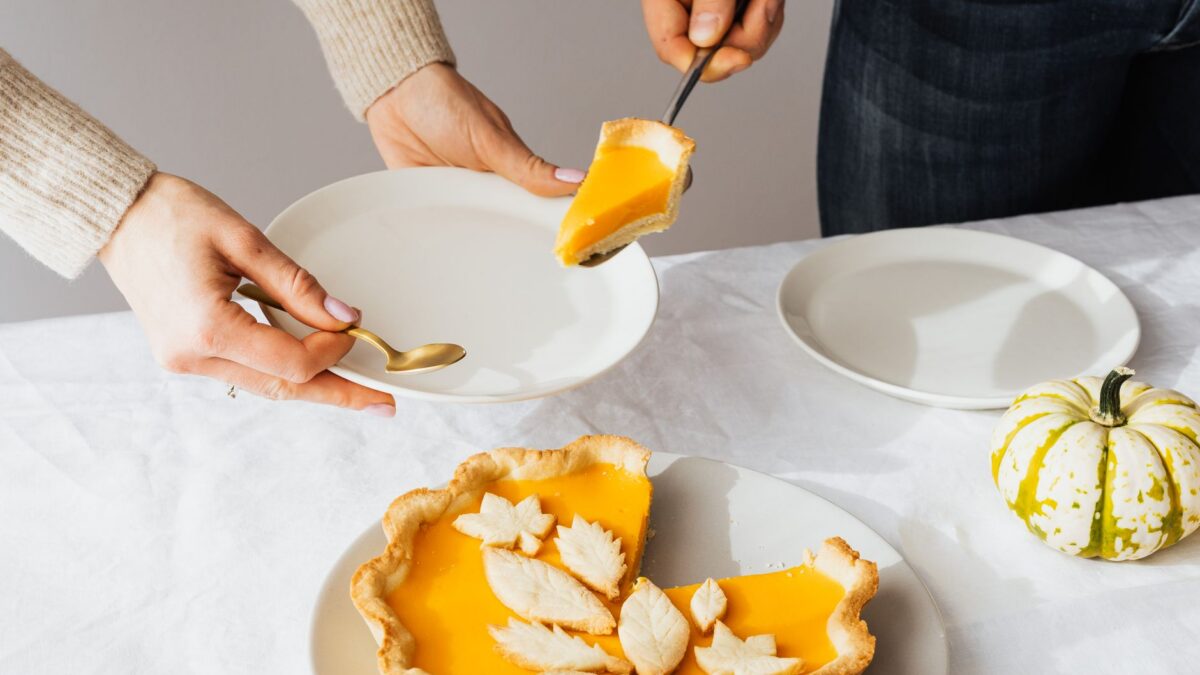
A classic pumpkin pie is a spiced custard of canned pumpkin purée, eggs and evaporated milk baked in a pie crust. It is done when the edges are set and the center still jiggles slightly like gelatin, or when the middle reads about 175°F (80°C) on an instant-read thermometer. The recipe below makes one 9-inch (23 cm) pie.
Ingredients
- 1 unbaked 9-inch (23 cm) pie crust, in a standard (not deep-dish) pie plate
- 1 can (15 oz / 425 g) pumpkin purée, not pumpkin pie filling
- 1 can (12 oz / 354 ml) evaporated milk
- 2 large eggs
- 3/4 cup (150 g) granulated sugar
- 1 teaspoon ground cinnamon
- 1/2 teaspoon ground ginger
- 1/4 teaspoon ground cloves
- 1/2 teaspoon salt
Short on spices? A homemade blend works in place of the individual spices, and our guide to a pumpkin pie spice substitute explains how much to use.
Steps
- Heat the oven to 425°F (220°C) with a rack in the lower third.
- Whisk the sugar, spices and salt in a large bowl. Add the eggs and whisk until combined.
- Stir in the pumpkin purée, then slowly whisk in the evaporated milk until smooth.
- Set the crust on a baking sheet, then pour in the filling. The sheet makes it easier to move the pie and catches spills.
- Bake at 425°F (220°C) for 15 minutes to set the crust.
- Lower the oven to 350°F (175°C) and bake for 40 to 50 minutes more.
- Check for doneness using the tests below. Cool the pie on a wire rack for at least 2 hours before slicing.
How to tell when pumpkin pie is set
Pumpkin pie is an egg custard, so it keeps cooking as it cools. Pull it out slightly early rather than late.
- The jiggle test: gently shake the pie. The outer 1 to 2 inches (3 to 5 cm) should look set, and the center should wobble slightly like gelatin. If a wave ripples through the whole pie, it needs more time.
- The thermometer: an instant-read thermometer in the center should read about 175°F (80°C). Egg custards are set by around that range, and going far above it risks curdling and cracks.
- The knife test: a knife inserted halfway between the center and the edge should come out mostly clean. Because it leaves a slit, many bakers prefer the jiggle or thermometer method.
Why evaporated milk?
Evaporated milk is concentrated, so it adds richness and gives a firm, smooth set with less water than regular milk. Do not swap in sweetened condensed milk, which would make the pie far too sweet and change the set. If you must substitute, a mix of heavy cream and whole milk can work, though the texture will be slightly different.
Fixing common problems
- Cracked top: usually overbaking or cooling too fast. Remove the pie when the center still wobbles and cool it at room temperature away from drafts.
- Soggy bottom: the oven may be too cool or the rack too high. Use the lower rack and the hot first stage, and consider blind-baking the crust for 10 to 15 minutes if yours is thin.
- Burnt crust edge: cover the edge with a ring of foil or a pie shield after the first 15 minutes.
- Weeping or watery filling: generally from underbaking or cutting too early. Cool fully before slicing.
- Curdled or grainy texture: the pie went well past 175°F (80°C).
Storage and food safety
Because the filling contains eggs and milk, pumpkin pie should not sit out for long. After the 2-hour cooling period, refrigerate it and keep it covered. Leftovers keep in the refrigerator for up to 3 to 4 days, and the standard guideline is not to leave a custard pie at room temperature for more than 2 hours total. For baking ahead and preventing cracks, see our guide to make-ahead pumpkin pie.
Variations
- Use a brown sugar and white sugar mix for a deeper caramel note.
- Add a pinch of nutmeg or a bit of black pepper to the spices.
- Add a tablespoon of bourbon or a teaspoon of vanilla to the filling.
- Bake in a graham cracker crust, adding 5 minutes of cooling and checking sooner.
If you have extra purée from a can, our recipe for pumpkin muffins with canned purée uses it well and explains the difference between purée and pie filling.
Quick answers
Can I use pumpkin pie filling instead of purée?
Not in this recipe. Pie filling already contains sugar and spices, so the proportions would be off. Check the can label to make sure you have 100 percent pumpkin.
Do I need to blind-bake the crust?
It is optional with the hot start in this recipe. A short blind bake helps if you want a crisper bottom.
Can I freeze pumpkin pie?
Yes, wrap it well and freeze after baking and cooling. Thaw overnight in the refrigerator, though the crust may soften slightly.