Why Are My Muffins Hard on Top? Oven, Sugar and Storage Fixes
Muffins turn hard or crusty on top from an oven that is too hot, too much sugar, overbaking or poor storage. Find the cause and fix it with these steps.
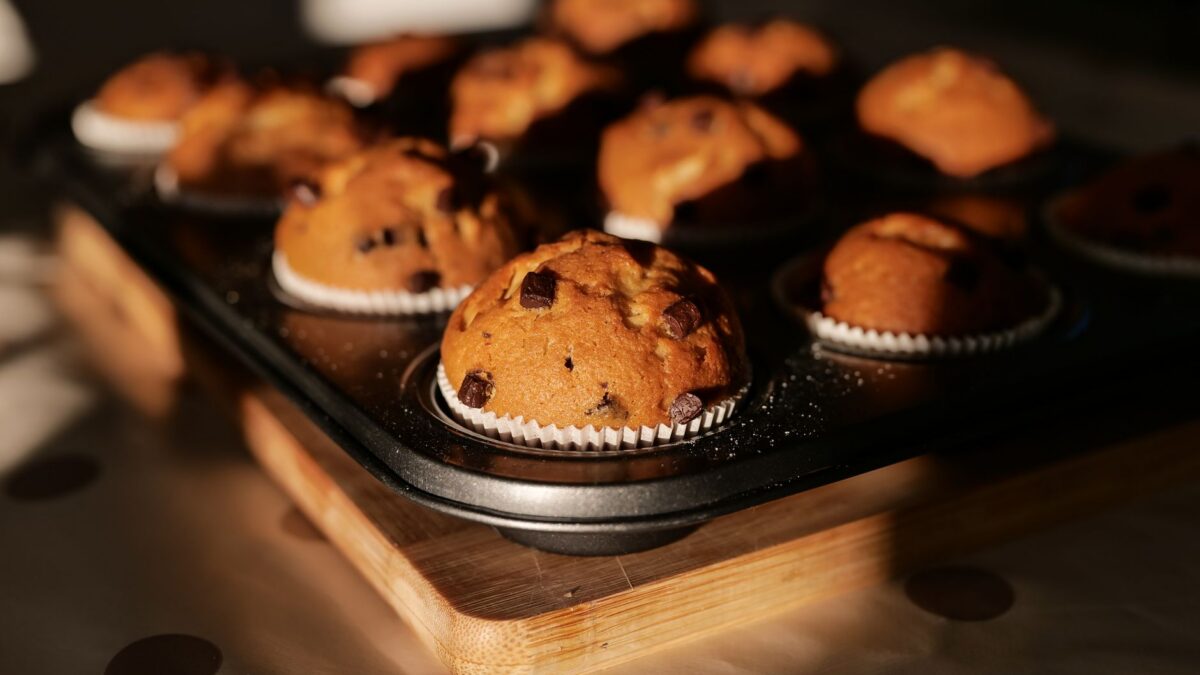
Muffins get a hard or crusty top when the surface dries and sets before the inside finishes baking. The usual causes are an oven running hotter than the dial says, a bake that runs too long, a heavy sugar topping, a batter short on fat or liquid, and storage that dries the top out or traps steam against it. Most of these are fixed by checking the oven with a thermometer, shortening the bake and cooling the muffins correctly.
The answers below start with the most common cause and work down.
Is my oven too hot?
Yes, this is the most frequent reason. Many home ovens run 25°F (about 14°C) or more above or below the set temperature, and a hot oven sets the top into a crust while the middle is still soft. A cheap oven thermometer hung from the middle rack shows the real temperature after the oven has preheated for 15 to 20 minutes.
Standard muffin recipes bake at 350°F to 425°F (175°C to 220°C). The high end gives a taller dome, but it also browns the top fast, so it suits small muffins with a short bake time. If your muffins come out crusty at 400°F (200°C), try 375°F (190°C) and add a few minutes.
- Bake on the middle rack so the tops are not close to the upper heating element.
- Dark metal pans absorb more heat than light ones. Lower the temperature by about 25°F (about 14°C) with dark pans.
- Do not open the door during the first half of the bake. Heat loss makes the oven overcorrect and run hotter.
Did I bake them too long?
Overbaking dries the surface first and makes a leathery or hard top, because the outside loses moisture while the center finishes. Standard-size muffins usually need 18 to 25 minutes, and mini muffins about 10 to 14.
Start checking about five minutes before the earliest time in the recipe. A toothpick pushed into the center should come out clean or with a few moist crumbs, and the top should spring back lightly when pressed. Pull the pan out at that point. Muffins keep cooking from residual heat for a few minutes, so waiting for a deeply browned top usually means the muffins are already overdone.
If gummy centers are your problem instead of dry tops, the opposite fixes apply, and this guide to gummy muffins covers them.
Does too much sugar make the top crusty?
It can. Sugar caramelizes on the surface and then sets hard as it cools, which is how a sugar crust forms. A sprinkle of coarse sugar or a cinnamon-sugar topping gives a crunchy lid on purpose, as in coconut vanilla muffins with a cinnamon-sugar top. If that crunch is unwanted, cut the topping or leave it off.
Sugar inside the batter matters too. Sugar holds water and keeps crumb tender, so a batter with much less sugar than the recipe asks for can bake up drier and tougher. When you reduce sugar, change it in small steps of a tablespoon or two and check the result before cutting more.
If you measure by volume, scoop-and-pack methods can add extra flour or sugar without you noticing. Weighing is more consistent, and a cups to grams converter helps when a recipe is written in cups.
Could the batter be the problem?
Yes. A few batter habits lead to a tough top.
- Overmixing. Stirring after the flour is moistened builds gluten, which makes a chewy, peaked, tough muffin. Mix only until the streaks of dry flour disappear. Lumps are fine.
- Too much flour. Spooning flour into the cup and leveling it gives less flour than dipping the cup into the bag, which packs it.
- Too little fat or liquid. Oil, melted butter, milk, yogurt and sour cream all keep muffins moist. Swapping a full-fat ingredient for a leaner one dries the crumb.
- Overfilled cups. Batter spilling over the rim bakes into a flat, hard shelf around the top. Fill cups about two-thirds to three-quarters full.
Pancake-mix muffins are especially prone to dryness when the ratios are off, and this pancake mix muffin guide lists workable ratios.
Can storage make muffins hard on top?
It can, and it works in two directions. Left uncovered, muffins dry out and the top turns hard within a day. Sealed in a container while still warm, they trap steam, which makes the top sticky first and then leathery as it sits.
Cool muffins in the pan for about five minutes, then move them to a wire rack until they are fully cool. Store them in an airtight container with a folded paper towel on the bottom and another on top to absorb extra moisture. At room temperature they are best within two days.
- For longer storage, freeze cooled muffins in a freezer bag. They keep their quality for about three months.
- Thaw at room temperature, or warm a muffin in a 300°F (150°C) oven for 8 to 10 minutes to refresh the top.
- Muffins with cream cheese, custard or fresh fruit fillings belong in the refrigerator. The USDA Food Safety and Inspection Service has general guidance on keeping perishable foods safe at fsis.usda.gov.
How do I fix muffins that are already hard?
A hard top softens with moisture and gentle heat. Wrap a muffin in a barely damp paper towel and microwave it for 10 to 15 seconds, or cover it loosely with foil and warm it in a 300°F (150°C) oven for about 10 minutes. Split a very dry muffin and brush the cut sides with a little melted butter or warm milk. Stale muffins also work as the base for a bread pudding or can be crumbled over yogurt.
Quick answers
Why are my muffins crusty on the outside and raw inside?
The oven is probably too hot, so the outside sets before the center cooks. Lower the temperature by 25°F (about 14°C), bake a few minutes longer and confirm the real temperature with an oven thermometer.
Should I cover muffin tops with foil during baking?
A loose piece of foil over the pan in the last few minutes slows browning if the tops are getting dark before the center is done. Remove it for the final minute or two if you want a little color.
Why do bakery muffins stay soft on top?
Bakery recipes often use more fat and moisture, and they are sold fresh the same day. At home, a recipe with oil or sour cream and a short, precise bake gives a softer top than a lean recipe baked until deep brown.
Is a sugar-topped muffin supposed to be crunchy?
Yes. A coarse sugar or cinnamon-sugar topping forms a crisp layer by design. If you want it to stay soft, bake without the topping or use a thin glaze after cooling.