Why Are My Muffins Gummy or Raw in the Middle? 7 Causes and Fixes
Gummy or raw muffin centers usually mean a hot oven, overfilled cups or a wet batter. Here are the causes, doneness tests and how to rescue a batch.
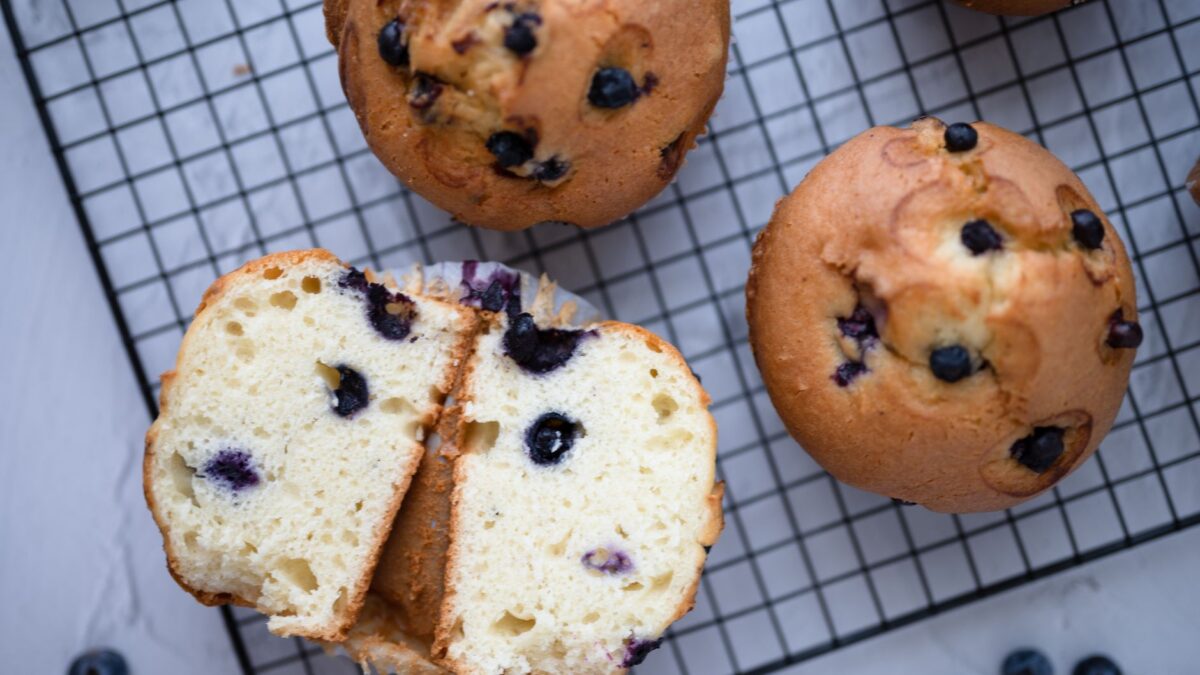
Muffins are gummy or raw in the middle when the center never got hot enough to set before the outside finished browning. The usual causes are an oven running hotter than its dial, cups filled too full, batter with too much liquid or fruit, and pulling the pan out a few minutes early. Most standard muffins bake at 350 to 400°F (175 to 200°C) for about 18 to 25 minutes and are done when a toothpick from the center comes out clean or with a few dry crumbs.
What makes muffins raw in the center?
A raw center comes from heat reaching the outside of the muffin much faster than the middle. These are the most common reasons, roughly in order of how often they happen:
- The oven is too hot. The crust browns and sets quickly, so the muffins look done while the center is still wet batter.
- The cups are overfilled. A muffin cup filled to the brim holds more batter in the center than the recipe’s time allows for.
- The batter is too wet. Extra milk, oil, yogurt or a heavy hand with mashed banana or pumpkin leaves more water to drive off.
- There is a lot of fruit in the batter. Fresh or frozen berries release juice as they bake, and frozen fruit also cools the batter around it.
- The muffins came out too soon. Ovens vary, and the time in a recipe is a guide.
- The oven was not fully preheated, or the door was opened often, which lets heat escape.
- The leavening was weak. Old baking powder or baking soda gives less lift, so the crumb stays dense and damp.
How do I know when muffins are done?
Muffins are done when a toothpick or thin skewer pushed into the center of the middle muffin comes out clean or with a few moist crumbs, with no wet batter. Other signs help confirm it:
- The tops spring back when pressed lightly with a finger.
- The edges have just begun to pull away from the paper or the pan.
- An instant-read thermometer in the center reads about 200 to 210°F (93 to 99°C), the range commonly used for quick breads and muffins.
Test a muffin in the middle of the pan, because the ones on the outside bake faster. If you hit a berry or a chocolate chip, try a second spot, since melted fruit or chocolate can look like raw batter.
Can I put underbaked muffins back in the oven?
Yes, if you catch the problem while the muffins are still warm. Put them back in the pan, return them to the oven at the same temperature, and check every 3 to 5 minutes. If the tops are already brown, lay a loose sheet of foil over the pan so the centers can finish without the crust darkening further. Muffins that have cooled completely can still be rebaked, though the crust will turn drier.
If the gummy layer is only a thin band near the bottom, the batter may have been fine and steam trapped under the muffins caused it; that problem has its own fix in the guide to why muffins get soggy bottoms.
Is it safe to eat a muffin that is raw in the middle?
It is best not to eat raw or gummy batter. Muffin batter contains raw flour and usually raw eggs, and the U.S. Food and Drug Administration advises against eating raw dough or batter because raw flour can carry E. coli and raw eggs can carry Salmonella. Rebake an underdone batch until a toothpick comes out clean, or cut away the wet center.
How do I stop muffins from being gummy next time?
Most gummy centers can be prevented with a few changes to how you measure, fill and bake:
- Check the oven with an oven thermometer. Many ovens run 25°F (about 15°C) or more off the dial; adjust the setting to match.
- Preheat fully, usually 15 to 20 minutes, and keep the door closed for at least the first two-thirds of the bake.
- Fill cups about two-thirds to three-quarters full unless the recipe says otherwise.
- Measure flour by spooning it into the cup and leveling it, or weigh it; too little flour makes a wet batter.
- Toss berries in a spoonful of the flour, and add frozen berries straight from the freezer so they do not bleed.
- Use fresh baking powder and baking soda; replace them if they are past their date or have been open a long time.
- Bake on the middle rack, where heat is most even.
Dark metal pans absorb more heat and brown faster. If you use one, lowering the oven by about 25°F (about 15°C) helps the centers catch up with the edges.
Does mixing affect gummy muffins?
Yes, though overmixing more often makes muffins tough and full of tunnels than raw. Stir the wet and dry ingredients only until no dry flour shows; a lumpy batter is normal for muffins. The guide to muffin tunnels and holes explains what heavy mixing does to the crumb. Undermixing can leave streaks of dry flour, but it rarely causes a wet center.
Quick answers
Why are my muffins gummy even though the toothpick came out clean?
The toothpick may have missed the center or passed through a crack. Muffins can also turn gummy if they sit in the hot pan and steam, so move them to a wire rack after about 5 minutes.
Why are my jumbo muffins raw in the middle?
Jumbo muffins hold much more batter, so they need a lower temperature and a longer bake than standard ones. Lower the oven by about 25°F (about 15°C) and start checking after about 25 minutes.
Can too much banana or yogurt make muffins gummy?
Yes. Mashed banana, pumpkin, applesauce and yogurt all add moisture, and going well over the recipe’s amount leaves a dense, damp center. The same problem shows up in loaves, as the guide to gummy banana bread explains.
Why do my muffins sink and stay wet in the middle?
Muffins that rise and then fall in the center are usually underbaked or have too much leavening or liquid. The guide to why muffins sink in the middle covers each cause.