Muffin Batter Consistency: What Thick and Thin Batter Tell You
Muffin batter should be thick, lumpy and drop from a spoon in heavy ribbons. Here is what too-thick and too-thin batter mean and how to fix each.
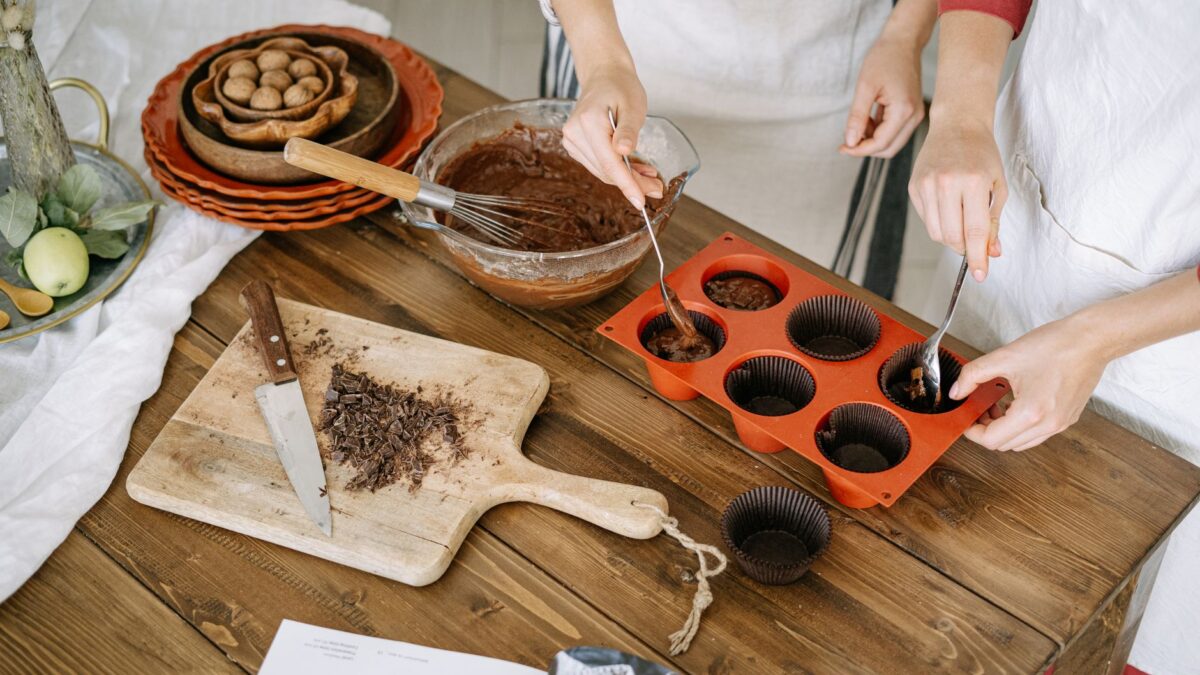
Muffin batter should be thick and lumpy, thicker than pancake batter and looser than cookie dough. It should fall off a spoon in heavy, slow clumps and hold a mound when scooped into the pan, with a few streaks of flour still visible. Batter that pours like cream is too thin, and batter that has to be pushed off the spoon is too thick.
How thick should muffin batter be?
The target is a batter that mounds. Lift the spatula and the batter should drop off in thick pieces rather than run off in a stream. When you scoop it into a cup, the top stays roughly where you put it and does not level itself.
Most standard recipes use a ratio of about 2 cups (250 g) of flour to 1 to 1 1/4 cups (240 to 300 ml) of liquid, with eggs and fat on top of that. That is why the batter lands between a pourable cake batter and a scone dough. The basic muffin recipe on this site follows that balance and works as a reference point when your own batter looks off.
Why is muffin batter supposed to be lumpy?
Lumps are the sign that the flour was mixed in gently. Wheat flour forms gluten as soon as it meets liquid, and every extra stir makes that gluten network stronger. A strong network gives a chewy, tunneled, tough muffin with a pointed top. A weak one gives a tender crumb.
The standard method is to whisk the wet ingredients in one bowl and the dry ingredients in another, pour the wet into the dry, and fold with a spatula until the last dry flour disappears. Stop there, even if small lumps and a few floury streaks remain. They bake out. Stirring until the batter looks smooth almost always means it was mixed too long.
What does too-thick muffin batter mean?
Thick batter that clings to the spoon and has to be scraped into the pan usually has too much flour or too little liquid. The common causes are scooping flour straight from the bag with the measuring cup, which packs it in, and adding extra mix-ins without adjusting anything else.
The result is a dry, dense, crumbly muffin with a short rise and sometimes a pale top. If you see that pattern in finished muffins, the article on crumbly muffins covers the other causes that produce it.
To fix thick batter before baking:
- Add milk, buttermilk or yogurt one tablespoon at a time, folding once after each addition.
- Stop as soon as the batter drops from the spoon in heavy clumps.
- Next time, spoon flour into the cup and level it with a knife, or weigh it.
Some batters are meant to be very stiff. Recipes built on mashed banana, pumpkin puree or thick Greek yogurt hold a lot of moisture in the fruit or dairy, so the batter looks heavy even when the ratios are right. Judge those by the recipe, not by the picture in your head. The banana muffins guide explains how ripeness changes the moisture in that kind of batter.
What does too-thin muffin batter mean?
Batter that pours, spreads across the bowl and levels itself in the pan has too much liquid or too little flour. Typical causes are an extra splash of milk, a heavy hand with the oil, very juicy fruit that has leaked into the mix, or flour measured short.
Thin batter makes muffins that spread instead of rising, flatten on top, or come out gummy and damp in the center because there is not enough structure to set. Fruit also sinks to the bottom, since a loose batter cannot hold pieces in place. The guide on blueberries sinking in muffins goes into that effect in detail, and gummy or raw centers lists the related causes.
To rescue thin batter:
- Fold in flour one tablespoon at a time until the batter mounds on the spoon.
- Let it rest for 5 to 10 minutes. Flour absorbs liquid slowly, and a rested batter often thickens on its own.
- Do not add baking powder to compensate. Extra leavening makes muffins rise fast and then collapse.
Does resting the batter change the consistency?
Yes. A batter that looks slightly loose right after mixing often thickens within 10 to 15 minutes as the flour hydrates. Many bakers rest muffin batter on purpose, and some recipes call for a rest of up to 30 minutes or an overnight chill in the refrigerator. Resting can produce a taller dome and a more even crumb.
Because of this, wait a few minutes before you decide a batter is too thin. Adding flour to a batter that was about to thicken itself is a common way to end up with a dry muffin. Cold batter that has rested is also stiffer than warm batter straight from the bowl, so judge the texture at the same stage each time you bake.
How do mix-ins, fillings and pan size affect what you see?
Add-ins change both the look and the actual moisture of the batter. Fresh berries release juice as they sit, so fold them in last and bake promptly. Frozen berries go in still frozen, since thawed ones bleed color and water. Chocolate chips and nuts absorb little and make the batter look stiffer without changing the crumb.
Pan size matters for what you do next. A thick batter fills mini and standard cups the same way, but it needs a longer bake in jumbo cups, and the dome sets differently. The muffin pan size conversions page lists the batter amounts and times for each size. If you are moving a recipe to a different pan shape, the baking pan size converter shows how the volume compares.
Fill the cups about two thirds to three quarters full. Batter at the right thickness will sit in a rounded mound, and a good rule is to scoop with a spring-loaded scoop or two spoons so it does not smear against the sides.
Quick answers
Is muffin batter thicker than cake batter?
Yes. Muffin batter is thick and lumpy and mounds on a spoon, while most cake batters are smoother and pour or spread into the pan. Cupcake batter, which is closer to cake, is the looser of the two.
Can I mix muffin batter with an electric mixer?
Hand folding is safer. A mixer works the flour quickly and develops gluten before you notice, which gives tough muffins with tunnels. If you use one, use the lowest speed and stop as soon as the dry flour is gone.
Should the batter be thicker for oil or butter muffins?
Both should mound, but oil batters often look a little looser because oil stays liquid at room temperature, while melted butter thickens as it cools. An oil batter that mounds loosely is normal; one that pours like milk still has too much liquid.
How can I tell the batter is ready if I am unsure?
Drag the spatula through the bowl. If the groove stays open for a moment and the batter drops in thick pieces when you lift it, it is ready. If the groove fills at once and the batter runs, add a little flour. If the spatula stands almost upright, add a little liquid.