Why Are My Muffins Dense? 6 Causes of a Heavy Crumb and How to Get Tender Muffins
A heavy, tight muffin crumb has a short list of causes. Most come down to how the flour was measured and how long the batter was stirred.

Muffins turn out dense mainly because the batter was overmixed, which builds gluten, or because it contains too much flour from scooping straight out of the bag. Cold ingredients, stale baking powder and an overloaded batter make it worse. The fix is usually simple: weigh or spoon the flour, stir briefly and check your leavening.
What a muffin crumb should look like
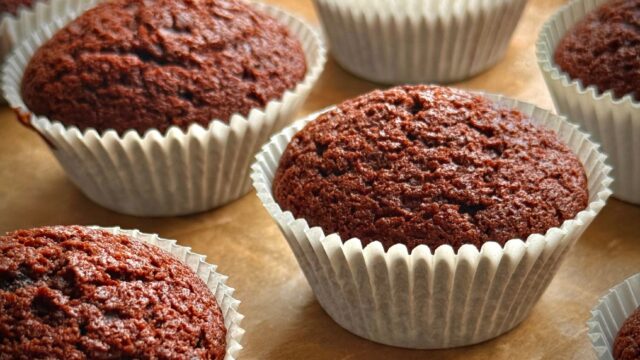
A good muffin has a moist, tender crumb with small, fairly even holes and a slightly rounded top. It is a little coarser than cake, because muffin batters use less sugar and fat and are mixed quickly. A dense muffin has a tight, heavy crumb, often with a gummy or bready feel, and it may be shorter than expected. Before changing the recipe, cut a muffin in half and compare it with the table below.
Cause → fix table
| Cause | What you see | Fix |
|---|---|---|
| Overmixing | Tough, chewy, bready; tunnels; peaked tops | Fold wet into dry only until no dry flour shows |
| Too much flour | Dry, heavy, short muffins; thick, stiff batter | Weigh flour (120 g per cup in King Arthur’s chart) or spoon and level |
| Weak leavening | Short, flat, compact muffins | Replace opened baking powder after about six months |
| Cold ingredients | Lumpy batter, butter flecks that solidify, uneven rise | Bring eggs and dairy to room temperature |
| Too much liquid or wet add-ins | Gummy, damp, heavy center | Drain fruit; keep wet add-ins within the recipe amount |
| Batter sat too long | Less rise than usual, especially with baking soda only | Bake soon after mixing unless the recipe says to rest |
The causes, one by one
Overmixing develops gluten
Wheat flour contains two proteins, glutenin and gliadin, that form gluten when they are hydrated and stirred. Gluten gives bread its chew, which is exactly what you do not want in a muffin. The more you stir, the stronger and more elastic the network gets, and the harder it becomes for gas bubbles to expand evenly. The result is a tougher, denser crumb. Our explainer on what gluten does covers flour types and protein levels.
The muffin method exists to limit gluten: combine dry ingredients in one bowl, wet in another, then fold them together with a spatula in a handful of strokes. Stop as soon as you no longer see dry flour. Small lumps are fine.
Too much flour
Scooping a measuring cup directly into a flour bag compacts the flour, and you can end up with noticeably more than the recipe intended. Extra flour soaks up the liquid, stiffens the batter and limits the rise. If you do not have a scale, fluff the flour, spoon it into the cup and level it with a straight edge. Better still, weigh it. See how to measure flour for the spoon-and-level method and gram weights.
Leavening that has lost strength
Baking powder slowly loses its punch once opened, especially in a humid kitchen. Clabber Girl, a baking powder maker, recommends using an opened can within about six months. Baking soda needs an acid, such as buttermilk, yogurt, brown sugar or natural cocoa, to produce gas; if a recipe relies on soda and you swap the acidic ingredient for plain milk, rise will suffer.
Cold ingredients
Eggs and milk straight from the fridge can make melted butter seize into small solid bits, and cold batter takes longer to heat through in the oven. That gives the leavening less time to work before the crust sets. Taking eggs and dairy out 30–60 minutes ahead usually helps. If you forgot, place whole eggs in a bowl of warm tap water for about 10 minutes, and warm milk briefly so it is just cool to the touch. More in our guide to room-temperature ingredients.
Too much liquid or heavy add-ins
Extra banana, yogurt, pumpkin or thawed berry juice can make the crumb gummy rather than light. Heavy mix-ins such as nuts, chocolate and dried fruit also weigh the batter down. As a rough rule, most standard 12-muffin recipes handle about 1 to 1½ cups of mix-ins; beyond that, the batter cannot support them well.
Batter left standing
Batters leavened with baking soda alone start reacting as soon as the wet and dry ingredients meet. If they sit for a long time, some of that gas escapes before baking. Double-acting baking powder is more forgiving because it releases a second burst of gas in the oven. Some bakery-style recipes deliberately rest batter for thicker domes; follow the recipe if it says so.
How to get a tender crumb: step by step
- Weigh the flour, or spoon and level it.
- Whisk the dry ingredients well so the leavening is evenly distributed and you will not need to stir much later.
- Use room-temperature eggs and dairy.
- Whisk the wet ingredients until smooth in a separate bowl.
- Pour wet into dry and fold with a spatula, scraping the bottom of the bowl, for about 15–20 strokes.
- Fold in mix-ins with the last few strokes.
- Fill the cups and bake in a fully preheated oven.
Do ingredient choices matter?
Yes. Oil-based muffins tend to stay softer than butter-based ones because oil is liquid at room temperature. Acidic dairy such as buttermilk, yogurt or sour cream tenderizes the crumb and gives baking soda something to react with. Swapping in a large share of whole wheat flour makes muffins heavier; many bakers start by replacing a quarter to a third of the all-purpose flour. Cutting sugar sharply can also make muffins denser and drier, because sugar holds moisture and tenderizes.
Bottom line
Most dense muffins come from two habits: scooping flour and stirring too much. Measure accurately, fold briefly, use fresh leavening and room-temperature ingredients, and the crumb should lighten noticeably on the next batch.
FAQ
Is lumpy muffin batter normal?
Yes. Small lumps of flour hydrate during baking. Stirring until the batter is smooth usually means it has been overmixed.
Can I use a mixer for muffin batter?
You can use one for the wet ingredients, but fold wet into dry by hand. A mixer makes it very easy to overmix.
Why are my muffins dense at the bottom only?
A dense or wet bottom layer often means heavy fruit or liquid settled, the oven was not fully preheated, or the batter was very thin. Thicker batter and full preheating help.
Does cake flour make muffins lighter?
Lower-protein flour gives a softer crumb, but it can make fruit muffins fragile. All-purpose flour is the standard for muffins.