What Does Gluten Do in Baking? Flour Protein, Mixing and Tender vs Chewy
Gluten is why bread is chewy and why overmixed muffins turn tough. Knowing how flour type, water and mixing build it lets you choose the right flour and the right stir.
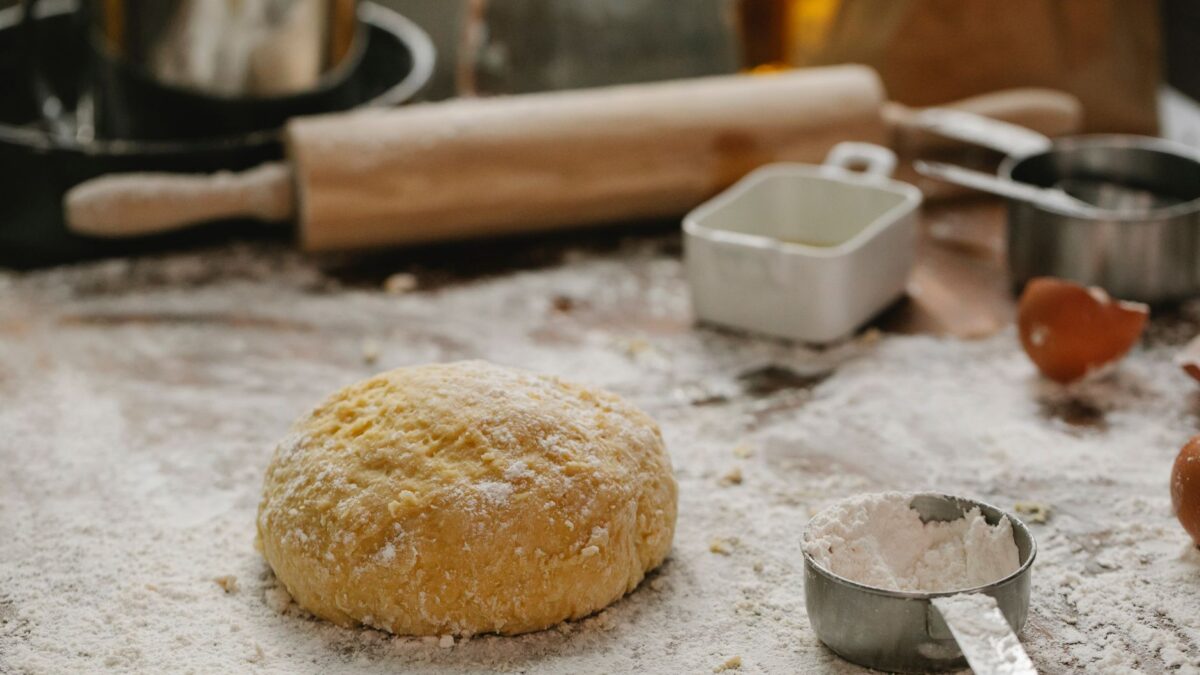
Gluten is a stretchy network of proteins that forms when wheat flour is mixed with water. It traps gas from yeast or baking powder and sets in the oven into the structure that holds a bake up. More gluten, built by higher-protein flour and more mixing or kneading, means chewier, sturdier results like bread. Less gluten means tender, soft results like muffins, cakes and biscuits.
How gluten forms
Wheat flour contains two groups of proteins, glutenins and gliadins. Dry, they do nothing. Once water is added, they hydrate and begin to link. Mixing or kneading stretches and aligns them into long, elastic strands. Glutenins give the network strength and spring; gliadins let it stretch. Together they form a dough that can expand like a balloon as gas forms, then set firm as the proteins cook.
Three things control how much gluten develops:
- Protein content of the flour: more protein, more potential gluten.
- Water: gluten needs water to form. Fat and sugar compete with it.
- Work: stirring, beating, kneading and time all build the network.
Protein levels in common flours
Protein percentages vary by brand and by the wheat used, so check the nutrition panel or the miller’s website. The ranges below are typical for US flours.
| Flour | Typical protein | Gluten potential | Best uses |
|---|---|---|---|
| Cake flour | About 7–9% | Low; very fine, soft texture | Tender layer cakes, chiffon, some cupcakes |
| Pastry flour | About 8–9% | Low to moderate | Pie crust, biscuits, tender cookies |
| All-purpose flour | About 10–12% (King Arthur’s unbleached is listed at 11.7%) | Moderate | Muffins, quick breads, cookies, most cakes |
| Bread flour | About 12–14% | High | Yeast breads, bagels, pizza, chewy cookies |
| Whole wheat flour | High, often 13% or more | Weaker than the number suggests, because bran cuts gluten strands | Hearty breads and muffins, often blended with all-purpose |
All-purpose flour differs by region. Southern US brands are often milled from softer wheat and contain less protein than national brands, which makes them popular for biscuits. UK “plain flour” is often lower in protein than many US all-purpose flours, while UK “strong flour” is the counterpart to bread flour.
If you need cake flour and do not have it, the cake flour substitute method uses all-purpose flour and cornstarch to lower the effective protein.
Gluten in muffins, cakes and cookies
Muffins and quick breads: mix as little as possible
The muffin method combines wet and dry ingredients with a brief stir, leaving the batter lumpy. That is deliberate. Every extra stir builds gluten, and in a thin batter that leads to a tough crumb, peaked tops and long holes known as tunnels. See why muffins get tunnels for what overmixing looks like.
Cakes: fat and sugar keep gluten in check
Butter cakes contain a lot of fat and sugar. Fat coats flour proteins and limits how much water they can reach; sugar attracts water away from them. That is why cake batters can be beaten thoroughly before the flour goes in, and why recipes usually say to mix gently once the flour is added.
Cookies: a small lever for chew
Cookie doughs have little water, so gluten stays limited. Swapping some all-purpose flour for bread flour adds chew; using cake or pastry flour makes cookies more tender. The full set of texture levers is in chewy vs crispy cookies.
Bread: gluten is the goal
Yeast bread relies on a strong, elastic network to hold gas during a long rise. That is why bread recipes call for higher-protein flour and kneading.
How to control gluten
| To get more gluten (chewier, stronger) | To get less gluten (more tender) |
|---|---|
| Use bread flour or a higher-protein all-purpose | Use cake or pastry flour, or all-purpose with some cornstarch |
| Knead or mix longer | Stir only until no dry flour remains |
| Add enough water and give dough a rest to hydrate | Add fat early; coat the flour with butter or oil |
| Keep sugar and fat moderate | Use recipes with more sugar and fat |
| Fold or stretch the dough | Cut cold fat into flour (pastry) rather than mixing it smooth |
Resting batter and dough
Resting lets flour absorb water evenly. In bread, it also lets gluten relax, which makes dough easier to shape. In muffin batter, a short rest thickens the mixture slightly, which some bakers use to help taller tops; the batter should still be mixed only briefly first.
What about gluten-free baking?
Gluten-free flours, such as rice, sorghum or oat flour certified gluten-free, do not form gluten. Gluten-free blends usually include starches and a binder such as xanthan gum or psyllium to mimic its structure. Muffins and quick breads adapt well because they need little gluten in the first place. See gluten-free flour baking for details.
A note on health: people with celiac disease or a wheat allergy must avoid wheat and need certified gluten-free ingredients and care with cross-contact in the kitchen. Follow your doctor or dietitian’s guidance.
Bottom line
Gluten is structure. Choose flour by protein content: low for tender cakes, moderate for muffins and cookies, high for bread. Then match the mixing to the bake: stir muffin batter briefly, mix cakes gently after adding flour, and knead bread. Most tough muffins and chewy cakes come from too much gluten, not too little.
FAQ
Can I use bread flour instead of all-purpose in muffins?
You can, but muffins will be chewier and may dome or tunnel more. Mix even more gently if you try it.
Does sifting reduce gluten?
No. Sifting aerates flour and removes lumps; it does not change protein content.
Is gluten only in wheat?
Gluten proteins come from wheat; related proteins in barley and rye also matter for celiac disease. Oats are naturally gluten-free but are often contaminated unless certified.
Why do some recipes say to rest pancake batter?
Resting lets the flour hydrate and any gluten from mixing relax, giving a more tender pancake.