Why Do My Cookies Spread So Much? Causes and Fixes for Flat Cookies
Thin, greasy cookies that run together on the sheet are almost always a fat-temperature or measuring problem. A short chill and a cool pan fix most batches.
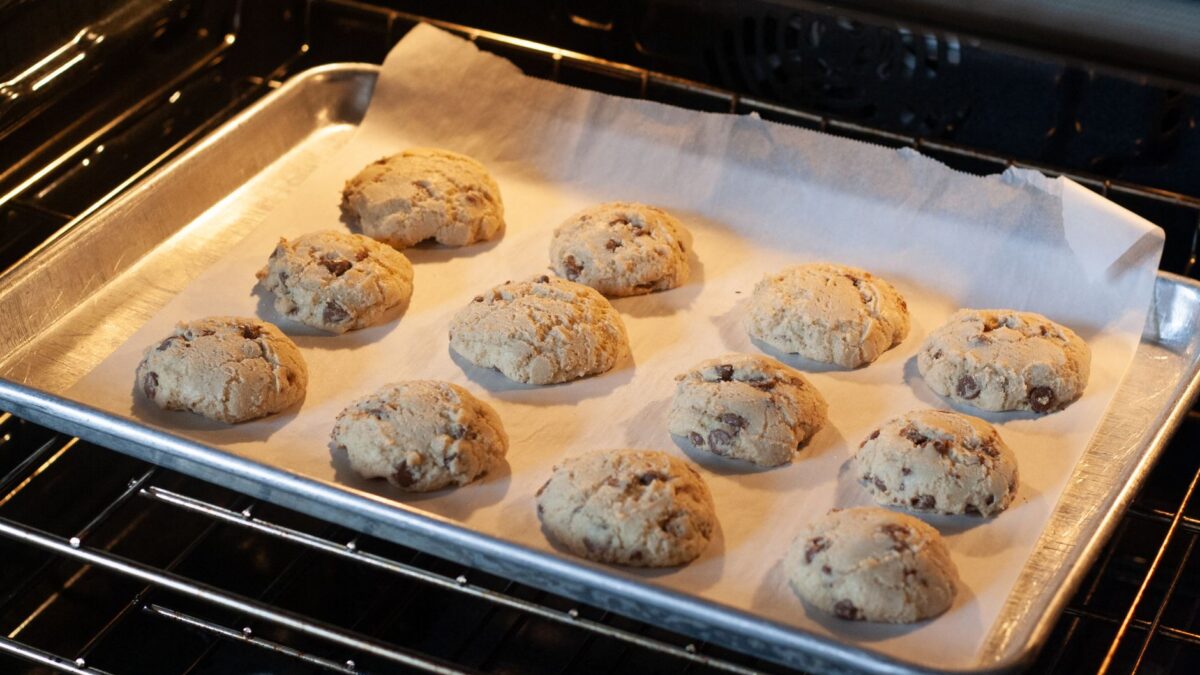
Cookies spread too much when the dough is too warm or too soft before it has a chance to set in the oven. The usual causes are butter that was too soft or melted, too little flour, greased or hot baking sheets, and a high proportion of sugar. Chilling the dough, measuring flour accurately and baking on cool, lined sheets fix most flat cookies.
How spread works
When cookie dough goes into the oven, two things race each other. The butter melts and sugar dissolves, which makes the dough flow outward. At the same time, eggs and flour set into a structure that stops the flow. If the fat melts long before the structure sets, cookies spread thin. If the structure sets quickly, cookies stay thick. Every fix below shifts that balance.
Causes and fixes at a glance
| Cause | Why it spreads | Fix |
|---|---|---|
| Butter too soft or melted | Already-liquid fat flows immediately in the oven | Use butter that is cool and pliable; chill the dough |
| Too little flour | Not enough starch and protein to hold the fat | Weigh flour; check that cups are spooned and leveled |
| Greased baking sheet | Dough slides outward on the fat | Line with parchment or a silicone mat instead of greasing |
| Hot baking sheet | Dough starts melting before it reaches the oven | Cool sheets fully between batches, or rotate two or three sheets |
| High sugar, especially white sugar | Sugar liquefies as it heats and adds to the flow | Follow the recipe; do not add extra sugar |
| Oven too cool | Fat melts slowly while the structure takes even longer to set | Check oven temperature with a thermometer |
| Substituted fat | Spreads and soft margarines contain more water and less fat | Use butter or baking sticks with the fat content the recipe expects |
| Too much leavening, especially soda | Soda weakens structure and encourages spread | Level the measuring spoon; follow the recipe amount |
The main causes in more detail
Butter temperature
Most cookie recipes that cream butter and sugar want butter that is softened but still cool, roughly 65–70°F (18–21°C). Butter that is shiny or greasy has gone too far, and a dough made with it will be soft and sticky. Recipes that use melted butter are designed for it, but they usually depend on chilling to control spread. See why room-temperature ingredients matter for quick ways to get butter to the right point.
Flour measurement
Cookie dough has very little liquid, so small changes in flour matter. Too little flour makes greasy, lacy cookies; too much makes them dry and puffy. King Arthur Baking counts 1 cup of all-purpose flour as 120 g; how to measure flour explains why weighing removes the guesswork.
Sugar type and amount
Granulated sugar melts and flows, so recipes high in white sugar spread more and bake crisp. Brown sugar holds more moisture and tends to give softer, thicker cookies. The relationships are laid out in chewy vs crispy cookies.
Baking sheets
Grease gives dough a slippery surface to run on. Parchment and silicone mats prevent sticking without adding fat. Dark sheets absorb more heat and can brown bottoms before the tops set, while thin sheets can warp. Light-colored, heavy aluminum sheets give the most even results.
How to chill cookie dough
- Scoop the dough into balls first; it is much easier to portion before chilling.
- Set the balls on a lined tray or plate, cover and refrigerate for at least 30 minutes. Many recipes call for longer, and an overnight chill also deepens flavor.
- Bake straight from the fridge. Chilled dough may need a minute or two more in the oven.
- For very soft dough, chill it in the bowl until scoopable, then portion and chill again.
Chilling helps because firm fat takes longer to melt, giving the eggs and flour time to set. It also lets the flour absorb some of the liquid, which thickens the dough.
Pan and oven habits that help
- Use two or three sheets and rotate them so dough never goes onto a warm pan.
- Bake one sheet at a time on the middle rack for the most even heat. If you bake two, swap and rotate them halfway through.
- Space the dough as the recipe directs, usually about 2 inches (5 cm) apart for drop cookies.
- Preheat fully and check the temperature with an oven thermometer.
- Bake a test cookie: if it spreads too much, chill the remaining dough longer or add 1–2 tablespoons of flour before baking the rest.
What if cookies do not spread enough?
The opposite problem has the opposite causes: too much flour, butter that was too cold, very little sugar or a long chill for a recipe that was not designed for it. Let chilled dough sit at room temperature for 10 minutes, or press each ball down slightly before baking.
Food safety note
Cookie dough contains raw flour and usually raw egg. The U.S. FDA advises against eating raw dough because flour is a raw agricultural product that can carry E. coli, and raw eggs can carry Salmonella. Taste after baking, not before.
Bottom line
Flat cookies are mostly about temperature and measuring. Use cool, pliable butter, weigh or spoon and level the flour, line sheets instead of greasing them, put dough only on cool pans, and chill the dough for at least 30 minutes if it feels soft. Bake one test cookie before committing the whole batch.
FAQ
Why did my second batch spread more than the first?
The baking sheet was probably still warm, or the dough warmed up on the counter. Cool the sheet completely and keep the dough in the fridge between batches.
Does parchment paper make cookies spread less?
Compared with a greased sheet, yes, because there is no extra fat for the dough to slide on.
Can I fix dough that is already too soft?
Chill it first. If it still spreads, mix in a tablespoon or two of flour at a time and bake a test cookie.
Why do my cookies spread in a convection oven?
Moving air melts the fat fast. Most manufacturers suggest lowering the temperature by about 25°F for convection; check your oven manual.