Gingerbread Cookies: Molasses Dough, Spice Blend and How to Make Them Soft or Crisp
Gingerbread dough is a molasses-sweetened, spiced cookie dough that rolls and cuts well. Thickness and bake time decide whether the cookies come out soft or snappy.
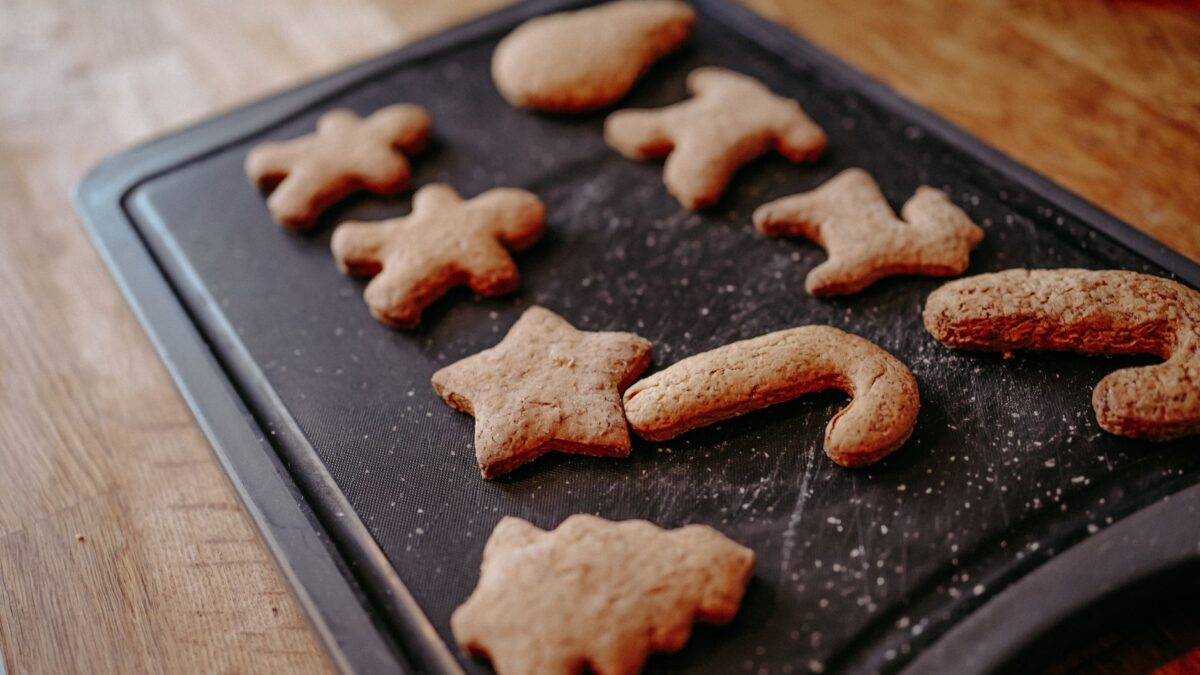
Gingerbread cookies are a rolled dough of flour, butter, brown sugar, an egg and molasses, flavored with ginger, cinnamon and cloves and leavened with a little baking soda. Chill the dough, roll it out, cut shapes and bake at 350°F (175°C). Whether they turn out soft or crisp depends mainly on thickness and bake time: about 1/4 inch, pulled as soon as the centers look just dry, for soft cookies; 1/8 inch, baked until the edges are firm and slightly darker, for crisp ones.
Flour weights use King Arthur’s 120 g per cup convention, spooned and leveled. The dough makes about 24 medium cookies at 1/4 inch, or more when rolled thinner.
Ingredients
- 3 cups (360 g) all-purpose flour, plus a little for dusting
- 1/2 teaspoon baking soda
- 1/2 teaspoon fine salt
- 1 tablespoon ground ginger
- 1 1/2 teaspoons ground cinnamon
- 1/4 teaspoon ground cloves
- 1/4 teaspoon ground nutmeg or allspice (optional)
- 3/4 cup (170 g, 1 1/2 sticks) unsalted butter, softened
- 3/4 cup (160 g) packed brown sugar
- 1 large egg, at room temperature
- 1/2 cup (170 g) unsulphured molasses
- 1 teaspoon vanilla extract
Method
- Whisk the flour, baking soda, salt and spices in a bowl.
- Beat the butter and brown sugar for about 2 minutes, until smooth and lightened slightly.
- Beat in the egg, then the molasses and vanilla. The mixture may look slightly curdled; that is fine.
- Add the dry ingredients on low speed and mix just until a soft, sticky dough forms.
- Divide the dough in half, flatten each half into a disc or roll it between parchment, wrap and refrigerate at least 2 hours, or overnight. Molasses dough is soft and needs a longer chill than plain sugar cookie dough.
- Heat the oven to 350°F (175°C), gas mark 4, or about 160°C fan. Line baking sheets with parchment.
- Roll the dough on a lightly floured surface or between parchment to your chosen thickness (see the table). Cut shapes and place them about 1 inch (2.5 cm) apart.
- Bake one sheet at a time: soft cookies until the edges are set and the centers look just dry; crisp cookies until firm at the edges and slightly darker.
- Cool 5 minutes on the sheet, then move to a rack. Cookies firm up as they cool.
Soft vs crisp: the levers
| Lever | Softer cookies | Crisper cookies |
|---|---|---|
| Thickness | 1/4 inch (6 mm) | 1/8 inch (3 mm) |
| Bake time at 350°F | About 8–10 min, centers just set | About 7–10 min (thin dough bakes fast), until edges are firm and slightly darker |
| Sugar | Brown sugar (more moisture) | Swap up to half for granulated |
| Molasses | Full 1/2 cup | Reduce to 1/3 cup and add 2 tablespoons sugar |
| Storage | Airtight with a slice of bread | Tin with a loose lid, away from soft cookies |
The reason is moisture. Brown sugar and molasses are hygroscopic: they attract and hold water, which keeps cookies soft. Thinner cookies and longer baking drive more water out. For the general version of these levers, see chewy vs crispy cookies.
About molasses and spices
- Molasses: light (mild) molasses gives a sweet, gentle cookie; dark (robust) gives classic gingerbread flavor. Blackstrap is bitter and much less sweet; use only a spoonful mixed with regular molasses, if at all. UK bakers can use black treacle, often with some golden syrup.
- Baking soda reacts with the acid in molasses, giving a little lift and tempering the sharpness. Too much makes cookies puffy and soapy-tasting.
- Spices lose aroma with age. If your ground ginger has been open for a year or more and smells faint, buy a fresh jar.
- For extra heat, add 1/8 teaspoon black pepper or 1 teaspoon finely grated fresh ginger.
Gingerbread for houses vs cookies
Gingerbread for houses and structures is usually a firmer, low-butter dough with little or no leavening, baked until hard. It is meant to stand up, not to be eaten at its best. The cookie dough here is softer and tastier, but it can still make small decorations or a simple house if rolled to 1/4 inch and baked until fully firm. For larger houses, use a dough designed for construction.
Decorating and storage
- Decorate only when cookies are completely cool. A simple glaze or royal icing piped in lines suits the dark surface.
- Royal icing made with raw egg whites should use pasteurized egg whites or meringue powder, since the icing is never cooked.
- Store soft and crisp cookies separately: crisp cookies absorb moisture from soft ones and lose their snap.
- Baked gingerbread keeps in an airtight container for about a week at room temperature and freezes well. See how to freeze Christmas cookies.
- Gingerbread is also one of the sturdier cookies for mailing; see shipping holiday cookies.
Troubleshooting
| Problem | Likely cause | Fix |
|---|---|---|
| Dough too sticky to roll | Not chilled long enough | Chill 2 hours or overnight; roll between parchment |
| Cookies spread and lose shape | Warm dough, too much soda | Chill cut shapes 10 minutes; measure soda level |
| Hard, tough cookies | Too much flour worked in or overbaked | Dust lightly; pull soft cookies when centers look just dry |
| Bitter flavor | Blackstrap molasses or burnt edges | Use light or dark molasses; check oven temperature |
| Crisp cookies went soft | Stored with soft cookies or humid air | Store separately; re-crisp at 300°F for 5 minutes |
Food safety and allergens
Do not eat the raw dough: raw flour and raw eggs can carry harmful bacteria. This recipe contains wheat (gluten), eggs and milk. Gluten-free and dairy-free swaps need certified ingredients and care with cross-contact. Anyone managing allergies or celiac disease should follow their doctor’s or dietitian’s advice.
Bottom line
Chill the molasses dough well, roll it evenly and decide on texture before you cut: 1/4 inch and a short bake for soft gingerbread, 1/8 inch and a longer bake for crisp. Store the two types apart and they will keep their texture through the holidays.
FAQ
Can I make gingerbread dough ahead?
Yes. Wrapped dough keeps in the fridge for about 3 days and freezes for longer. Thaw frozen dough overnight in the refrigerator before rolling.
Can I use honey instead of molasses?
It will bake, but you lose the characteristic flavor and color. Dark brown sugar with a smaller amount of molasses is a closer substitute.
Why are my gingerbread cookies puffy?
Usually too much baking soda or dough rolled thicker than intended. Measure the soda level and roll evenly.
How do I keep gingerbread cookies soft?
Underbake slightly, store airtight and add a slice of bread or an apple wedge to the container, replacing it every day or two.