Oatmeal Cookies With Raisins or Chocolate: Which Oats to Use and How to Control Spread
One standard dough makes chewy oatmeal raisin or oatmeal chocolate chip cookies. The type of oats and the dough temperature decide how much they spread.
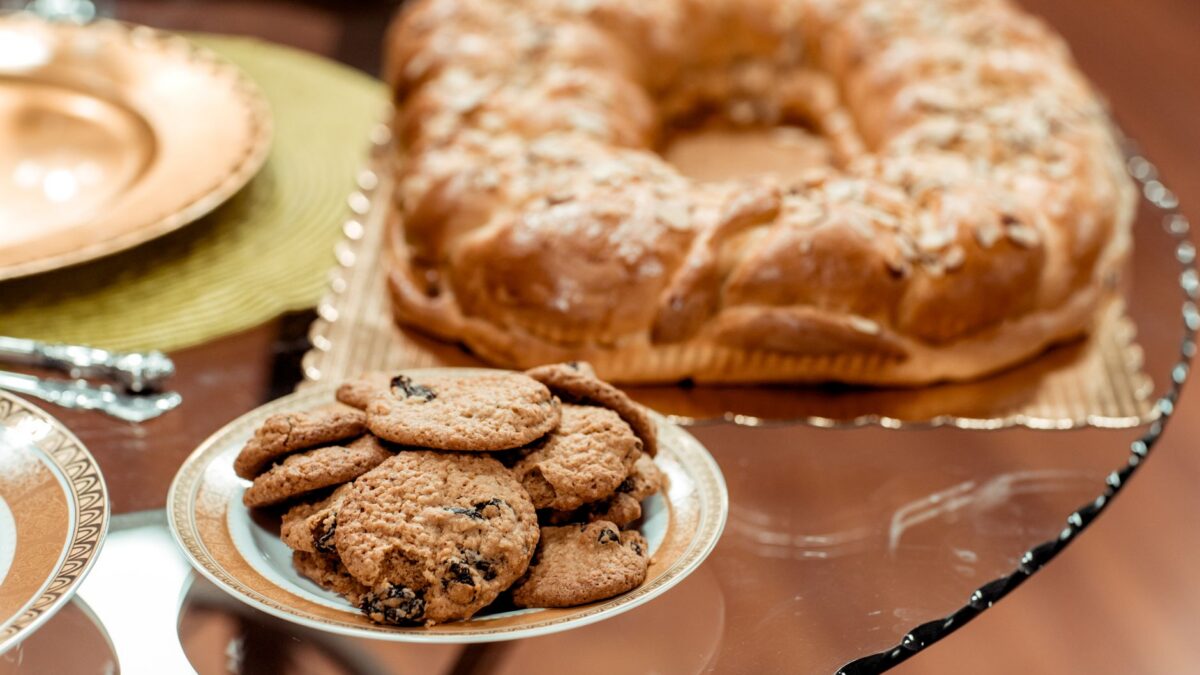
Classic oatmeal cookies use a creamed butter-and-brown-sugar dough with a generous amount of rolled oats, cinnamon and raisins or chocolate, baked at 350°F (180°C) for about 10–13 minutes. Old-fashioned rolled oats give a chewier, more textured cookie that spreads a bit more; quick oats give a thicker, softer, more uniform cookie. Chilling the dough and measuring flour by weight are the most reliable ways to control spread.
Weights follow King Arthur Baking’s ingredient weight chart: 89 g per cup of oats, 120 g per cup of flour, 213 g per cup of packed brown sugar and 149 g per cup of raisins.
Ingredients (about 4 dozen cookies)
- 1 1/2 cups (180 g) all-purpose flour
- 1 teaspoon baking soda
- 1 teaspoon ground cinnamon
- 1/2 teaspoon table salt
- 1 cup (2 sticks, 227 g) unsalted butter, softened
- 1 cup (213 g) packed light or dark brown sugar
- 1/2 cup (99 g) granulated sugar
- 2 large eggs, at room temperature
- 1 teaspoon vanilla extract
- 3 cups (267 g) old-fashioned rolled oats or quick oats (not instant)
- 1 cup (149 g) raisins, or 1 1/2 cups (255 g) chocolate chips, or a mix
- Optional: 3/4 cup (85 g) chopped walnuts or pecans
Method
- Whisk the flour, baking soda, cinnamon and salt together.
- Beat the butter and both sugars on medium speed for about 2 minutes, until creamy and slightly lighter.
- Beat in the eggs and vanilla.
- On low speed, add the flour mixture until just combined. Stir in the oats, then the raisins or chocolate and nuts, by hand.
- Cover and chill the dough for at least 30 minutes, or up to 2 days. This hydrates the oats and limits spread.
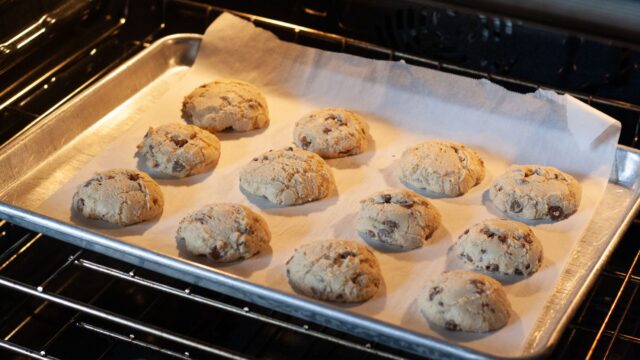
- Heat the oven to 350°F (180°C; 160°C fan; gas mark 4). Line baking sheets with parchment.
- Scoop rounded tablespoons (about 30 g) of dough 2 inches apart.
- Bake 10–13 minutes, until the edges are golden and the centers look just set but still soft. Rotate the sheet halfway if your oven has hot spots.
- Cool 3–5 minutes on the sheet, then transfer to a rack.
Which oats to use
| Oats | What they are | Effect in cookies |
|---|---|---|
| Old-fashioned (rolled) | Whole groats steamed and rolled flat | Chewy, hearty, distinct flakes; slightly more spread |
| Quick-cooking | Rolled thinner and cut smaller | Softer, more uniform and slightly thicker cookies; finer texture |
| Instant | Precooked, very thin, often flavored | Pasty, cakey texture; not recommended |
| Steel-cut | Chopped groats, not rolled | Stay hard and gritty unless pre-cooked; not a swap |
King Arthur Baking’s oatmeal cookie recipe is written to accept either rolled or quick oats, noting that rolled oats give a slightly chewier and heartier texture. Oats keep absorbing moisture as the dough rests, which is one reason a short chill makes such a difference.
Gluten note: oats are naturally gluten-free but are often contaminated with wheat during growing and processing. Only oats labeled certified gluten-free are suitable for people with celiac disease, and even then some people with celiac disease react to oats; follow medical advice.
How to control spread
Oatmeal cookies have a lot of butter and brown sugar and comparatively little flour, so they can spread into thin, lacy disks if conditions are off. The main controls:
- Weigh the flour. Too little flour is a common cause of spread. Packed cups give too much, so scale weights help in both directions; see how to measure flour.
- Chill the dough. Cold butter melts later in the oven, and resting lets the oats soak up moisture.
- Butter temperature. Soft but cool butter, not shiny or greasy, holds air and structure.
- Cool baking sheets. Dough on a hot sheet starts melting before the oven sets it.
- Parchment, not grease. A greased sheet encourages spreading.
- Quick oats absorb more liquid and spread less than rolled.
The full list of causes is in why cookies spread.
Raisins, chocolate and other mix-ins
- Plump the raisins if they are dry: cover with hot water for 10 minutes, then drain and pat dry. They stay juicier and do not pull moisture from the dough.
- Chocolate pairs well with a pinch more salt; reduce the cinnamon to 1/2 teaspoon if you prefer chocolate to lead.
- Other options: dried cranberries or cherries, chopped dates, toasted coconut, or white chocolate with dried cranberries. Keep total add-ins around 1 1/2–2 cups.
- Spice: add 1/4 teaspoon nutmeg or ginger for a warmer flavor.
Chewy or crisp
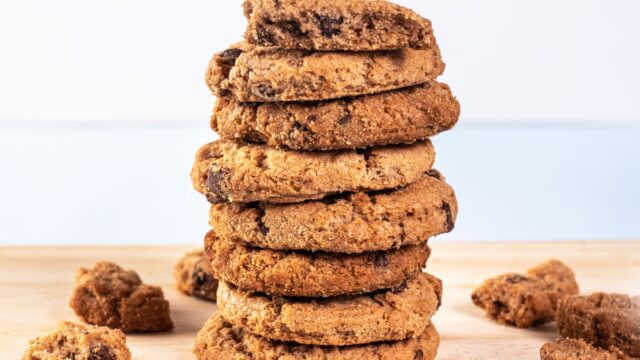
For chewier cookies, keep the high brown-sugar ratio, use rolled oats, scoop larger balls and remove them while the centers still look soft. For crisper cookies, flatten the balls slightly, swap a quarter cup of brown sugar for white and bake 1–2 minutes longer. See chewy vs crispy cookies for the science.
Storing and freezing
Keep cooled cookies airtight at room temperature; a slice of bread in the container helps soft cookies stay soft. Freeze scooped dough balls on a tray, bag them and bake from frozen with a minute or two extra. Baked cookies freeze well wrapped airtight.
Troubleshooting
| Problem | Cause | Fix |
|---|---|---|
| Thin and lacy | Too little flour; warm dough; hot sheets | Weigh flour; chill; cool sheets |
| Dry, crumbly | Overbaked; packed flour; too many oats | Pull earlier; weigh flour and oats |
| Puffy, cakey | Instant oats; too much flour | Use rolled or quick oats; weigh flour |
| Hard raisins | Dry fruit | Plump in hot water first |
Food safety and allergens
Do not eat the raw dough; it contains raw flour and raw eggs, which can carry harmful bacteria until baked. This recipe contains wheat (gluten), eggs and milk, possible tree nuts, and often milk and soy in chocolate chips. Readers with allergies or celiac disease should follow their doctor’s or dietitian’s advice.
Bottom line
Use old-fashioned oats for chew or quick oats for a softer, thicker cookie, weigh the flour, chill the dough and bake at 350°F just until the edges turn golden. That combination gives oatmeal cookies that hold their shape and stay soft in the middle.
FAQ
Can I use quick oats instead of rolled?
Yes, measure for measure. Expect a slightly thicker, softer cookie with a finer texture.
Why are my oatmeal cookies flat?
Usually warm dough, too little flour or greased hot sheets. Chill the dough and weigh the flour.
Can I reduce the sugar?
Modestly. Cutting a quarter of the sugar works, but cookies will be less chewy and brown less.
Can I make them with melted butter?
Yes; they will be denser and chewier and need a chill to stop spreading.