Why Is My Cake Dry? 8 Causes and How to Fix a Dry Cake
A few extra minutes in the oven or an extra half cup of scooped flour is enough to turn a tender cake dry. Here is how to pinpoint the cause and what to do with the cake you already baked.
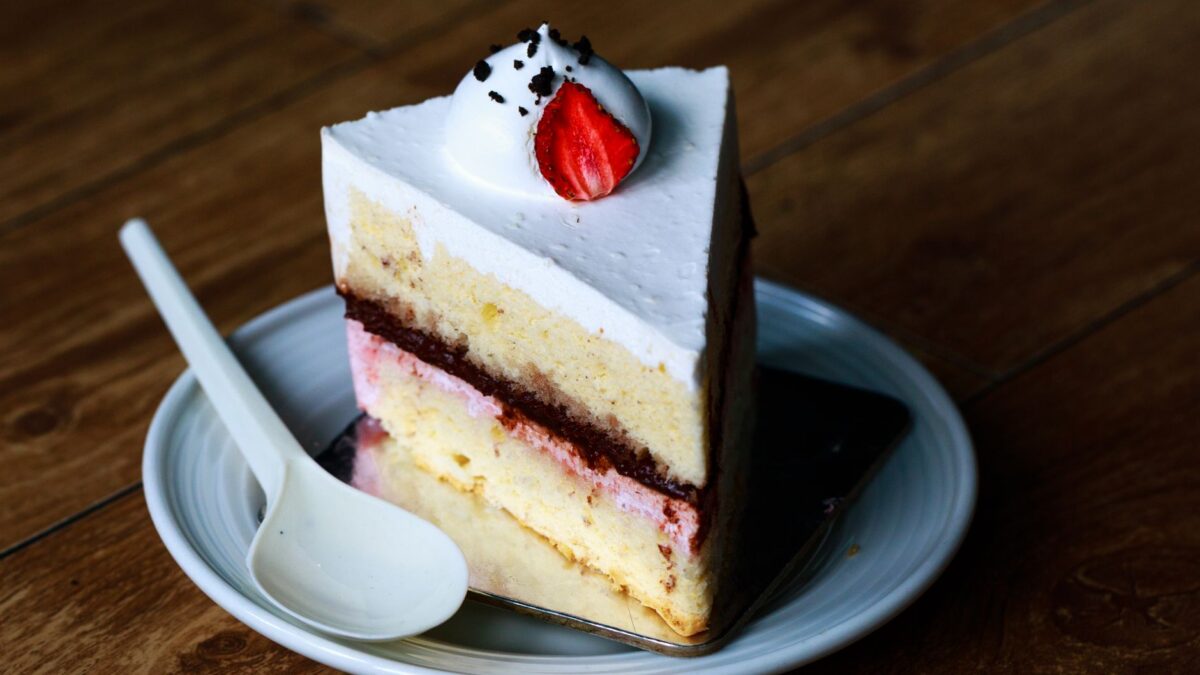
The two most common reasons for a dry cake are overbaking and too much flour, usually from scooping the measuring cup straight into the bag. Other causes include an oven running hot, a pan that is a different size or darker than the recipe expects, too little fat or sugar, and storing the cake uncovered or in the fridge. A dry cake can often be rescued with a simple syrup brushed over the layers.
Causes and fixes at a glance
| Cause | What happens | Fix next time |
|---|---|---|
| Overbaking | Moisture keeps evaporating after the crumb has set | Start checking at the low end of the time range; pull when a toothpick shows a few moist crumbs |
| Too much flour | Excess starch absorbs the liquid and fat | Weigh flour or spoon and level; 1 cup all-purpose = 120 g (King Arthur) |
| Oven running hot | Outside overbakes before the center is done | Check with an oven thermometer |
| Wrong pan size | Thinner layers bake faster and dry out on the recipe’s time | Use the stated pan or adjust time for the new depth |
| Dark or glass pan | Absorbs more heat; edges dry and crusty | Lower the oven by about 25°F (15°C) and check early |
| Too little fat or sugar | Both help keep the crumb tender and moist | Avoid cutting them sharply without adjusting the recipe |
| Overmixing after adding flour | Develops gluten; firm, chewy, dry-feeling crumb | Mix only until no dry flour shows |
| Poor storage | Cut or unwrapped cake loses moisture; the fridge speeds staling | Wrap well; refrigerate only when the filling or frosting requires it |
The main causes in more detail
Overbaking
Once a cake’s structure has set, every extra minute drives off more water. Carryover heat continues to bake the cake for a few minutes after it leaves the oven, so a cake that tests perfectly dry with a toothpick in the oven may end up a little overdone. Pull it when the toothpick comes out clean or with a few moist crumbs and the center springs back. Layer cakes generally read about 205–210°F (96–99°C) in the center, according to Kansas State University Extension guidance.
Too much flour
Scooping flour packs extra into each cup, sometimes a quarter more. In a recipe with 2 1/2 cups of flour, that can add more than half a cup. The batter feels thick, the cake bakes up tight and dry, and it stales quickly. The guide to how to measure flour shows the spoon-and-level method and gram weights.
Pan size, color and material
A 9-inch round pan has about a quarter more area than an 8-inch one, so the same batter bakes into a thinner layer that finishes sooner. Dark metal and glass absorb and hold more heat than light aluminum, which can overbake the outer inch. Oven manufacturers such as GE and Maytag suggest lowering the temperature by about 25°F (15°C) for glass or dark nonstick pans; check your pan and oven instructions.
Not enough fat, sugar or liquid
Sugar is hygroscopic, meaning it holds water in the crumb, and it slows gluten and starch from firming up. Fat coats flour proteins and keeps the crumb tender. Cutting either one by a large amount changes texture more than flavor; the article on what sugar does in baking explains how far you can usually go.
Storage
Cut cake dries from the exposed surface. Refrigeration also makes the starch in cake firm up faster, so an unfrosted cake can taste staler after a day in the fridge than on the counter. Cakes with cream cheese frosting, whipped cream, custard or fresh fruit fillings still need refrigeration for food safety; just keep them well covered.
How to rescue a dry cake
Simple syrup soak
Brushing layers with syrup is a standard bakery technique. A basic syrup is equal parts sugar and water.
- Combine 1/2 cup (100 g) granulated sugar and 1/2 cup (120 ml) water in a small saucepan.
- Heat, stirring, until the sugar dissolves completely. Remove from the heat.
- Add flavor if you like: 1/2 teaspoon vanilla extract, a strip of citrus zest, or a tablespoon of citrus juice or coffee.
- Cool to room temperature.
- Level the cake layers if needed, then brush or spoon the syrup evenly over each cut surface, a little at a time, letting it soak in before adding more.
- Assemble and frost as usual. A thin layer of frosting helps seal moisture in.
This amount is usually enough for two 8- or 9-inch layers. Use less on thin layers so they do not turn soggy.
Other fixes
- Add moisture with fillings: fruit compote, jam, lemon curd or whipped cream between layers.
- Serve it warm: a few seconds in the microwave softens a slice; serve with custard, ice cream or fruit sauce.
- Repurpose it: cubes of dry cake work well in trifles and bread-pudding-style desserts, where they soak up cream or custard.
- Make crumbs: toast them for a topping, or mix with frosting for cake pops.
Prevention checklist
- Weigh flour, or spoon and level it.
- Check your oven with a thermometer and preheat fully.
- Use the pan size and type the recipe calls for.
- Set a timer for the earliest time in the recipe and test in the center.
- Cool layers on a rack, then wrap them once they are completely cool.
- Store frosted, cut cake with the cut faces covered.
The same overbaking and flour issues are behind dry muffins, so the fixes carry over.
Bottom line
Start with the two big culprits: measure flour by weight or spoon and level, and take the cake out as soon as the center springs back and a toothpick shows a few moist crumbs. Check pan size and oven accuracy next. For a cake that is already dry, a sugar-and-water syrup brushed on the layers and a moist filling go a long way.
FAQ
Does oil make a cake moister than butter?
Oil stays liquid at room temperature, so oil-based cakes tend to feel moister, especially after a day or two. Butter gives more flavor. Many recipes are designed around one or the other.
Can I add extra milk to make a cake moist?
Adding liquid without changing anything else can make the cake gummy or sink. Fix the measuring and baking time first.
Should I wrap cake layers while warm?
Wrap them only when completely cool; wrapping warm layers traps steam and can make the surface sticky.
Why is my cake dry on the edges but fine in the middle?
The edges overbaked, often because of a dark pan, a hot oven or a long bake. Lower the temperature slightly or use cake strips around the pan.