Vanilla Cupcakes: A Standard Recipe With Cups and Grams, Fill Level and Cooling Tips
Twelve classic vanilla cupcakes from a standard butter-cake ratio, plus the details that decide the result: room-temperature ingredients, a two-thirds fill and prompt cooling.
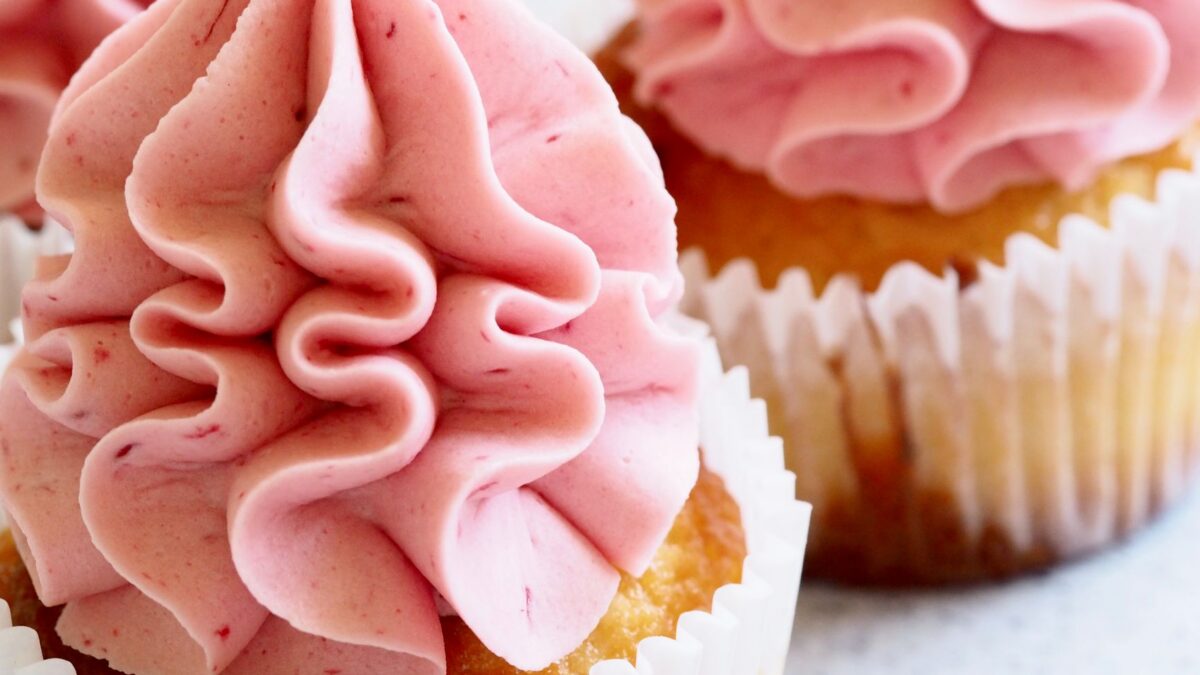
Standard vanilla cupcakes are a small butter cake: butter and sugar creamed until light, eggs beaten in, then flour and milk added alternately. Fill liners about two-thirds full and bake at 350°F (180°C) for 18–22 minutes, until the tops spring back and a toothpick comes out clean. Move them to a rack within a few minutes so the bottoms do not steam and the liners do not peel away.
The recipe makes 12 standard cupcakes. Weights follow King Arthur Baking’s chart: 120 g per cup of all-purpose flour, 198 g per cup of sugar and 113 g per stick of butter.
Ingredients (12 standard cupcakes)
- 1 1/2 cups (180 g) all-purpose flour
- 1 1/2 teaspoons baking powder
- 1/4 teaspoon table salt
- 1/2 cup (113 g) unsalted butter, softened to cool room temperature
- 3/4 cup (149 g) granulated sugar
- 2 large eggs, at room temperature
- 2 teaspoons vanilla extract
- 1/2 cup (113 g) whole milk, at room temperature
Method
- Heat the oven to 350°F (180°C; 160°C fan; gas mark 4) with a rack in the center. Line a standard 12-cup muffin pan with paper liners.
- Whisk the flour, baking powder and salt together.
- Beat the butter and sugar with a mixer on medium-high for 2–3 minutes, until pale and fluffy. Scrape the bowl.
- Beat in the eggs one at a time, then the vanilla. The mixture may look slightly curdled; it will come together when the flour goes in.
- On low speed, add one third of the flour mixture, then half the milk, then flour, milk and the last of the flour, mixing only until each addition disappears. Finish by folding with a spatula.
- Divide among the liners, filling each about two-thirds full (about 3 level tablespoons, or a level standard cookie scoop plus a little more).
- Bake 18–22 minutes, rotating the pan halfway if your oven has hot spots. Cupcakes are done when the tops are pale gold, spring back when pressed and a toothpick from the center comes out clean or with a few dry crumbs.
- Cool in the pan for 3–5 minutes, then lift each cupcake onto a rack. Cool completely, about 1 hour, before frosting.
How full to fill cupcake liners
Fill level controls both the shape of the top and whether batter spills over.
| Fill level | Result | Best for |
|---|---|---|
| Half full | Flat top below the rim | Thick frosting, filled cupcakes |
| Two-thirds full | Gentle dome at or just above the rim | Most frosted cupcakes (recommended) |
| Three-quarters full | Higher dome, risk of a lip | Unfrosted or glazed cupcakes |
| Full | Overflow, mushroom tops, sticking | Avoid for cake batter |
Cake batter is thinner than muffin batter and rises more, so it should not be filled as high as muffins. A scoop gives even cupcakes that bake at the same rate. For pan capacities across mini, standard and jumbo cups, see muffin pan sizes and conversions.
Why it works
- Creaming beats tiny air bubbles into the butter with the sharp edges of sugar crystals. Baking powder enlarges those bubbles in the oven, which gives a fine, even, cake-like crumb rather than the coarser crumb of muffins.
- Room-temperature ingredients blend into a smooth emulsion. Cold eggs or milk can make the creamed butter seize and lose air. More detail in why ingredient temperature matters.
- Alternating dry and wet keeps the batter from curdling and avoids long mixing, so the gluten stays relaxed and the crumb tender.
Cooling: the step that saves the liners
A hot cupcake left in a metal pan keeps releasing steam. That moisture condenses between the liner and the cake, which makes bottoms damp and liners peel away from the sides. Lifting cupcakes onto a rack after a few minutes lets the steam escape. Do not frost until they are completely cool, or the frosting will melt and slide. If your liners still stick or separate, the causes and fixes are covered in why muffins stick to liners.
Variations
- Bakery-white crumb: use 4 large egg whites in place of 2 whole eggs and clear vanilla; the crumb is paler and slightly drier.
- Buttermilk: swap the milk for buttermilk and add 1/4 teaspoon baking soda for a more tender, slightly tangy cake.
- Sprinkles: fold 1/3 cup rainbow jimmies into the finished batter; nonpareils tend to bleed.
- Lemon: rub the zest of 1 lemon into the sugar before creaming.
- Mini cupcakes: the batter makes about 36 minis; bake 10–14 minutes.
Frosting
A batch of simple buttercream made with 1 cup (227 g) butter is enough for a generous swirl on 12 cupcakes. For a thin spread, half a batch is plenty.
Storing
Unfrosted cupcakes keep best in an airtight container at room temperature for a day or two, or wrapped and frozen for longer. Cupcakes frosted with butter-and-sugar buttercream can sit at cool room temperature for a short time; cupcakes with cream cheese frosting, whipped cream or custard fillings are perishable and belong in the refrigerator. Follow the general USDA rule not to leave perishable foods out for more than 2 hours.
Troubleshooting
| Problem | Cause | Fix |
|---|---|---|
| Sunken centers | Underbaked; oven opened early; too much leavening | Bake to spring-back; keep the door closed for the first 12 minutes |
| Peaked, cracked tops | Oven too hot; overmixed batter | Check with an oven thermometer; mix on low |
| Dense or rubbery | Underbeaten butter and sugar; overmixing after flour | Cream 2–3 minutes; fold in the last flour by hand |
| Dry | Overbaked; packed flour | Weigh flour; start checking at 17 minutes |
| Uneven sizes | Eyeballed portions | Use a scoop |
Food safety and allergens
Do not taste raw batter; raw flour and raw eggs can carry harmful bacteria until baked, per the FDA. This recipe contains wheat (gluten), eggs and milk. Gluten-free and dairy-free versions need suitable certified ingredients and care with cross-contact; anyone with allergies or celiac disease should follow their doctor’s or dietitian’s advice.
Bottom line
Cream room-temperature butter and sugar well, add flour and milk gently, fill liners two-thirds full, bake until the tops spring back and move cupcakes to a rack promptly. Those habits give level, tender cupcakes that hold frosting.
FAQ
Can I use oil instead of butter?
Yes, but switch to a mix-and-stir method. Oil cupcakes are moister and stay soft longer but have less buttery flavor and a slightly coarser crumb.
Why are my cupcakes pulling away from the liners?
Usually steam trapped by cooling in the pan, or humid storage. Move them to a rack after a few minutes and store only once fully cool.
Can I make the batter ahead?
Baking-powder batter is best baked right away. Bake the cupcakes ahead and freeze them unfrosted instead.
Do I need a stand mixer?
No. A hand mixer creams this amount of butter easily; a wooden spoon works with very soft butter and patience.