Classic Blueberry Muffins: A Standard Recipe in Cups and Grams, Fresh or Frozen Berries
A thick, lightly sweet batter, a hot oven and a sprinkle of coarse sugar are all it takes. Here is the standard formula, why it works and how to handle frozen berries.
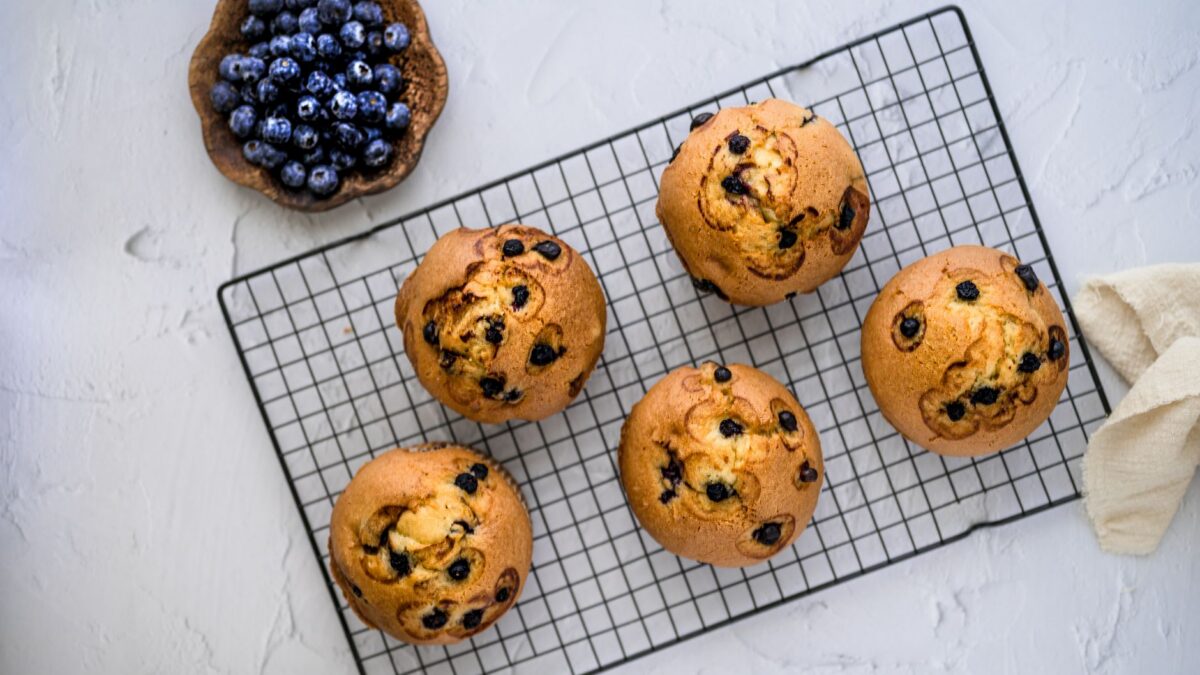
Classic blueberry muffins follow a simple, well-established ratio: about 2 cups of flour, 2/3 to 3/4 cup of sugar, 2 eggs, 1 cup of dairy and 1/2 cup of fat, with roughly 1 1/2 cups of berries folded in at the end. Bake at 400°F (200°C) for 18 to 22 minutes, until a toothpick comes out clean. A thick batter keeps the berries suspended, and a sprinkle of coarse sugar gives the domed tops their crunch.
The recipe below uses the muffin method (wet into dry, stirred briefly), so it needs no mixer. Flour weights follow the King Arthur convention of 120 g per cup of all-purpose flour, spooned and leveled.
Ingredients (12 standard muffins)
- 2 cups (240 g) all-purpose flour
- 2 1/2 teaspoons baking powder
- 1/2 teaspoon fine salt
- 3/4 cup (149 g) granulated sugar
- 2 large eggs (about 100 g without shells), at room temperature
- 3/4 cup (170 g) milk, plus 1/4 cup (57 g) sour cream or plain yogurt; or 1 cup (227 g) buttermilk
- 1/2 cup (99 g) neutral oil, or 8 tablespoons (113 g) butter, melted and slightly cooled
- 1 1/2 teaspoons vanilla extract
- 1 teaspoon finely grated lemon zest (optional)
- 1 1/2 cups (210–255 g) fresh or frozen blueberries
- For the top: 2 tablespoons coarse (turbinado or sparkling) sugar, or granulated sugar
If you use buttermilk instead of milk, add 1/4 teaspoon baking soda to the dry ingredients to balance its acidity. See the buttermilk substitute guide if you have none on hand.
Method
- Heat the oven to 400°F (200°C), gas mark 6, or about 180°C in a fan oven. Line a standard 12-cup muffin pan with paper liners or grease it well.
- In a large bowl, whisk the flour, baking powder, salt and sugar. If using lemon zest, rub it into the sugar first with your fingertips to release its oils.
- In a second bowl or a large measuring jug, whisk the eggs, milk, sour cream or yogurt, oil or melted butter and vanilla until smooth.
- Pour the wet ingredients into the dry ones. Stir with a spatula about 10 to 15 strokes, just until no dry flour shows. The batter should be thick and lumpy.
- Fold in the blueberries with 3 or 4 more strokes. If they are frozen, add them straight from the freezer; do not thaw them.
- Divide the batter among the cups. They will be full to the rim, which is what helps the tops dome. A 1/3-cup scoop or a large ice cream scoop makes this even.
- Sprinkle the coarse sugar over the tops.
- Bake 18 to 22 minutes (frozen berries may need 2 to 4 minutes more), until the tops are golden, spring back when pressed and a toothpick in the center comes out clean or with a few moist crumbs. An instant-read thermometer should show roughly 200–205°F (93–96°C).
- Cool in the pan for 5 minutes, then move the muffins to a rack. Leaving them in the pan traps steam and softens the bottoms.
Why this recipe works
Thick batter holds the fruit. Blueberries are heavier than a loose, runny batter, so they sink to the bottom. A batter with roughly as much flour by volume as liquid stays stiff enough to suspend them. Tossing berries in flour helps far less than a thick batter does; the full explanation is in why blueberries sink in muffins.
Minimal mixing keeps the crumb tender. Once liquid meets wheat flour, gluten starts forming. A few lumps mean you stopped in time; a smooth batter usually means tunnels and a tougher crumb.
Oil or butter is a choice, not a rule. Oil stays liquid at room temperature, so oil-based muffins feel moister on day two. Butter gives more flavor and a slightly firmer crumb. Both work at the same volume in this recipe.
The hot oven gives height. At 400°F the outer batter sets quickly while the center keeps rising, which pushes up a dome. For even taller tops, some bakers start at 425°F (220°C) for 5 minutes, then lower to 375°F (190°C) without opening the door.
Fresh vs. frozen blueberries
| Berries | How to use | What to expect |
|---|---|---|
| Fresh | Rinse, dry well on a towel, remove stems | Clean color, slightly shorter bake |
| Frozen cultivated | Add straight from the freezer, fold gently | Some purple streaks; add 2–4 minutes |
| Frozen wild (small) | Add frozen; a quick rinse in cold water, then pat dry, reduces bleeding | More berries per bite, more color bleed |
| Thawed frozen | Not recommended | Juice turns the batter gray-blue and wet |
Weights vary: King Arthur’s ingredient chart lists 1 cup of fresh or frozen blueberries at 140 to 170 g, depending on berry size.
Variations
- Streusel top: rub together 1/4 cup (30 g) flour, 1/4 cup (53 g) packed brown sugar, 2 tablespoons (28 g) cold butter and a pinch of cinnamon. Use instead of coarse sugar.
- Lemon blueberry: increase the zest to the grated peel of 1 lemon, and brush the warm tops with a simple lemon glaze.
- Part whole wheat: replace up to 1/2 cup (60 g) of the flour with whole wheat flour (about 57 g). Expect a slightly denser, nuttier muffin.
- Other berries: raspberries or chopped strawberries work at the same volume, but they are juicier; pat them dry and expect a softer crumb.
Storage and freezing
Cool the muffins completely before covering them, or condensation will make the tops sticky. Bakers commonly keep fruit muffins at room temperature in a loosely covered container for 2 to 3 days; a paper towel in the container absorbs extra moisture. For longer storage, freeze them in an airtight bag, then thaw at room temperature or warm briefly in the oven. Details are in how to freeze muffins.
Troubleshooting
| Problem | Likely cause | Fix |
|---|---|---|
| Berries all at the bottom | Batter too thin | Measure flour by weight; do not add extra milk |
| Gray or purple batter | Thawed or overmixed frozen berries | Fold in frozen berries last, with few strokes |
| Flat tops | Old baking powder, cups underfilled, oven too cool | Fresh powder, fill cups to the rim, check oven temperature |
| Raw, wet center | Frozen berries chilled the batter | Bake a few minutes longer; check with a thermometer |
| Tough with tunnels | Overmixing | Stop stirring as soon as dry flour disappears |
Food safety and allergens
Do not taste the raw batter. The FDA notes that flour is a raw agricultural product and can carry E. coli, and raw eggs can carry Salmonella; baking makes the muffins safe. See the FDA’s guidance on handling flour safely. This recipe contains wheat, eggs and milk. Gluten-free or dairy-free versions need certified ingredients and care with cross-contact; anyone with a food allergy or celiac disease should follow their doctor’s or dietitian’s advice.
Bottom line
Keep the batter thick, mix it briefly, add frozen berries still frozen, fill the cups to the top and bake hot. Those four habits fix most blueberry muffin problems before they start.
FAQ
Should I toss blueberries in flour before adding them?
It is harmless but does little on its own. A thick batter is what keeps berries suspended; flour coating mainly helps with frozen berries by absorbing surface ice.
Can I use less sugar?
You can reduce it to about 1/2 cup (99 g) without major problems. Muffins will brown less and dry out a little faster, because sugar holds moisture.
How full should I fill the cups?
For this recipe, fill them to the rim. That amount of batter is what produces a domed top; filling them two-thirds full gives smaller, flatter muffins.
Can I make jumbo muffins with this batter?
Yes. It makes about 6 jumbo muffins; bake at 375°F (190°C) for roughly 25 to 30 minutes and check the center with a toothpick.