Lemon Poppy Seed Muffins: Zest vs. Juice, a Standard Recipe and a Simple Glaze
Most of a lemon's flavor is in the zest, not the juice. This standard recipe uses both, plus a simple glaze, for muffins that actually taste of lemon.
Lemon poppy seed muffins get most of their flavor from lemon zest, not juice. The fragrant oils sit in the colored outer peel, and rubbing the zest into the sugar releases them before baking. Juice adds sourness but also liquid, so it goes into the batter in a modest amount and into the glaze, where it does the most good. A standard batch of 12 uses the zest of 2 lemons, 2 tablespoons of poppy seeds and bakes at 375°F (190°C) for 18 to 22 minutes.
Flour weights follow King Arthur’s 120 g per cup convention; poppy seeds are 18 g per 2 tablespoons on the same chart.
Ingredients (12 standard muffins)
- 3/4 cup (149 g) granulated sugar
- Finely grated zest of 2 medium lemons (about 1 1/2 to 2 tablespoons)
- 2 cups (240 g) all-purpose flour
- 2 tablespoons (18 g) poppy seeds
- 2 teaspoons baking powder
- 1/2 teaspoon baking soda
- 1/2 teaspoon fine salt
- 2 large eggs, at room temperature
- 3/4 cup (170 g) plain yogurt or sour cream
- 1/2 cup (113 g) milk
- 2 tablespoons (28 g) fresh lemon juice
- 1/2 cup (99 g) neutral oil, or 8 tablespoons (113 g) butter, melted
- 1 teaspoon vanilla extract
Simple lemon glaze
- 1 cup (113 g) confectioners’ (powdered) sugar
- 1 1/2 to 2 tablespoons (21–28 g) fresh lemon juice
Method
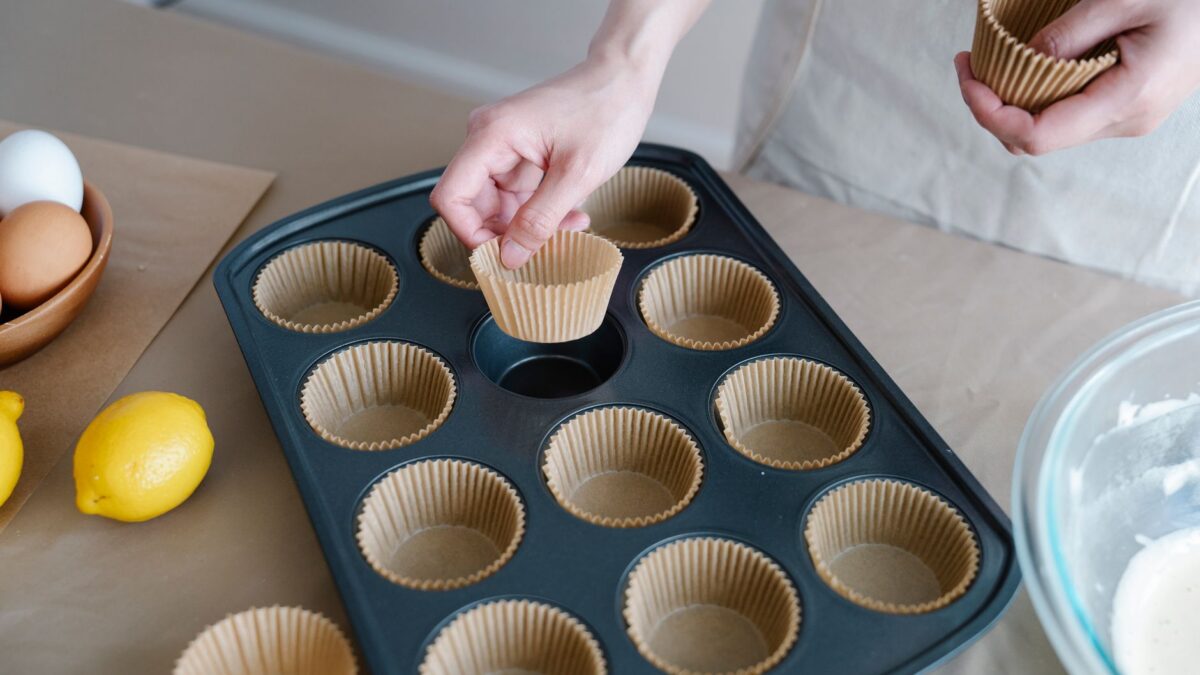
- Heat the oven to 375°F (190°C), gas mark 5, or about 170°C fan. Line or grease a 12-cup muffin pan.
- In a large bowl, combine the sugar and lemon zest. Rub them together with your fingertips for about a minute until the sugar is damp and fragrant.
- Whisk in the flour, poppy seeds, baking powder, baking soda and salt.
- In another bowl, whisk the eggs, yogurt or sour cream, milk, lemon juice, oil or melted butter and vanilla. The mixture may look slightly curdled from the acid; that is fine.
- Pour the wet into the dry and fold just until no dry flour remains.
- Fill the cups about three-quarters full to nearly full.
- Bake 18 to 22 minutes, until pale golden, springy on top and a toothpick in the center comes out clean.
- Cool in the pan for 5 minutes, then move to a rack to cool for at least 15 minutes more.
- Whisk the powdered sugar with lemon juice, adding juice a teaspoon at a time, until thick but pourable. Spoon over the barely warm muffins and let set about 15 minutes.
Zest vs. juice: what each does
| Zest | Juice | |
|---|---|---|
| Main contribution | Aroma and “lemony” flavor from peel oils | Sourness (citric acid) |
| Adds liquid? | Barely | Yes; large amounts thin the batter |
| Survives baking? | Mostly; oils are carried by the fat | Tartness fades in the oven |
| Best place | Rubbed into the sugar in the batter | A little in the batter; most in the glaze or a syrup |
| Effect on leavening | None | Acid reacts with baking soda |
King Arthur suggests rubbing zest into sugar in recipes that do not cream butter and sugar, which is exactly the case with the muffin method. Use only the colored part of the peel; the white pith underneath is bitter.
If you double the juice in the batter for more tang, reduce the milk by the same amount so the batter stays thick. Thin batter rises less and gives flatter muffins; see why muffins have flat tops.
Why the recipe works
Yogurt or sour cream gives a tender, slightly tangy crumb and enough acidity for the baking soda, which also balances the lemon juice. Baking powder provides the main lift. The oil version stays softer for longer; butter adds a richer flavor. For a lighter, airier texture, avoid overmixing once the flour goes in, as explained in the muffin method explained.
Poppy seeds add crunch and a mild nutty flavor, not leavening or structure, so you can use anywhere from 1 to 3 tablespoons without changing anything else.
Variations
- Lemon syrup soak: instead of glaze, warm 1/4 cup (57 g) lemon juice with 1/4 cup (50 g) sugar until dissolved and brush over the warm muffins.
- Orange poppy seed: use orange zest and juice; reduce the sugar slightly since oranges are sweeter.
- Lemon blueberry: skip the poppy seeds and fold in 1 cup of frozen blueberries.
- Thicker glaze for drizzling: add more powdered sugar, a tablespoon at a time.
Storage and freezing
Store glazed muffins in a single layer, loosely covered, at room temperature for about 2 days; stacking smears the glaze. For freezing, freeze them unglazed in an airtight bag, then thaw and glaze before serving, because glaze tends to turn sticky or weep after thawing.
Troubleshooting
| Problem | Likely cause | Fix |
|---|---|---|
| Weak lemon flavor | Too little zest, or juice used instead | Zest 2 lemons and rub into the sugar |
| Bitter taste | White pith grated with the zest | Grate lightly; stop at the colored layer |
| Flat, spreading tops | Extra juice thinned the batter | Keep juice at 2 tablespoons or cut milk to match |
| Glaze soaked in and vanished | Muffins too hot, glaze too thin | Cool 15 minutes; add more powdered sugar |
| Dense crumb | Overmixing or packed flour | Fold briefly; spoon and level flour |
Food safety and allergens
Do not taste the raw batter; the FDA advises that raw flour and raw eggs are only safe once cooked. This recipe contains wheat, eggs and milk. Poppy seeds are not one of the major US allergens but can cause reactions in some people. Follow medical advice for food allergies.
Bottom line
Put the lemon zest to work in the sugar, keep the juice in the batter modest and save the rest for the glaze. That gives a bright, clearly lemon muffin without thinning the batter or flattening the tops.
FAQ
Can I use bottled lemon juice?
For the batter and glaze, yes, though fresh juice tastes brighter. You still need fresh lemons for zest, since bottled juice has none of the peel oils.
Do poppy seeds need to be soaked?
No. They can go straight into the dry ingredients. Some bakers soak them in the milk for extra softness, but it is optional.
How much zest is in one lemon?
Typically around 2 to 3 teaspoons from a medium lemon, depending on size and peel thickness.
Can I make this as a loaf?
Yes. Bake in a greased 9 x 5-inch loaf pan at 350°F (180°C) for about 50 to 60 minutes, until a toothpick comes out clean.