Why Cakes Dome and Crack on Top (and When It Is Perfectly Normal)
A peaked, split top on a layer cake is a heat problem you can fix. On a pound cake or loaf, the same crack is a sign the bake went right.
A cake domes when its edges set before the center has finished rising. Batter near the hot pan walls firms up first, so the still-liquid middle can only rise upward, forming a hump that often splits as the crust hardens. The usual causes are an oven that is too hot, a dark or deep pan, overfull pans and stiff batter. In loaf and pound cakes, a crack down the center is normal and expected.
Why it happens: heat from the outside in
Heat reaches a cake from the pan’s sides and bottom, and from the air above. The batter touching the pan bakes first, sets into a firm wall and stops rising. The middle, which is last to heat, keeps expanding while the edges are fixed in place, so the center bulges. Once the top crust sets and the interior is still pushing up, the crust tears, leaving a crack.
The bigger the difference in temperature between the edge and the center, the bigger the dome. Every fix below works by slowing the edges down or speeding the center up.
Causes and fixes at a glance
| Cause | Why it domes or cracks | Fix |
|---|---|---|
| Oven too hot | Edges and top set very early | Check with an oven thermometer; bake at the recipe temperature, or about 25°F (15°C) lower for a longer time |
| Dark, glass or heavy pan | Absorbs more heat; sets edges faster | Use light-colored aluminum, or lower the temperature about 25°F |
| Pan too small or deep | Thicker batter takes longer to heat in the middle | Use the stated pan size; fill about half to two-thirds full |
| Too much flour | Stiff batter does not level itself before setting | Weigh flour or spoon and level |
| Too much leavening | Rapid rise pushes the center up and splits it | Level measuring spoons; follow the recipe amount |
| Rack too high or low | Too close to the top or bottom heating element | Bake on the middle rack unless the recipe says otherwise |
| Overmixing | Extra gluten and air make a tall, tight rise | Mix until just combined after adding flour |
Ways to get flatter cake layers
Use bake-even strips
Cake strips are bands of fabric or silicone that wrap around the outside of the pan. Fabric strips are soaked in water first, so they keep the pan sides cooler; silicone versions insulate. Either way, the edges heat more slowly and set closer to the same time as the center, giving a flatter top and less browned sides. You can improvise with a strip of damp kitchen towel wrapped in foil, folded to the height of the pan and secured around it. Keep fabric away from direct contact with heating elements.
Lower the heat a little
Many bakers bake layer cakes at a slightly lower temperature for a little longer than the recipe calls for, which reduces doming. If you try this, expect a longer bake and test in the center rather than relying on the timer.
Check the oven itself
An oven that runs 25°F hot can turn flat layers into domes. The guide on oven temperature accuracy shows how to test yours with a thermometer. Convection ovens are a special case: the moving air sets the outside faster, so manufacturers generally recommend lowering the temperature by about 25°F for convection baking.
Spread the batter toward the edges
After pouring batter into the pan, push it slightly up the sides with a spatula so the center is a touch lower than the edges. As the cake rises, the center fills in.
Use the right pan
Light-colored aluminum pans of the size the recipe names give the most even results. If you change pan sizes, match the batter volume and adjust time; see the cake pan size conversion guide.
How to level a domed cake
- Cool completely. Warm cake tears easily. Chilling the layer briefly, wrapped, makes it firmer to cut.
- Use a long serrated knife. Hold it level with the lowest point of the top.
- Turn, don’t saw. Rotate the cake against the knife (a turntable helps), cutting gently a little deeper with each turn until you reach the center.
- Save the scraps. Trimmed tops make good cake crumbs for decorating or cake pops.
- Place cut-side down on the top layer for a cleaner, less crumbly surface to frost.
When domes and cracks are normal
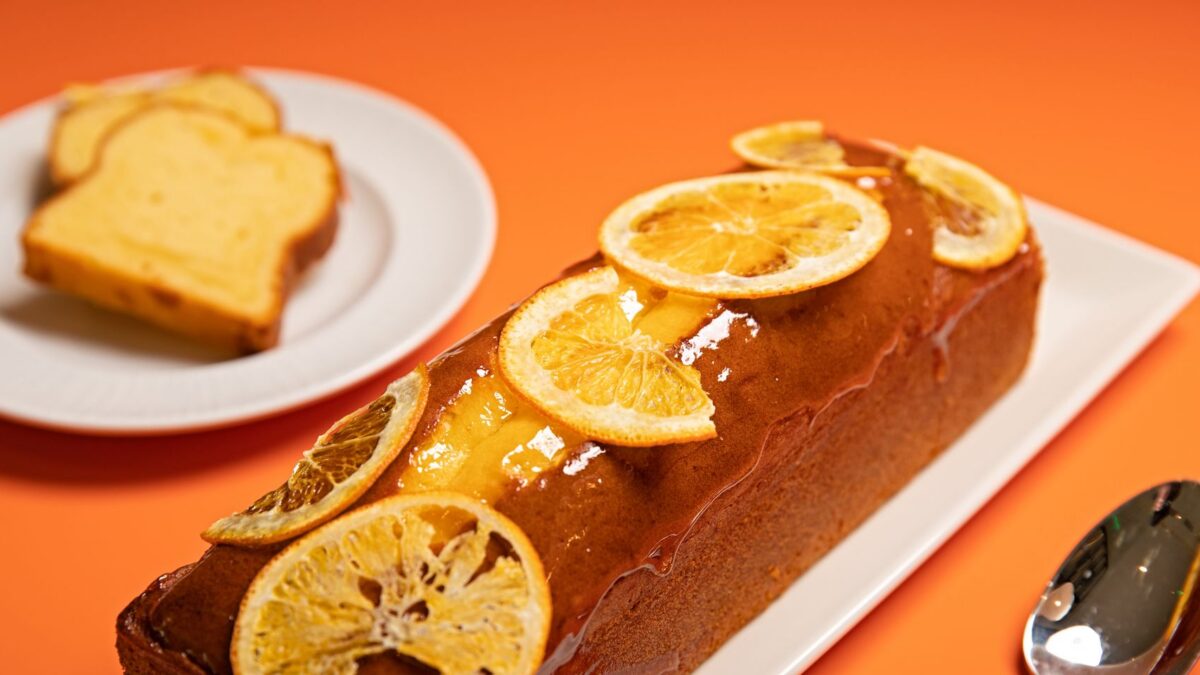
- Pound cakes and loaf cakes: deep batter in a narrow pan bakes from the sides inward, and a crack down the center is typical. Some bakers draw a line in the batter with a knife or a buttered spatula before baking so it splits neatly.
- Quick breads: banana bread, zucchini bread and lemon loaf commonly crack along the top.
- Bundt cakes: the top becomes the bottom, so a dome there just gets trimmed or sits on the plate.
- Muffins: a domed top is the goal. The article on tall muffin tops explains how bakers encourage it.
A crack is a problem only if the center under it is gummy or raw. In that case, the cake is underbaked rather than domed; see why cakes sink in the middle for doneness checks.
Bottom line
Domes and cracks come from edges that set too early. Bake on the middle rack, verify oven temperature, use light metal pans of the right size, and try cake strips or a slightly lower temperature for flat layers. Level any remaining dome with a serrated knife. For loaf and pound cakes, leave the crack alone; it is part of the style.
FAQ
Do cake strips really work?
They reduce how quickly the pan sides heat up, so edges and center set closer together. The result is usually a flatter top and paler, softer sides.
Why does my cake crack only in the middle?
The center rises last and pushes against a crust that has already set. A slightly lower oven temperature usually reduces the split.
Can I flip a domed cake upside down instead of leveling it?
For a single layer with a small dome, yes. A larger dome will make the cake rock or crack, so trimming is better for stacked cakes.
Is a domed cake overbaked?
Not necessarily. Doming is about how heat moved through the batter. Check doneness in the center as usual.