Cornbread Two Ways: Northern vs Southern, Skillet vs Pan, and Why Buttermilk Matters
Sweet and cakey or savory and crisp-edged? The difference comes down to sugar, flour, cornmeal and a very hot skillet.
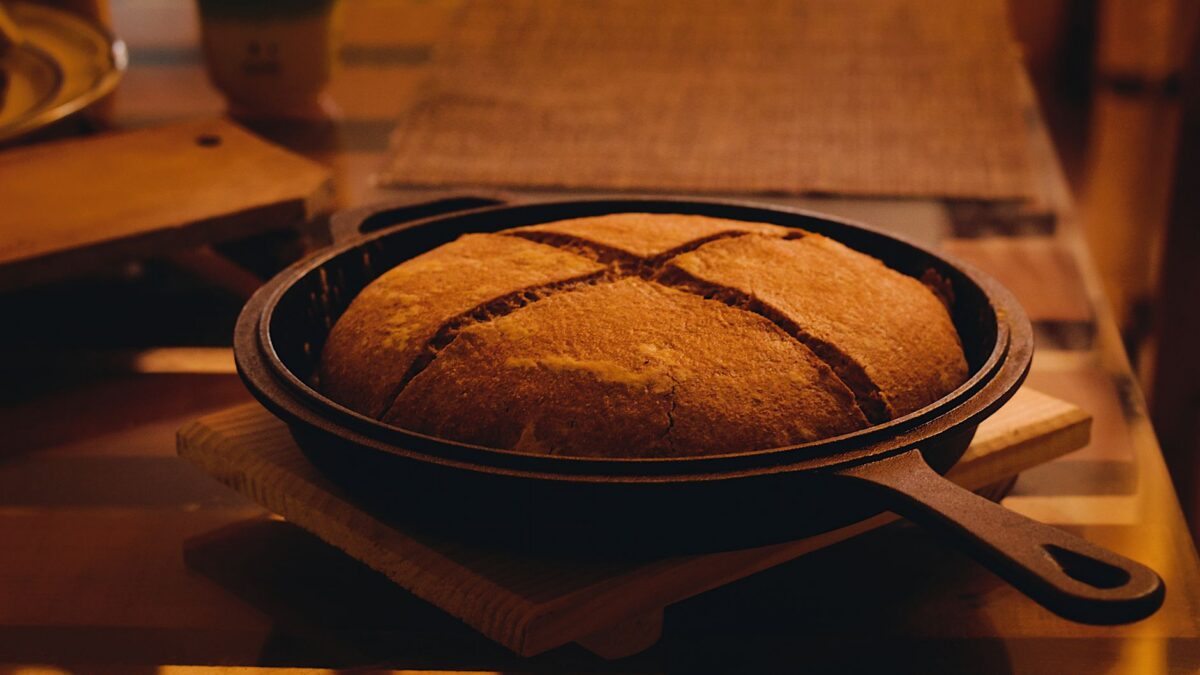
Northern-style cornbread is sweeter and more cake-like, usually made with yellow cornmeal, a good share of wheat flour and some sugar, and baked in a square pan. Traditional Southern cornbread uses little or no sugar and little or no flour, relies on buttermilk, and is baked in a preheated cast-iron skillet for a crisp, browned crust. Both are quick breads leavened with baking powder and/or baking soda, and both bake in about 20–25 minutes at 400–425°F (200–220°C).
These are tendencies, not laws; plenty of Southern cooks add a spoonful of sugar and plenty of Northern ones use a skillet. Below is a standard recipe for each style. Flour follows King Arthur Baking’s ingredient weight chart at 120 g per cup; cornmeal weight depends on the grind, so weigh if you can (King Arthur lists a common yellow cornmeal at 156 g per cup).
Northern-style cornbread (8 x 8-inch pan, 9 pieces)
Ingredients
- 1 cup (156 g) yellow cornmeal, fine or medium grind
- 1 cup (120 g) all-purpose flour
- 1/4 cup (50 g) granulated sugar (use up to 1/3 cup for a sweeter bread)
- 2 teaspoons baking powder
- 1/2 teaspoon baking soda
- 3/4 teaspoon table salt
- 1 cup (227 g) buttermilk
- 2 large eggs
- 1/4 cup (57 g) unsalted butter, melted, plus more for the pan
Method
- Heat the oven to 400°F (200°C; 180°C fan; gas mark 6). Butter an 8 x 8-inch metal pan.
- Whisk cornmeal, flour, sugar, baking powder, baking soda and salt in a large bowl.
- In another bowl whisk the buttermilk and eggs, then whisk in the melted butter.
- Pour wet into dry and stir just until moistened. The batter should be thick and slightly lumpy.
- Spread in the pan and bake 20–25 minutes, until golden, the top springs back and a toothpick comes out clean.
- Cool 10 minutes before cutting.
Southern-style skillet cornbread (10-inch skillet, 8 wedges)
Ingredients
- 2 cups cornmeal (white or yellow; about 300–310 g for a medium grind)
- 1 teaspoon baking powder
- 1/2 teaspoon baking soda
- 1 teaspoon table salt
- 1 3/4 cups (397 g) buttermilk
- 1 large egg
- 3 tablespoons bacon fat, lard or butter (about 40 g)
- Optional: 1 tablespoon sugar
Method
- Put the fat in a 10-inch cast-iron skillet, set it on the middle rack and heat the oven to 425°F (220°C; 200°C fan; gas mark 7) with the skillet inside, so the pan is very hot.
- Whisk the cornmeal, baking powder, baking soda, salt and sugar if using.
- Whisk the buttermilk and egg together and stir into the dry ingredients until just combined.
- Using oven mitts, take out the skillet and swirl the melted fat to coat. Pour most of the fat into the batter and stir once, leaving a thin film in the pan.
- Pour the batter into the hot skillet; it should sizzle at the edges. Bake 20–25 minutes, until deep golden and the center is firm.
- Turn out onto a board or serve from the skillet. Keep the handle covered; it stays dangerously hot.
Side-by-side differences
| Feature | Northern style | Southern style |
|---|---|---|
| Sugar | Noticeable, 1/4–1/3 cup per 8-inch pan | None to a tablespoon |
| Wheat flour | About equal to cornmeal | Little or none |
| Cornmeal | Usually yellow, fine grind | Often white, medium or stone-ground |
| Liquid | Milk or buttermilk | Buttermilk |
| Fat | Butter or oil | Bacon fat, lard or butter |
| Pan | Square or round baking pan | Preheated cast-iron skillet |
| Texture | Soft, cakey, tender | Crumbly, crisp crust, corn-forward |
Why buttermilk matters
Buttermilk is acidic. That acid reacts with baking soda to release carbon dioxide right away, giving lift, and it tenderizes the crumb and adds a gentle tang that balances the corn. In a recipe with no flour, it also helps the cornmeal hydrate. If you have none, a standard stand-in is 1 cup milk with 1 tablespoon lemon juice or vinegar, rested 5–10 minutes; see the buttermilk substitute guide for other ratios. If you use plain milk with no acid at all, replace the baking soda with an extra 1 1/2 teaspoons baking powder, since soda needs acid to work (more in baking powder vs baking soda).
Skillet vs pan
- Preheated cast iron starts browning the batter the moment it hits the pan, giving a crunchy bottom and edges. It suits low-sugar batters, which brown less on their own.
- Light metal pans give an even, tender crust that suits sweeter, cake-like batters. Glass and dark pans brown faster; lower the oven by 25°F if using one.
- Muffin pans work for either batter at 400°F for roughly 15–18 minutes; see corn muffins for a version designed for cups.
Why cornbread crumbles
Cornmeal has no gluten-forming proteins, so a batter with little wheat flour holds together mainly through egg and starch. More flour, an extra egg or a short rest of the batter (10 minutes lets the cornmeal absorb liquid) all make a sturdier slice. Overbaking dries it out and makes crumbling worse.
Storage
Cornbread is best the day it is baked. Wrap leftovers once cool and keep them at room temperature for a day or two, or freeze wrapped pieces. Reheat in a hot oven or skillet to revive the crust.
Food safety and allergens
Do not taste raw batter; flour, cornmeal and eggs are raw ingredients that become safe when baked. The Northern recipe contains wheat (gluten), eggs and milk; the Southern recipe contains eggs and milk and only becomes gluten-free if you use cornmeal certified gluten-free and prevent cross-contact. People with celiac disease or allergies should follow their doctor’s or dietitian’s advice.
Bottom line
For sweet, soft, cake-like cornbread, use equal cornmeal and flour, some sugar and a square pan. For savory, crisp-edged cornbread, use mostly cornmeal, buttermilk, little or no sugar, and pour it into a skillet that is already smoking hot.
FAQ
Can I make cornbread without a cast-iron skillet?
Yes. Preheat a heavy oven-safe metal pan with the fat the same way, or use a regular pan and accept a softer crust.
White or yellow cornmeal?
Both work. Yellow often tastes slightly more “corny” and gives a golden color; white is milder. Grind affects texture more than color does.
Why is my cornbread dry?
Usually overbaking or too much cornmeal from packed cups. Weigh it, rest the batter briefly and pull the bread when a toothpick just comes out clean.
Can I add corn kernels or cheese?
Yes. Fold in up to 1 cup of drained corn kernels or shredded cheese; expect a few extra minutes of baking.