Chewy vs Crispy Cookies: The Ingredient Levers That Control Texture
You do not need a new recipe to change cookie texture. Sugar type, butter state, flour, eggs and bake time each push a cookie toward chewy, cakey or crisp.
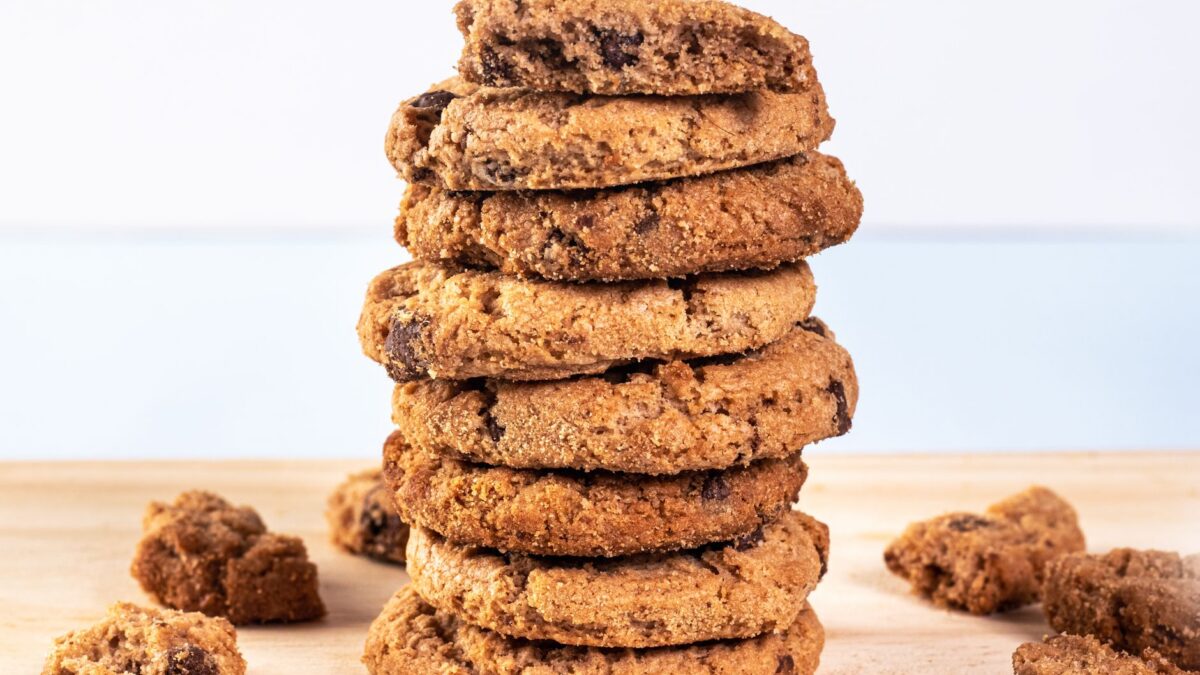
Cookie texture comes down to moisture and structure. Chewy cookies hold on to more water and have a dense, bendy crumb; crispy cookies lose more water, spread thinner and brown further. The biggest levers are the ratio of brown to white sugar, whether the butter is melted or creamed, the flour, the eggs and the bake time. Change one at a time to move a recipe in the direction you want.
The texture levers at a glance
| Lever | For chewier cookies | For crispier cookies | For cakey, soft cookies |
|---|---|---|---|
| Sugar | More brown sugar | More white sugar | Less sugar overall |
| Butter | Melted (then cooled) | Softened or melted, with more spread | Creamed until light |
| Flour | Higher-protein flour (some or all bread flour) | All-purpose | Some cake flour, or slightly more flour |
| Eggs | An extra yolk | Fewer eggs, or white only | A whole extra egg |
| Leavening | Baking soda | Baking soda (more spread, more browning) | Baking powder |
| Dough temperature | Chilled, thick balls | Room temperature, flattened | Chilled, tall balls |
| Bake time and temperature | Pull while centers look slightly underdone | Bake longer, or lower and slower, until golden throughout | Bake until just set |
| Size | Large, thick cookies | Small, thin cookies | Medium, tall cookies |
Sugar: the biggest single lever
Both sugars sweeten, but they behave differently in dough.
- Brown sugar is white sugar with molasses. Molasses brings moisture, a little acidity and extra ability to hold water, so cookies stay softer and chewier, and they stay that way longer in storage.
- White (granulated) sugar is drier. As it melts in the oven it helps the dough spread and, as the cookie cools, it recrystallizes into a crisp, snappy texture.
Many classic chocolate chip cookie recipes use roughly equal amounts of each. Shifting the ratio toward brown sugar makes them chewier; toward white sugar, crisper. If you are out of brown sugar, see the brown sugar substitute guide. Sugar also affects browning and tenderness, covered in what sugar does in baking.
Butter: melted vs creamed
Creaming softened butter with sugar beats in air. That air expands in the oven and gives cookies a lighter, more cake-like lift. Melted butter cannot hold air, so cookies made with it are denser and chewier. Melted-butter doughs are usually soft, so they often need chilling to keep them from spreading thin.
The water in butter matters too. Butter is mostly fat with some water; that water turns to steam and helps puff the cookie. Butter substitutes and spreads with more water and less fat change both spread and texture, often for the worse.
Flour: protein matters
When flour is mixed with liquid, its proteins form gluten, which gives chew. Bread flour has more protein than all-purpose, so replacing some or all of the all-purpose flour with bread flour is a common way to make cookies chewier. Cake flour, with less protein, makes cookies softer and more tender. The article on what gluten does explains the protein differences between flours.
Amount matters as much as type. A little extra flour gives a puffier, cakier cookie; a little less gives a flatter, crisper one. Measuring by weight keeps this consistent.
Eggs: yolks vs whites
- Yolks contain fat and emulsifiers that make cookies richer, more tender and chewier. Adding one extra yolk is a common chewy-cookie adjustment.
- Whites are mostly water and protein. They dry and set firm, pushing cookies toward cakey or crisp.
Baking time and temperature
For chewy cookies, take them out when the edges are set and golden but the centers still look a little soft and puffy. They firm up on the hot sheet as they cool. For crisp cookies, bake until they are evenly golden, or bake at a slightly lower temperature for longer so more moisture evaporates before the edges burn.
Oven accuracy matters here, because a few degrees shift the balance between browning and drying. Thin, crisp cookies can also come from too much spread; if that is not what you want, see why cookies spread.
Storage keeps the texture you baked
- Chewy cookies: store airtight once completely cool. Brown-sugar cookies stay soft for longer.
- Crisp cookies: store separately from soft ones in a container that is not packed tightly; moisture from soft cookies will soften crisp ones.
- Revive crisp cookies that went soft with a few minutes in a low oven, then cool on a rack.
Quick recipes for each style
To adjust a standard chocolate chip cookie recipe without rewriting it:
- Chewier: use melted, cooled butter; swap about a quarter of the white sugar for brown; add one extra yolk; chill the dough; pull early.
- Crispier: use slightly more white sugar than brown; skip the chill; flatten the dough balls; bake until golden all over.
- Cakier: cream the butter and sugar well; add a little baking powder alongside the soda or a little more flour; bake just until set.
Change one lever at a time and bake a test cookie so you can see what each change did.
Food safety note
Do not taste raw dough while adjusting a recipe. The U.S. FDA advises against eating raw dough because of the risks from raw flour and raw eggs. Bake a test cookie instead.
Bottom line
For chewy cookies, lean on brown sugar, melted butter, an extra yolk, higher-protein flour and a short bake. For crisp cookies, lean on white sugar, more spread and a longer bake. For cakey cookies, cream the butter, use baking powder and do not let them spread. Adjust one lever at a time.
FAQ
Why do my cookies come out chewy and then turn hard?
They were probably overbaked or stored uncovered. Pull them a minute earlier and store them airtight once cool.
Does chilling dough make cookies chewier?
Chilling reduces spread, so cookies bake thicker, which usually reads as chewier in the center.
Can I use all brown sugar?
Yes, but the cookies will be soft, darker and more caramel-flavored, with less crisp edge.
Does baking soda make cookies crispy?
Soda encourages spread and browning, which supports a crisper edge. Baking powder gives more lift and a puffier, cakier result.