Why Do Muffins Stick to Paper Liners? Causes, Fixes and Which Liners Release Best
Stuck liners are usually a timing or fat problem, not a bad recipe. A light spray, a full cool-down or a different liner type solves most cases.
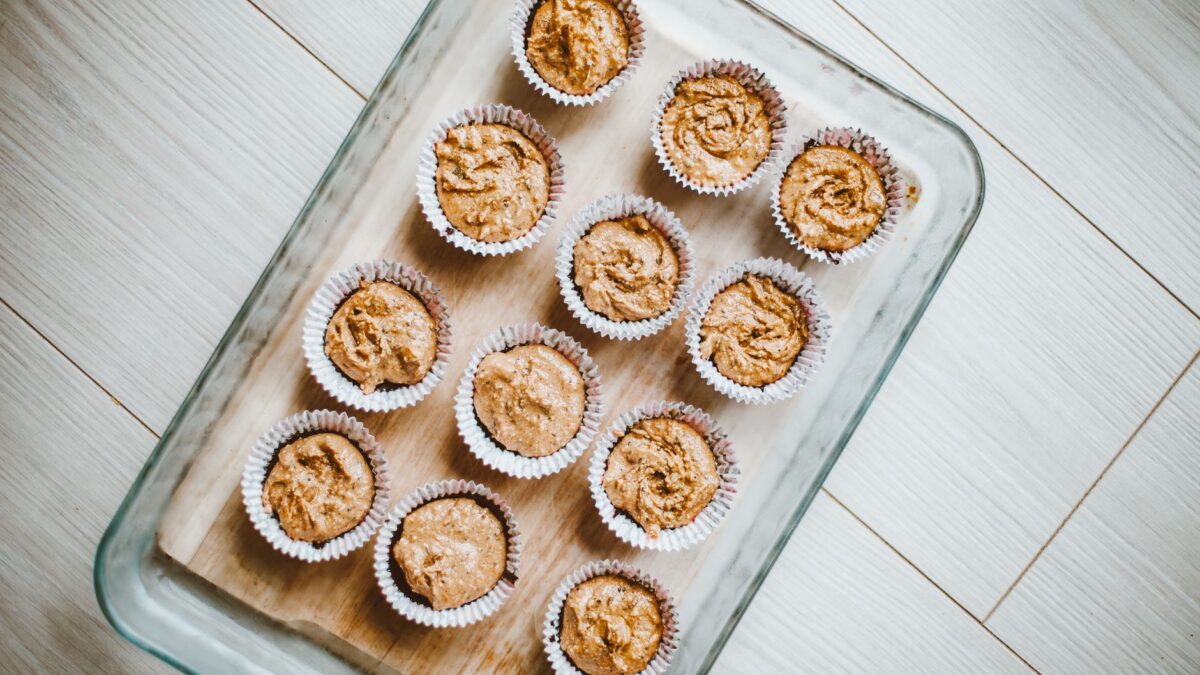
Muffins stick to paper liners mainly when the batter is low in fat or when you peel them while they are still warm. Warm crumb is soft and moist, and starch acts like glue against the paper. Letting muffins cool completely, lightly spraying the liners with nonstick spray, or switching to parchment or foil-lined liners usually fixes it.
Why liners stick in the first place
As muffins bake, the batter touching the liner sets and bonds with the paper fibers. In a rich batter, fat sits between the crumb and the paper and helps them separate. In a lean batter, there is little fat to act as a barrier, so more crumb stays attached. While the muffin is warm, steam keeps that contact layer damp and sticky. As it cools, the crumb firms up and shrinks slightly, which loosens its hold on the wrapper.
That is why muffins seem to stick more than cupcakes. Cupcakes are cooled completely before frosting; muffins are often eaten straight from the oven.
Common causes and fixes
| Cause | Why it sticks | Fix |
|---|---|---|
| Low-fat batter | Little fat between crumb and paper | Spray liners lightly, or use parchment or silicone |
| Peeling while warm | Moist, soft crumb clings to fibers | Cool completely before unwrapping |
| Thin, uncoated paper | Batter soaks into the paper | Use greaseproof or parchment-type liners |
| Sugary or sticky add-ins against the paper | Melted fruit or chocolate caramelizes on the liner | Keep add-ins away from the edges |
| Underbaked muffins | Damp crumb stays tacky | Bake until the center tests done |
| Stored warm and covered | Trapped steam softens the base | Cool on a rack before storing |
Liner types compared
| Liner | Release | Best for | Notes |
|---|---|---|---|
| Standard paper | Fair; worst with lean batters | Everyday muffins and cupcakes | Thin papers can turn greasy or see-through |
| Greaseproof paper | Good | Muffins you want to look neat | Coated to resist fat soaking through |
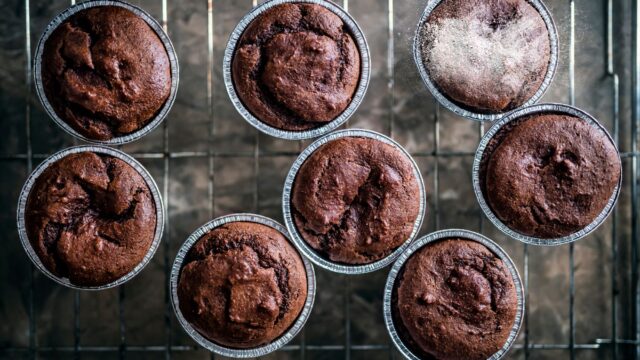
| Foil-lined paper | Good | Gifts, holidays, rich batters | Holds shape; can be used on a sheet pan without a tin |
| Parchment tulip wraps | Very good | Tall bakery-style muffins | Taller sides support high domes |
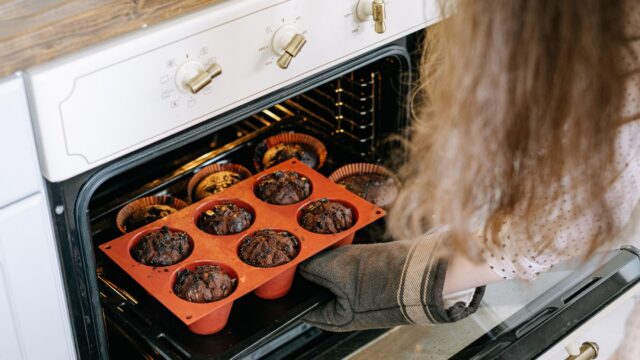
| Reusable silicone cups | Very good once cool | Low-fat batters, frequent baking | Check the manufacturer’s maximum oven temperature |
| No liner, greased pan | Good if well greased | Crispier edges | Grease the top surface of the pan too |
Our muffin liners guide covers sizes and materials in more depth, and silicone vs metal muffin pans explains how each affects browning and release.
How to stop muffins sticking: step by step
- Choose the liner for the batter. For low-fat, bran, oat or fruit-heavy muffins, use parchment, foil-lined or silicone cups.
- Spray paper liners lightly. A quick coat of nonstick cooking spray inside each liner before filling helps the crumb release. You do not need to grease the tin underneath, and extra grease there can make liners pull away from the sides.
- Bake fully. Check the center with a toothpick before taking the pan out.
- Rest briefly, then move to a rack. Leave muffins in the pan about 5 minutes, then lift them onto a wire rack so steam can escape from the bottom.
- Cool completely before peeling. If you want to eat one warm, accept that some crumb may stick, or bake that one in a silicone cup.
- Peel slowly from the top edge down. Pulling the liner away gently, rather than tearing upward from the base, leaves more muffin behind.
Why liners pull away from muffins
The opposite problem is liners separating from the sides after cooling. It usually comes from steam trapped between the muffin and the paper, often because muffins cooled in the pan or were stored warm in a closed container. Underbaked muffins and greased tins under the liners can also cause it. Move muffins to a rack promptly and let them cool fully before covering. The same steam problem causes damp bottoms; see why muffins get soggy bottoms.
Going liner-free
Baking without liners gives crisper, browner sides. Grease each cup well with butter, shortening or a baking spray that contains flour, including the flat top of the pan where domes may spread. Let muffins rest in the pan for about 5 minutes, run a thin knife around each one and tip them out. Nonstick pans release more easily, but scratched coatings can stick, so follow the maker’s care instructions and avoid metal utensils.
A note on sticky add-ins
Berries, jam swirls and chocolate chips that touch the liner can melt and caramelize, gluing the paper to the muffin. When filling, try to keep add-ins in the batter rather than against the edges, and save a few for the top.
Bottom line
Liners stick most with lean batters and warm muffins. Cool fully, give paper liners a light spray and choose parchment, foil-lined or silicone for low-fat recipes. If you prefer to eat muffins warm, a greased pan with no liner may suit you better.
FAQ
Should I spray paper muffin liners?
A light coat of nonstick spray inside paper liners helps lean batters release. You usually do not need to grease the pan under the liners.
Are foil liners better than paper?
Foil-lined liners generally release well and hold their shape, which makes them handy for gifts. They brown slightly less at the sides than bare metal.
Do silicone muffin cups need greasing?
Many bakers give them a light spray for the first uses or for very lean batters. Let muffins cool before removing them; warm muffins are more fragile.
Why do low-fat muffins stick more?
Fat acts as a barrier between the crumb and the paper. With less fat, more of the crumb bonds to the liner as it bakes.