Basic Irish Soda Bread: Four Ingredients, Buttermilk, Scoring and Why It Needs No Yeast
Soda bread rises from a chemical reaction rather than yeast, so it goes from bowl to oven in about ten minutes. The trick is a soft dough and a light touch.
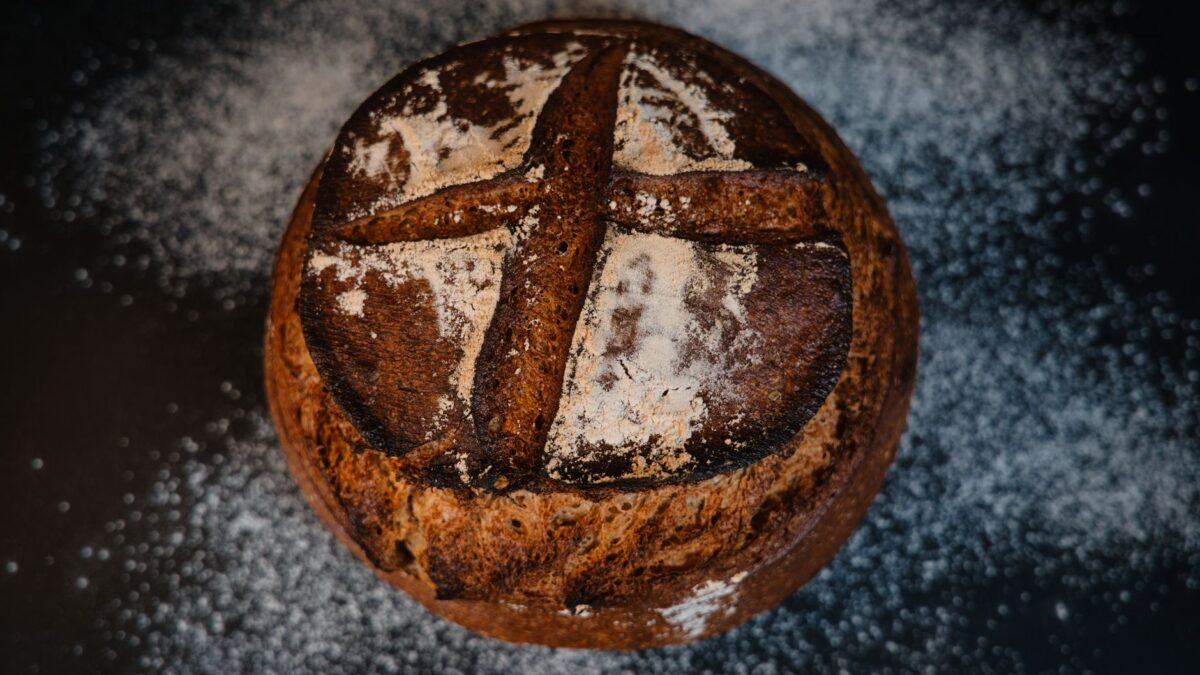
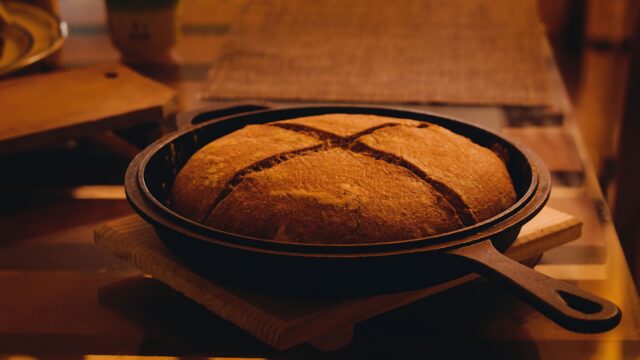
Basic Irish soda bread is made from just flour, baking soda, salt and buttermilk. It is “quick” because it needs no yeast: the acid in buttermilk reacts with baking soda to release carbon dioxide as soon as they meet, so the dough is shaped right away and baked at about 425°F (220°C) for 35–45 minutes. A deep cross cut on top helps the thick round bake through and lets it expand evenly.
The recipe below uses a standard ratio and King Arthur Baking’s convention of 120 g per cup of all-purpose flour.
Ingredients (one round loaf, about 8 inches across)
- 4 cups (480 g) all-purpose flour, plus a little for shaping
- 1 teaspoon baking soda
- 1 teaspoon table salt
- 1 3/4 cups (397 g) buttermilk, plus up to 2 tablespoons more if needed
Traditional Irish soda bread is often made with a soft, lower-protein flour or a mix of white and wholemeal flour. All-purpose flour works well; for a brown loaf, swap up to half for whole wheat flour and add a splash more buttermilk.
Method
- Heat the oven to 425°F (220°C; 200°C fan; gas mark 7). Line a baking sheet with parchment or dust it with flour. A preheated cast-iron pan or Dutch oven also works and gives a thicker crust.
- In a large bowl, whisk the flour, baking soda and salt thoroughly so the soda is evenly distributed. Sift the soda first if it is lumpy; pockets of soda taste bitter and soapy.
- Make a well in the center and pour in most of the buttermilk. Using one hand shaped like a claw or a wooden spoon, stir from the center outward until a soft, shaggy, slightly sticky dough forms. Add the remaining buttermilk if dry flour remains.
- Turn the dough onto a lightly floured surface. Pat and fold it over itself two or three times, just enough to form a rough round about 1 1/2–2 inches thick. Do not knead it like yeast bread.
- Place it on the sheet. With a sharp, floured knife, cut a deep cross across the top, about half the depth of the loaf, reaching nearly to the edges.
- Bake immediately for 35–45 minutes, until deep golden brown. If it browns too quickly, lower the heat to 400°F (200°C) for the last 15 minutes.
- Test by turning the loaf over and tapping the bottom: it should sound hollow. A skewer pushed into the center should come out clean, with no damp dough.
- Cool on a rack. For a soft crust, wrap the hot loaf in a clean tea towel; for a crisp crust, leave it uncovered.
Why it is so quick
Yeast breads rely on living yeast to produce gas slowly over hours, which is also when gluten strengthens through kneading and rising. Soda bread skips all of that. Baking soda (sodium bicarbonate) is an alkali; buttermilk contains lactic acid. Combined, they produce carbon dioxide within minutes, and the heat of the oven expands those bubbles. Because the reaction starts the moment the liquid goes in, the dough should be shaped and baked promptly. If it sits for a long time, some of the gas escapes and the loaf bakes up denser. For more on how the two leaveners differ, see baking powder vs baking soda.
A light hand matters for the same reason. There is no long rise to relax tough gluten, so heavy kneading makes the crumb tight and chewy. The ideal dough looks rougher than you expect.
What the cross does
A round soda loaf is thick, and the crust sets early in a hot oven. The deep cross:
- lets heat reach the center faster, so the middle bakes through before the outside burns;
- gives the loaf room to expand along the cuts rather than cracking at random;
- makes the bread easy to break into four “farls” or wedges.
Cut decisively and deeply. Shallow cuts close up in the oven and do little.
Buttermilk swaps
If you have no buttermilk, stir 1 tablespoon lemon juice or white vinegar into each cup of milk and let it stand 5–10 minutes, or thin plain yogurt with milk to buttermilk consistency. The bread will be slightly less tangy. Ratios for other options are in the buttermilk substitute guide. Do not use plain milk with no acid: the soda will not react fully and the bread will taste soapy and rise poorly.
Variations
| Variation | Change | Notes |
|---|---|---|
| Brown soda bread | Use 240 g white + 240 g whole wheat flour | Needs a little more buttermilk; denser, nuttier |
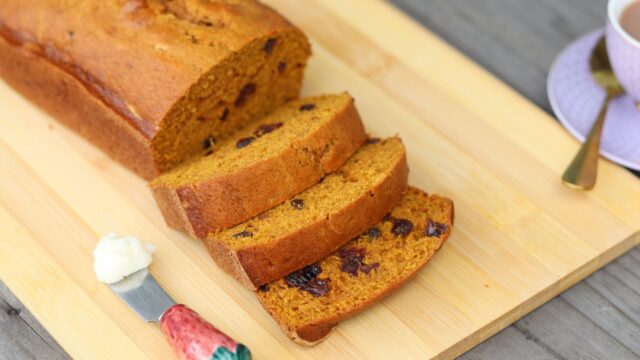
| Raisin or currant | Add 1 cup (149 g) raisins and 2 tbsp (25 g) sugar | Sometimes called “spotted dog”; sweeter, for tea |
| Seeded | Add 1/4 cup mixed seeds, plus more on top | Brush top with buttermilk so seeds stick |
| Richer crumb | Rub in 2 tbsp (28 g) cold butter and add 1 egg to the buttermilk | Softer and more cake-like; less traditional |
Troubleshooting
| Problem | Cause | Fix |
|---|---|---|
| Dense, heavy loaf | Overworked dough; waited too long before baking | Mix briefly; bake as soon as it is shaped |
| Soapy or bitter taste, yellow spots | Too much soda or lumps of soda | Measure level; sift soda into the flour |
| Raw center | Loaf too thick; shallow cross; oven too cool | Shape flatter, cut deeper, check oven with a thermometer |
| Flat, spreading round | Dough too wet | Hold back some buttermilk; add only as needed |
| Very hard crust | Long bake, cooled uncovered | Wrap in a towel while hot |
Storage
Soda bread is best on the day it is baked and stales faster than yeast bread. Wrap leftovers once cool. Day-old soda bread is good toasted. For longer storage, freeze it well wrapped, in quarters or slices, and toast from frozen.
Food safety and allergens
Do not taste the raw dough; flour is a raw ingredient that can carry harmful bacteria until it is baked, according to the CDC. Wash hands and surfaces after handling it. This bread contains wheat (gluten) and milk, and eggs if you use the richer variation. Anyone with allergies or celiac disease should follow their doctor’s or dietitian’s guidance.
Bottom line
Whisk the soda evenly through the flour, add buttermilk to make a soft, slightly sticky dough, shape it with as little handling as possible, cut a deep cross and bake right away in a hot oven until the base sounds hollow.
FAQ
Can I use self-rising flour?
You can, but it already contains baking powder and salt, so leave out the salt and reduce or omit the soda. The flavor and texture will differ from a classic loaf.
Why does my soda bread taste of soda?
Either too much soda, poorly mixed soda, or not enough acid. Measure level, sift it in and use real buttermilk or a soured-milk substitute.
Can I make it in a loaf pan?
Yes. Use a greased 9 x 5-inch pan, cut a slash down the center and bake about the same time, checking with a skewer.
Is soda bread supposed to be dense?
It is denser and more crumbly than yeast bread, but it should not be heavy or doughy. A tight, tough loaf usually means it was handled too much.