Stand Mixer vs Hand Mixer: What Each Does Well (and Why Muffins Need Neither)
A practical comparison of stand and hand mixers: tasks, bowl size, attachments, why wattage misleads, and which bakes are better by hand.
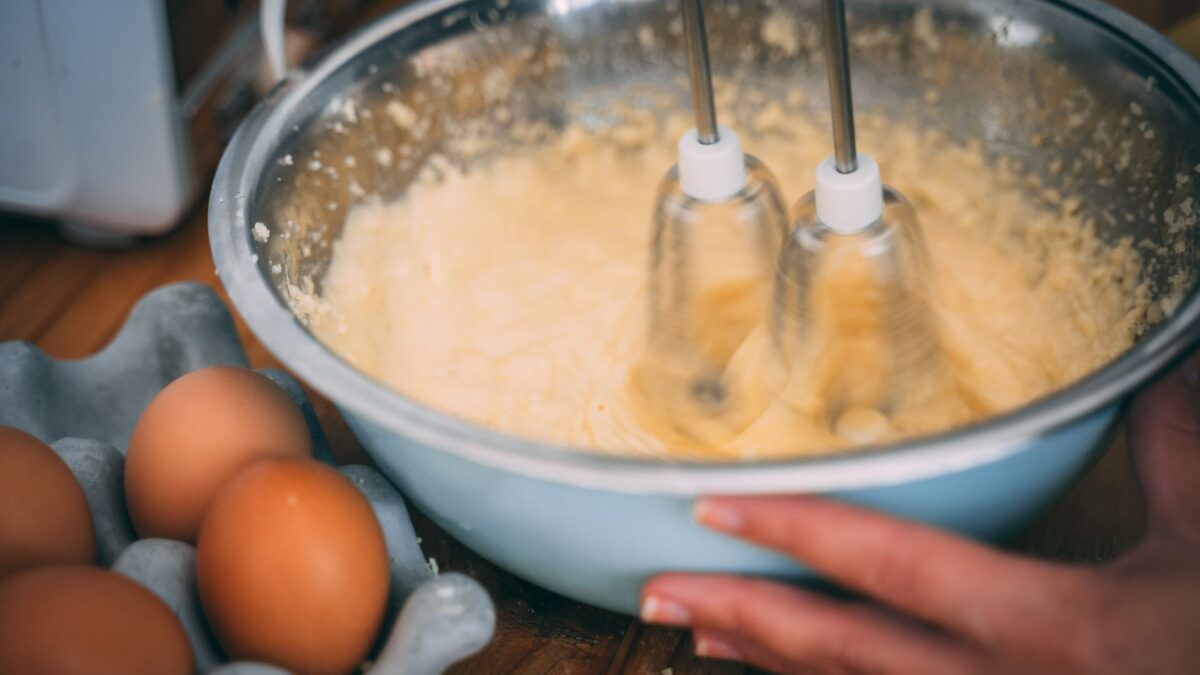
A hand mixer is enough for most home baking: creaming butter and sugar, whipping cream, beating egg whites and making frosting or cookie dough. A stand mixer earns its counter space if you bake large batches, make yeast bread often, or want hands-free whipping for meringue and buttercream. And for muffins and most quick breads, you need neither: a bowl, a whisk and a spatula give a better, more tender result.
Here is how to decide, what specs to compare, and which tasks are actually harmed by a mixer.
What each mixer does well
| Task | Hand mixer | Stand mixer | By hand |
|---|---|---|---|
| Muffins, quick breads | Not needed; easy to overmix | Not needed; easy to overmix | Best |
| Creaming butter and sugar | Good | Very good, hands-free | Possible, slow |
| Cookie dough, one batch | Good until thick add-ins | Very good | Possible with soft butter |
| Whipped cream | Very good | Very good | Possible with a whisk |
| Egg whites, meringue | Good, tiring for long whips | Very good | Hard work |
| Buttercream | Good for small batches | Very good for large batches | Difficult |
| Yeast bread dough | Not suitable for stiff dough | Good with a dough hook | Traditional kneading works |
| Double or triple batches | Limited by bowl and motor | Good within bowl capacity | Tiring |
Why muffins do not need a mixer
Muffins use the muffin method: whisk the dry ingredients in one bowl, the wet in another, then fold them together just until no dry flour shows. Lumps are fine. Mixing past that point develops gluten, which leads to tunnels, peaked tops and a chewy, dense crumb. A mixer, even on low, overmixes in seconds.
The same goes for banana bread, cornbread, soda bread and most loaf-style quick breads. Use a large flexible spatula and about 10 to 15 gentle folds. The method and its reasoning are covered in the muffin method explained and why muffins have tunnels.
The exception is creamed-style muffins, where softened butter and sugar are beaten together first, like a cake. A hand mixer is ideal for that first step; switch to a spatula once the flour goes in.
Hand mixers: what to compare
- Speeds: a true low speed matters more than a high top speed. It stops flour from flying and lets you combine gently.
- Beaters: sturdy wire or flat-edged beaters without a center post are easier to clean. Whisk and dough-hook attachments are extras.
- Weight and balance: you hold it for several minutes at a time, so comfort counts.
- Cord or cordless: cordless models are convenient but check run time and whether the battery is replaceable.
- Storage: a case or snap-on beater storage keeps parts together.
Stand mixers: what to compare
- Bowl capacity: home models commonly range from about 3.5 to 7 quarts. A mid-size bowl handles a standard cake, a batch of cookies or a loaf of bread. Very small batches, like one or two egg whites, can be hard to reach in a large bowl.
- Mixing action: planetary mixers move the beater around the bowl while it spins, reaching the sides and bottom. Others rotate the bowl instead. Both work; check reviews of reach and scraping.
- Head design: tilt-head models make adding ingredients easy; bowl-lift models are often built for heavier doughs.
- Attachments: a flat beater, whisk and dough hook are the core three. A beater with a flexible scraping edge reduces stopping to scrape.
- Weight and size: stand mixers are heavy. Measure the height under your cabinets, especially for tilt-head models.
The wattage myth
Wattage on the box tells you how much electricity the motor can draw, not how much mixing power reaches the beater. Gearing, motor type and mechanical design all affect how a mixer copes with stiff dough. Two mixers with the same wattage can perform very differently, and a lower-wattage machine with a well-designed drive can outperform a higher one. Compare bowl size, intended tasks and the manufacturer’s stated capacity, for example how much flour it is rated to knead, rather than watts alone.
Tips for using either mixer
- Start low, then increase to avoid splashes and flour clouds.
- Scrape the bowl once or twice so butter and sugar mix evenly.
- Use room-temperature butter and eggs for creaming; cold butter will not trap air, and cold eggs can make the mix look curdled.
- Switch to a spatula once flour goes into cakes and cookies if the recipe says to mix “just until combined.”
- Unplug before changing attachments.
- Do not overload the motor with stiff dough beyond the manual’s guidance; a hot motor smell means stop and rest it.
Which should you buy?
- Bake muffins, quick breads and the occasional cake: a hand mixer, or nothing at all.
- Bake cookies and frostings weekly: a good hand mixer covers it; a stand mixer adds convenience.
- Make yeast bread, big holiday batches or meringue often: a stand mixer.
- Short on space or budget: a hand mixer, and knead bread by hand.
Bottom line
A hand mixer covers most home baking, a stand mixer is worth it for frequent bread, big batches and long whipping, and muffins are better made by hand. Choose by bowl size, low-speed control and intended tasks, not by wattage.
FAQ
Can I make muffins with a stand mixer?
You can, but use the lowest speed for only a few seconds, then finish with a spatula. It is easy to overmix, which makes muffins tough.
Can a hand mixer knead bread dough?
Some come with dough hooks for soft doughs, but stiff bread dough can strain the motor. Check the manual’s limits.
What bowl size do I need?
For most home recipes, a mid-size stand mixer bowl is plenty. Choose larger only if you regularly double batches.
Is a mixer needed for buttercream?
It makes buttercream much easier and fluffier. A hand mixer works well for one batch.