Why Didn’t My Bread Rise? Yeast, Temperature and Flour Checks
Bread usually fails to rise because the yeast is dead, the dough is too cold or the flour is weak. How to check each cause and fix the next loaf.
Bread that doesn’t rise almost always has one of three problems: the yeast was dead or expired, the dough was too cold (or the liquid too hot), or the flour couldn’t build enough gluten to hold the gas. Yeast works best when dough sits at about 75 to 80°F (24 to 27°C), and liquid hotter than about 140°F (60°C) kills it. Test the yeast, check your water temperature and give the dough a warm spot before you blame the recipe.
Is my yeast still alive?
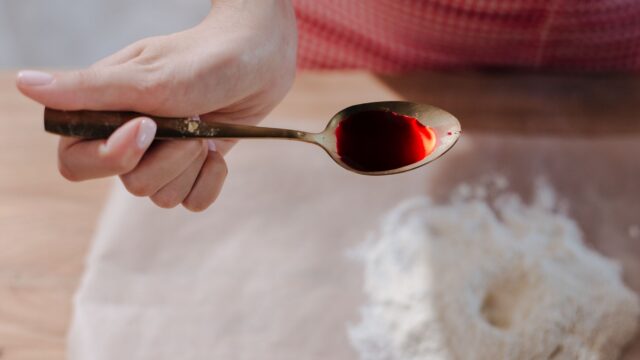
The quickest way to find out is to proof it. Stir 1 teaspoon of sugar and the yeast into 1/4 cup (60 ml) of water at about 105 to 110°F (40 to 43°C). Within 5 to 10 minutes, live yeast forms a creamy foam on top and smells clearly yeasty. If nothing happens after 10 minutes, the yeast is dead and the dough will not rise no matter how long you wait.
Yeast loses strength with age and heat. Common reasons it fails:
- The packet or jar is past its date, or it was opened months ago and kept in a warm cupboard.
- An opened jar was not sealed and stored in the fridge or freezer.
- The yeast was mixed straight into very hot water or milk.
- Salt was poured directly onto the yeast and left there before mixing.
Instant and active dry yeast behave a little differently: active dry is usually dissolved in water first, while instant can go straight into the flour. A comparison of instant versus active dry yeast and how to convert between them gives the swap amounts.
Was the water too hot or too cold?
Liquid temperature is the most common mistake after old yeast. Water that feels hot to the touch can be well above the range yeast tolerates. Use an instant-read thermometer if you have one:
- Active dry yeast dissolved in water: about 105 to 115°F (40 to 46°C).
- Instant yeast mixed with the flour first: liquid can be warmer, about 120 to 130°F (49 to 54°C), because the flour cools it.
- Around 140°F (60°C) and above, yeast cells die.
Water that is too cold does not kill yeast, but it slows it down so much that a 1-hour rise can take 3 hours or more.
Is my kitchen too cold for bread to rise?
A cool kitchen is a frequent reason for a “dead” dough that is really just slow. Below about 70°F (21°C), rising takes much longer, and in a cold winter kitchen the dough may barely move in the time a recipe gives. Warm spots that work:
- An oven that is turned off, with only the light on.
- An oven that is off, with a pan of just-boiled water on the rack below the dough.
- The top of the refrigerator or a spot near (not on) a radiator.
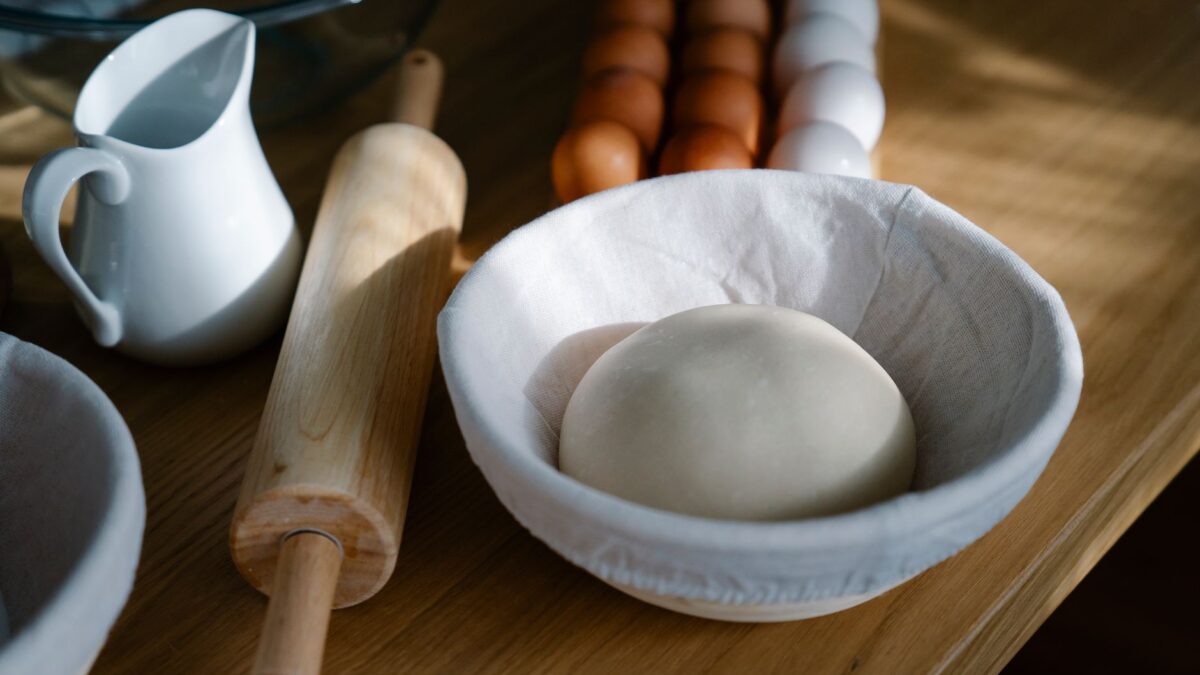
Judge the dough by size, not the clock. It is ready when it has roughly doubled and a floured finger pressed in leaves a dent that springs back slowly. For typical timings, see how long to let bread dough rise for the first and second rise.
Can the flour stop bread from rising?
Yes. Yeast makes the gas, but gluten is what traps it. Flour with less protein forms weaker gluten, so the dough rises less and spreads more.
- Bread flour has more protein than all-purpose and gives a taller loaf.
- Whole wheat flour contains bran, which cuts gluten strands, so whole wheat loaves rise lower and more slowly.
- Rye, oat, almond and other low-gluten or gluten-free flours do not rise much on their own.
- Cake and pastry flours are too weak for yeast bread.
If a recipe calls for bread flour and you used all-purpose, a lower loaf is normal; the guide to bread flour versus all-purpose flour explains when the swap works. Measuring by weight also helps: too much flour packed into a cup makes a stiff dough that rises poorly. A cups to grams converter turns cup amounts into grams.
Did I knead the dough enough?
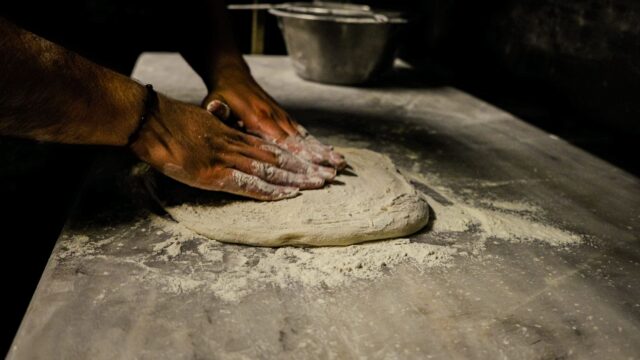
Under-kneaded dough has weak gluten that lets gas escape, so it rises a little and then stops. Well-kneaded dough is smooth and springy. To check, stretch a small piece between your fingers: if it thins into a translucent sheet without tearing (the “windowpane test”), the gluten is developed. If it tears at once, knead a few minutes more. Hand kneading usually takes about 8 to 10 minutes; a stand mixer is faster.
Can dough rise too much?
Yes, and over-proofed dough often looks like it never rose at all. If dough rises far past double, the gluten stretches until it cannot hold the gas, and the loaf collapses in the oven or bakes flat and dense with a sour, boozy smell. A finger dent that stays and does not spring back at all is a sign of over-proofing. If you catch it before baking, punch the dough down, reshape it and let it rise again for a shorter time.
What else slows yeast down?
A few ingredients and conditions slow yeast even when everything else is right:
- Too much salt. Measure it; a heaped spoon can hold far more than the recipe intends.
- Large amounts of sugar, butter or eggs, as in brioche or sweet rolls. These doughs rise more slowly by nature.
- Cinnamon and some other spices mixed into the dough in large amounts.
- High altitude, where dough rises faster and can over-proof before the timer goes off.
Once the loaf is in the oven, an oven running cold can also leave bread pale and squat. An oven thermometer on the middle rack shows whether the dial is accurate.
Quick answers
Can I save dough that didn’t rise?
If the yeast was dead, dissolve fresh yeast in a little warm water, knead it into the dough with a spoonful of flour, and let it rise again in a warm place. If the dough was only cold, move it somewhere warmer and give it more time.
Should I bake dough that only rose a little?
You can, but expect a dense, heavy loaf. Flat dough can still become flatbread, crackers or pizza base.
Does sugar help yeast work?
A small amount of sugar gives yeast quick food, which is why it is used in the proof test. Large amounts slow yeast down.
How should I store yeast?
Keep unopened packets in a cool, dry place and use them before the date. Store opened jars sealed in the refrigerator or freezer.