Bread Flour vs All-Purpose Flour: Swap Rules for Bread and Pizza
Bread flour and all-purpose flour swap 1:1 by weight in most recipes. See how protein changes chew, rise and crust in bread, pizza dough and muffins.
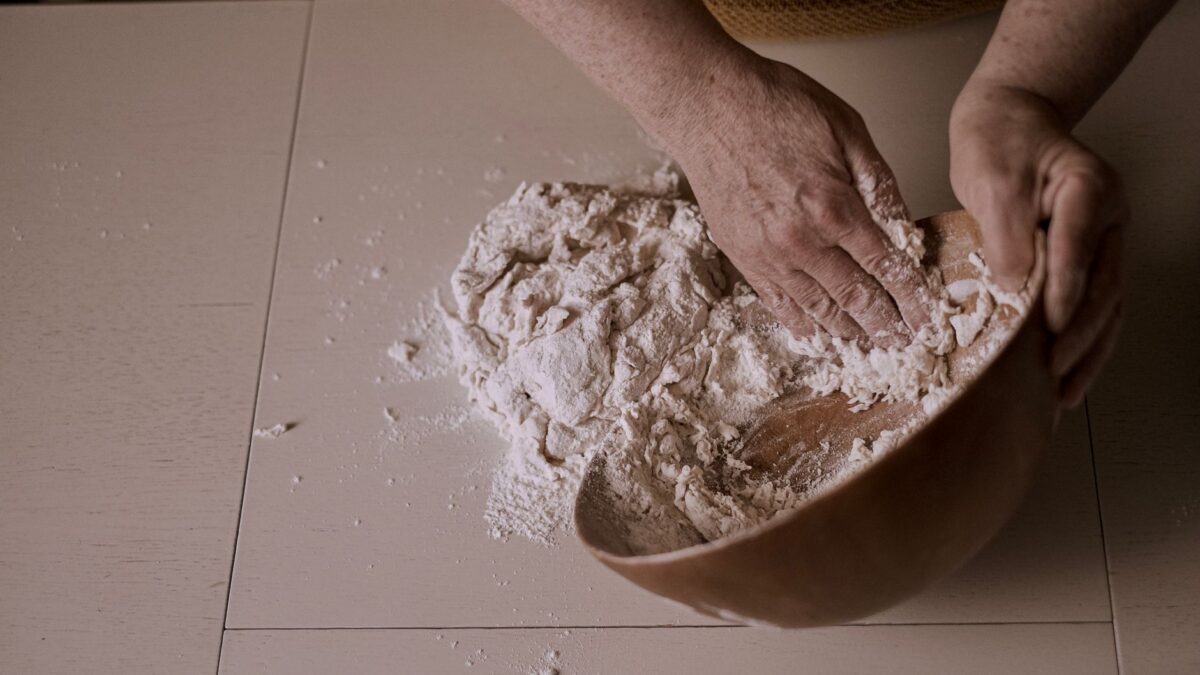
Bread flour and all-purpose flour can be swapped one for one by weight in nearly every recipe. Bread flour has more protein (about 12 to 14 percent, against about 10 to 12 percent for most all-purpose brands), so it builds more gluten, and yeast breads and pizza crusts made with it come out chewier and rise a little taller. Bread made with all-purpose flour is softer and slightly less springy but still good.
The swap works in both directions, though the results differ most in yeast doughs. In cakes, muffins and cookies the difference is smaller, and bread flour tends to make them tougher.
What is the difference between bread flour and all-purpose flour?
The difference is protein content. Wheat proteins join with water to form gluten, the stretchy network that traps gas from yeast and gives bread its structure and chew.
- Bread flour is milled from hard wheat and usually contains about 12 to 14 percent protein.
- All-purpose flour is a blend and usually contains about 10 to 12 percent protein. Some regional brands, especially in the southern United States, sit lower.
- Bread flour also absorbs somewhat more water, so the same recipe can feel a little stiffer with it.
Protein levels vary by brand, so the package label (look for grams of protein per serving) is the best guide to what you actually have.
Can you use all-purpose flour instead of bread flour?
Yes. Use the same weight of all-purpose flour and expect a softer, less chewy loaf with a slightly lower rise. Measuring by weight matters here: one US cup of either flour is roughly 120 to 130 grams depending on how it is scooped, and a cups to grams converter removes the guesswork.
A few adjustments help the dough compensate:
- Knead a little longer. By hand, 8 to 10 minutes is typical, and a stand mixer with a dough hook usually needs 6 to 8 minutes, until the dough is smooth and passes the windowpane test (a small piece stretches thin without tearing).
- Hold back a few tablespoons of the liquid and add it only if the dough feels dry. All-purpose flour usually needs a little less water than bread flour.
- Let the dough rise fully. A weaker gluten network benefits from the full first rise, until roughly doubled.
To get closer to bread flour, replace 1 to 2 teaspoons of each cup of all-purpose flour with vital wheat gluten. Vital wheat gluten is a concentrated wheat protein sold in the baking aisle, and it raises the protein level of the mix.
Can you use bread flour instead of all-purpose flour?
Yes, in most recipes, again at the same weight. The loaf, roll or pizza will be chewier and may bake up a little taller. The dough can feel firmer, so add 1 to 2 teaspoons of extra liquid per cup of flour only if the dough looks dry or stiff.
Bread flour suits yeast breads, bagels, pretzels, soft pretzels and pizza crusts. It is a poorer match for anything meant to be tender:
- Muffins and quick breads can turn dense and rubbery, because extra gluten forms even with light mixing.
- Cakes and cupcakes lose their soft, fine crumb. A cake-style recipe that calls for lighter flour is better served by the method in the cake flour substitute guide.
- Pie crust and biscuits become tougher and shrink more in the oven.
- Cookies spread less and bake up chewier. Some bakers like that, but the texture changes.
If you are making muffins with bread flour because it is all you have, mix only until the dry flour disappears and stop there.
How does the flour change pizza dough?
Pizza made with bread flour has a chewier crust with larger, more open bubbles and holds up under heavier toppings. Pizza made with all-purpose flour has a softer, more tender bite and a crust that is less stretchy.
Both work in a home oven. A standard home pizza bakes at 475 to 500°F (245 to 260°C) on a preheated stone, steel or heavy baking sheet, usually for about 8 to 12 minutes depending on thickness. With all-purpose flour, the dough tears more easily when stretched thin, so rest it for 10 to 15 minutes if it springs back. Bread flour dough is stronger and stretches further, but it also snaps back more, so the same rest helps.
A longer, cold rise in the refrigerator (a day or more) improves flavor with either flour. Italian pizzerias often use finely milled 00 flour, which is a separate product and not a direct stand-in for either flour discussed here.
Does the swap change bread loaves and rolls?
It changes the texture more than the taste. Sandwich loaves from bread flour slice cleanly, stay springy and keep their shape. The same loaf from all-purpose flour is softer, a little crumblier and may sink slightly if the dough is overproofed (allowed to rise too long).
Watch the dough rather than the clock. Press a floured finger into the risen dough: if the dent springs back slowly and only partly, it is ready to bake. If the dent stays and the dough feels slack, it has risen too far. A standard sandwich loaf bakes at roughly 350 to 375°F (175 to 190°C) and is done when the inside reaches about 190 to 210°F (88 to 99°C).
If you run out of yeast along with flour, the yeast substitute options explain what each one does to the dough.
Is raw bread dough safe to taste?
No. Raw flour of any type, bread flour included, can carry bacteria such as E. coli, and baking or cooking is what kills them. The FDA advises against eating raw dough or batter, and the same applies to pizza dough and bread dough. The guidance is covered in is raw flour safe to eat, and the U.S. Food and Drug Administration publishes its own warnings on raw flour and dough.
Quick answers
Is bread flour the same as strong flour?
In the UK, Canada and Australia, “strong flour” and “strong white flour” are the usual names for flour with the high protein of bread flour, so it can be used wherever a US recipe asks for bread flour.
Can I mix bread flour and all-purpose flour?
Yes. Mixing them gives a protein level in between, and a half-and-half blend makes a loaf with moderate chew. Use the combined weight the recipe calls for.
Do I need to change the yeast amount when I swap flours?
No. Yeast quantities stay the same. Only the texture of the dough and the amount of water it absorbs shift slightly.
Which flour is better for bagels?
Bread flour. Bagel dough is stiff and low in water, and the extra gluten gives the dense, chewy crumb bagels are known for. All-purpose flour makes a softer, breadier bagel.