Bread Internal Temperature: When Bread Is Done, by Loaf Type
Bread is done at 190 to 210°F (88 to 99°C) inside, depending on the loaf. See the internal temperature for sandwich bread, sourdough, rye and quick breads.
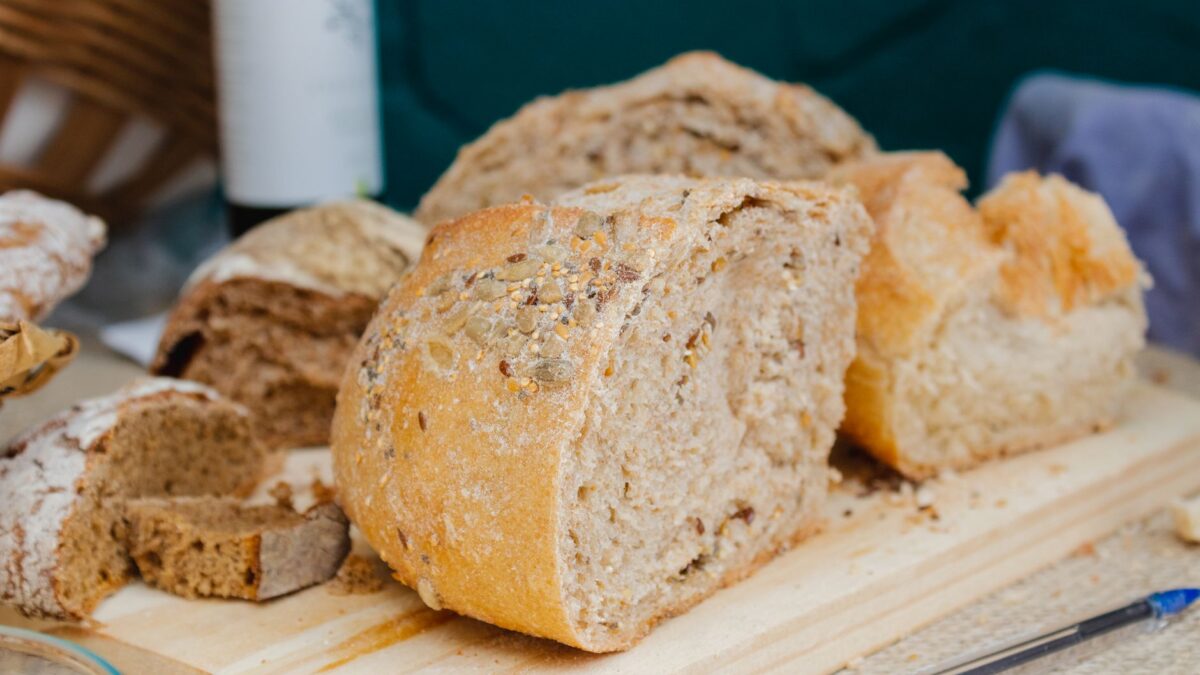
Bread is done when the center of the loaf reaches 190 to 210°F (88 to 99°C) on an instant-read thermometer. Soft, enriched breads made with butter, eggs, milk or sugar are done at 190 to 200°F (88 to 93°C), and lean, crusty breads such as baguettes and sourdough are done at 205 to 210°F (96 to 99°C). Quick breads such as banana bread fall between the two, at about 200 to 205°F (93 to 96°C).
What internal temperature should each type of bread reach?
The target depends on how much fat, sugar and water the dough holds. Enriched doughs set at a lower temperature and dry out if pushed further, while wet, lean doughs need more heat to drive off moisture and set the crumb.
- Soft sandwich loaf, white or whole wheat: 190 to 200°F (88 to 93°C)
- Dinner rolls, burger buns and cinnamon rolls: 190°F (88°C)
- Brioche and challah: 190 to 195°F (88 to 91°C)
- Baguettes, ciabatta and other lean crusty loaves: 205 to 210°F (96 to 99°C)
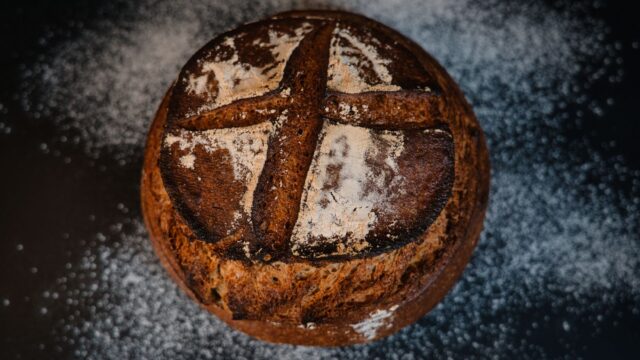
- Sourdough boules and batards: 205 to 210°F (96 to 99°C)
- No-knead Dutch oven bread: 205 to 210°F (96 to 99°C)
- Rye and dense whole grain loaves: 205 to 210°F (96 to 99°C)
- Gluten-free yeast bread: 205 to 210°F (96 to 99°C)
- Quick breads such as banana, zucchini and pumpkin: 200 to 205°F (93 to 96°C)
- Soda bread and cornbread: 195 to 205°F (91 to 96°C)
A loaf that has reached the low end of its range is safe to eat and fully set. The higher end gives a drier crumb and a firmer crust, which suits lean loaves and hurts enriched ones.
How do you take the temperature of a loaf?
Push an instant-read thermometer into the center of the loaf, which is the last part to cook. The method changes a little with the shape.
- Take the bread out of the oven and close the door so the oven keeps its heat.
- For a pan loaf, insert the probe through the side just above the rim of the pan, angled toward the middle. The hole stays hidden and the top keeps its shape.
- For a free-form boule or batard, turn the loaf over with a towel and insert the probe through the bottom into the center.
- For rolls, test one from the middle of the pan, where they bake slowest.
- Keep the tip away from the pan and from pockets of filling, fruit or melted chocolate, which read hotter or cooler than the crumb.
- Wait for the reading to stop climbing. If the loaf is under temperature, return it to the oven for 5 minutes and test again.
A thermometer that reads wrong by a few degrees can turn a good loaf gummy or dry. The USDA Food Safety and Inspection Service describes the ice water check: a thermometer held in a glass of ice and water should read 32°F (0°C).
Why do enriched breads finish at a lower temperature than lean ones?
Enriched doughs contain eggs, butter, milk and sugar, which tenderize the crumb and set at lower temperatures than a flour-and-water dough. Starch in bread gelatinizes and the structure sets by roughly 180 to 190°F (82 to 88°C), so brioche or a milk loaf is fully baked at 190°F (88°C). Baking it to 205°F (96°C) only removes moisture, and the bread stales faster.
Lean doughs are mostly flour and water, often with a high proportion of water. At 190°F (88°C) the crumb of a wet sourdough is set but still holds a lot of steam, and it can feel damp or gummy once cool. Taking those loaves to 205 to 210°F (96 to 99°C) dries the crumb enough to slice cleanly and gives the crust time to brown and harden. Rye flour holds even more water than wheat, which is why rye loaves go to the top of the range and are usually rested for a day before slicing.
Can bread reach the right temperature and still be underbaked?
Yes. Internal temperature shows that the crumb has set, and it says little about the crust or how much moisture is left. The center of a lean loaf can reach 205°F (96°C) several minutes before the crust has browned fully, and a loaf pulled at that moment may soften as it cools. Use the thermometer together with the other signs:
- The crust is deep golden brown, or dark brown for sourdough and rye.
- The bottom of a free-form loaf sounds hollow when tapped.
- A pan loaf has pulled slightly away from the sides of the pan, and its sides are browned and firm when turned out.
- The loaf feels light for its size.
Water boils at a lower temperature at high altitude, so bread baked well above sea level may never reach 210°F (99°C). Bakers at altitude should aim for the lower end of each range and rely more on crust color.
What if the crust is brown but the center is still under temperature?
Tent the loaf loosely with foil and keep baking until the center reaches its target. This happens most often with enriched doughs and quick breads, because sugar browns the outside quickly. Lowering the oven by 25°F (about 15°C) for the remaining time also helps. A loaf that browns too fast every time usually points to an oven that runs hot or a rack set too high.
A dense, damp center in a loaf that did reach temperature is often a proofing problem. Dough that goes into the oven underproofed bakes up tight and heavy, and the guide to first and second rise times covers how to tell when dough is ready. Flour choice changes the crumb as well, as explained in the comparison of bread flour and all-purpose flour.
Does bread keep cooking after it comes out of the oven?
The crumb keeps setting as the loaf cools, and steam continues to move from the center toward the crust. Cutting a hot loaf lets that steam out too quickly and compresses the soft crumb, which leaves a gummy streak even in bread that was fully baked.
Turn pan loaves out onto a wire rack within a few minutes so the sides do not steam and go soft. Rolls can be eaten warm after 10 to 15 minutes. Sandwich loaves need about 1 hour, and large sourdough or rye loaves need at least 2 hours.
Quick answers
What temperature is banana bread done?
Banana bread is done at 200 to 205°F (93 to 96°C) in the center. Insert the probe through the crack on top and avoid chunks of banana or chocolate. The classic banana bread recipe lists pan sizes and bake times.
Is bread done at 180°F?
No. At 180°F (82°C) the center of most loaves is still setting and will be gummy when cool. Bake soft breads to at least 190°F (88°C) and lean breads to 205°F (96°C).
Can you check bread without a thermometer?
Yes. Tap the bottom of a free-form loaf and listen for a hollow sound, and check that the crust is evenly browned and firm. For quick breads, a toothpick pushed into the center should come out clean or with a few dry crumbs. These signs are less exact than a temperature reading.
What happens if bread is overbaked?
Overbaked bread has a thick, hard crust and a dry crumb, and it stales sooner. Enriched loaves taken past 200°F (93°C) show this most. The bread is still safe to eat and works well as toast, croutons or breadcrumbs.