How Long to Bake a Potato: 350, 400 and 425°F Times
A whole medium russet potato bakes in 45 to 60 minutes at 400°F, 40 to 50 at 425°F and 60 to 75 at 350°F. Includes tips for crispy skin.
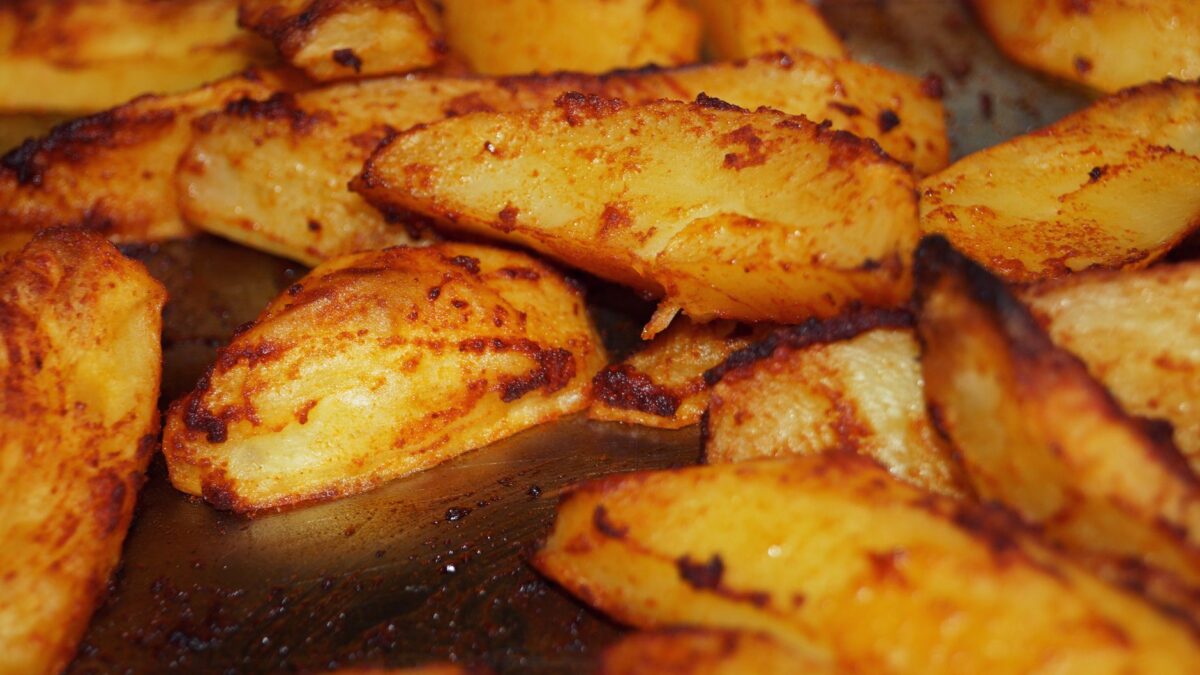
A whole medium russet potato (about 8 ounces, or 225 g) bakes in 45 to 60 minutes at 400°F (200°C), 40 to 50 minutes at 425°F (220°C) and 60 to 75 minutes at 350°F (175°C). It is done when the center reaches about 205 to 212°F (96 to 100°C) and a knife slides in with no resistance. Large russets of 10 to 12 ounces (280 to 340 g) need roughly 10 to 20 minutes more at any of these temperatures.
How long does a russet potato take at each temperature?
Time depends on size more than anything else, so use these ranges for whole, unpeeled russets baked on the oven rack:
- 350°F (175°C): 60 to 75 minutes for a medium potato, up to 90 minutes for a large one.
- 400°F (200°C): 45 to 60 minutes for a medium potato, 55 to 70 minutes for a large one.
- 425°F (220°C): 40 to 50 minutes for a medium potato, 50 to 60 minutes for a large one.
Start checking at the low end of the range. A potato that is a little overdone is still good to eat, while one that is underdone is firm and chalky in the middle.
How do you get crispy potato skin?
Dry skin, a little fat, coarse salt and direct heat give the crispiest skin. Follow these steps:
- Scrub the potatoes under running water, then dry them completely with a towel. Wet skin steams instead of crisping.
- Pierce each potato several times with a fork so steam can escape.
- Rub the skin with about 1 teaspoon (5 ml) of oil per potato, then sprinkle with coarse salt.
- Place the potatoes directly on the middle oven rack with a sheet pan on the rack below to catch drips.
- Bake at 400 to 425°F (200 to 220°C) until done, turning once halfway if you like.
- Cut a slit in the top as soon as they come out so steam escapes and the flesh stays fluffy.
The higher temperatures, 400°F and 425°F, brown the skin better than 350°F, which gives a softer, thicker skin.
How can you tell a baked potato is done?
A probe thermometer pushed into the center should read 205 to 212°F (96 to 100°C). Without a thermometer, squeeze the potato gently with an oven mitt: it should give easily. A paring knife or skewer should slide to the center with almost no resistance. Russets have a high starch content, which is why they turn dry and fluffy at these temperatures.
Should you wrap a baked potato in foil?
For crispy skin, no. Foil traps steam, so the skin comes out soft and damp, closer to a steamed potato. Foil does suit potatoes you want to keep hot for a short time after baking.
There is a food safety side to foil. Baked potatoes left wrapped in foil at room temperature for a long time can allow bacteria to grow, including the bacteria that cause botulism. Serve them hot, and refrigerate leftovers within 2 hours, as the USDA Food Safety and Inspection Service advises for perishable foods in general. Unwrap the foil before storing.
Can you bake potatoes alongside other dishes?
Yes, because potatoes tolerate a wide range of oven temperatures. Pick the temperature the main dish needs and adjust the potato time. Potatoes fit well with the roasting temperatures in our guides to baking chicken thighs at 375, 400 and 425°F and baking chicken breast at 350, 375, 400 and 425°F. For fish, the salmon timing guide covers 400°F and 425°F, so you can start the potatoes first and add the fish for the final stretch.
If your oven is fan forced or convection, many ovens run hotter, and the usual adjustment is to lower the setting by about 25°F (15°C) or shorten the time. The fan forced oven conversion chart lists the matching Celsius settings.
Why is a baked potato hard in the middle or leathery outside?
A hard center almost always means the potato needed more time, or it was larger than a medium potato. Return it to the oven and check again every 10 minutes. A leathery, dry skin usually comes from too much oil left unsalted, a long bake at a low temperature, or leaving the potato in the hot oven after it was done. A cold oven start also adds time, so preheat fully before the potatoes go in.
Green patches on a potato or sprouts with a bitter taste should be cut away before baking. If a potato has large green areas, it is better to discard it.
Quick answers
Do you have to poke holes in a potato before baking?
Piercing is standard advice because it lets steam escape, which lowers the chance of a split skin. A few pokes with a fork are enough.
What is the best potato for baking?
Russet potatoes (also sold as Idaho potatoes) are the usual choice, because their high starch content gives a fluffy interior and a skin that crisps well.
How do you reheat a baked potato?
Place it in a 400°F (200°C) oven for about 15 to 20 minutes, until hot all the way through. The skin crisps again, while the microwave makes it soft.