Why Do Muffins Have Tunnels and Holes Inside? Overmixing, Peaked Tops and the Fix
Tunnels running up through a muffin are a classic sign of overmixing. A gentler fold and a lumpy batter are the cure.
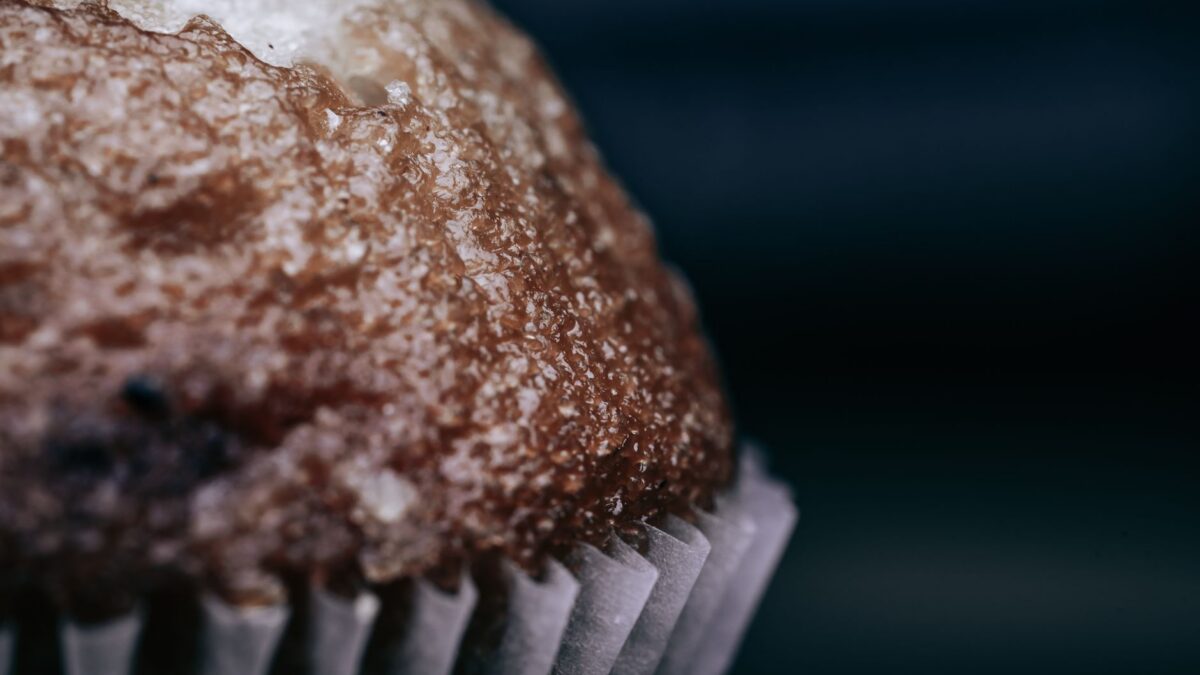
Tunnels and large holes inside muffins are almost always caused by overmixing. Stirring develops gluten, which traps expanding steam and gas in long channels that run up toward the top, often with a peaked, knobby crown. The fix is the muffin method: whisk wet and dry ingredients separately, then fold them together briefly and stop while the batter is still lumpy.
What tunnels look like
Cut an overmixed muffin from top to bottom and you will often see narrow, elongated holes running vertically through the crumb, sometimes from the base nearly to the top. The muffin may also have a pointed or lopsided peak, a slightly shiny crust and a chewy, bready texture. A well-mixed muffin, in contrast, has a fairly even crumb with small, round holes and a gently rounded dome.
Why overmixing causes tunnels
Wheat flour contains proteins that link into gluten once they are wet and stirred. In bread, gluten is the goal: it forms an elastic network that holds gas. In a muffin, too much gluten acts like a set of balloons. As the batter heats, steam and carbon dioxide from the leavening expand, and the stretchy gluten lets those bubbles join and travel upward instead of staying small and evenly spread. The bubbles follow the path of least resistance, from the hotter bottom and sides toward the softer center and top, leaving tunnels behind as the crumb sets.
The same strong structure makes the center push up into a narrow peak instead of a broad dome. For more on how protein content and mixing affect structure, see what gluten does in baking.
Other causes that make it worse
| Factor | Effect | Fix |
|---|---|---|
| Overmixing | Strong gluten, tunnels, peaks, chewiness | Fold 15–20 strokes, stop at lumpy |
| High-protein flour (bread flour) | More gluten for the same mixing | Use all-purpose flour |
| Using an electric mixer for the final mix | Very easy to overwork the batter | Combine wet and dry by hand |
| Too much leavening | Large, uneven bubbles | Level measuring spoons; follow the ratio |
| Oven too hot | Sides set fast, center bursts upward | Check with an oven thermometer |
| Poorly distributed leavening | Random large holes, bitter spots | Whisk dry ingredients thoroughly first |
The muffin method, step by step
The muffin method is designed to hydrate the flour with as little stirring as possible. Our full guide, the muffin method explained, compares it with the creaming method used for cakes.
- Whisk the dry ingredients (flour, sugar, baking powder or soda, salt, spices) in a large bowl for 20–30 seconds. Doing this well now means you need less stirring later.
- Whisk the wet ingredients (eggs, milk or buttermilk, melted butter or oil, vanilla) in a second bowl until smooth.
- Make a well in the dry ingredients and pour in the wet mixture all at once.
- Fold with a flexible spatula, sweeping around the side of the bowl and cutting through the middle, turning the bowl as you go.
- Stop when you no longer see dry flour, typically after 15–20 strokes. The batter should look thick and lumpy.
- Add mix-ins in the last few strokes, or fold them in very briefly after.
- Scoop and bake promptly in a preheated oven.
Why lumpy batter is fine
Many home bakers keep stirring because the batter looks unfinished. Small lumps of flour are pockets of dry flour that will hydrate from the moisture around them as the batter rests in the cups and heats in the oven. They disappear in the finished muffin. A smooth, glossy muffin batter is usually a sign it has gone too far. Large pockets of completely dry flour are different: scrape the bottom of the bowl once to catch them.
Does resting batter help?
Resting batter for 15–30 minutes lets flour absorb liquid, so remaining lumps soften and gluten relaxes slightly. It can also thicken the batter for taller tops. It will not undo heavy overmixing, though. If you rest batter longer than about half an hour, cover it and refrigerate it. Do not taste raw batter while you wait: the FDA advises against eating raw batter because flour and raw eggs can carry harmful bacteria.
Tunnels vs other holes
- Vertical tunnels with a peaked top: overmixing.
- A large hollow under the crust: often an oven that is too hot or too much leavening.
- Scattered large holes with a bitter taste: leavening not mixed evenly through the flour.
- Dense crumb with no holes: also linked to overmixing or too much flour; see why muffins are dense.
Bottom line
Tunnels mean the gluten got too strong. Whisk the dry ingredients well, fold wet into dry by hand, stop at lumpy and use all-purpose flour. Those changes alone usually produce an even crumb and a rounded top on the next batch.
FAQ
How many strokes should I mix muffin batter?
Usually around 15–20 gentle folds with a spatula, or just until no dry flour is visible. Exact counts vary with bowl size and batter volume.
Can I fix overmixed batter?
Not fully. Resting it for 20–30 minutes can relax the gluten a little, but the texture will still be firmer than a gently mixed batch.
Why do my muffins have a pointed top?
A sharp peak usually comes from overmixing or a very hot oven that sets the sides quickly and forces the center straight up.
Does whole wheat flour cause tunnels?
Whole wheat flour tends to make muffins denser rather than tunneled, because the bran cuts through the gluten strands.