Graham Cracker Crust Ratio: Baked vs No-Bake and Pan Sizes
A graham cracker crust for a 9-inch pie uses 1 1/2 cups crumbs, 1/4 cup sugar and 5 to 6 tablespoons butter. Baked vs no-bake and other pan sizes.
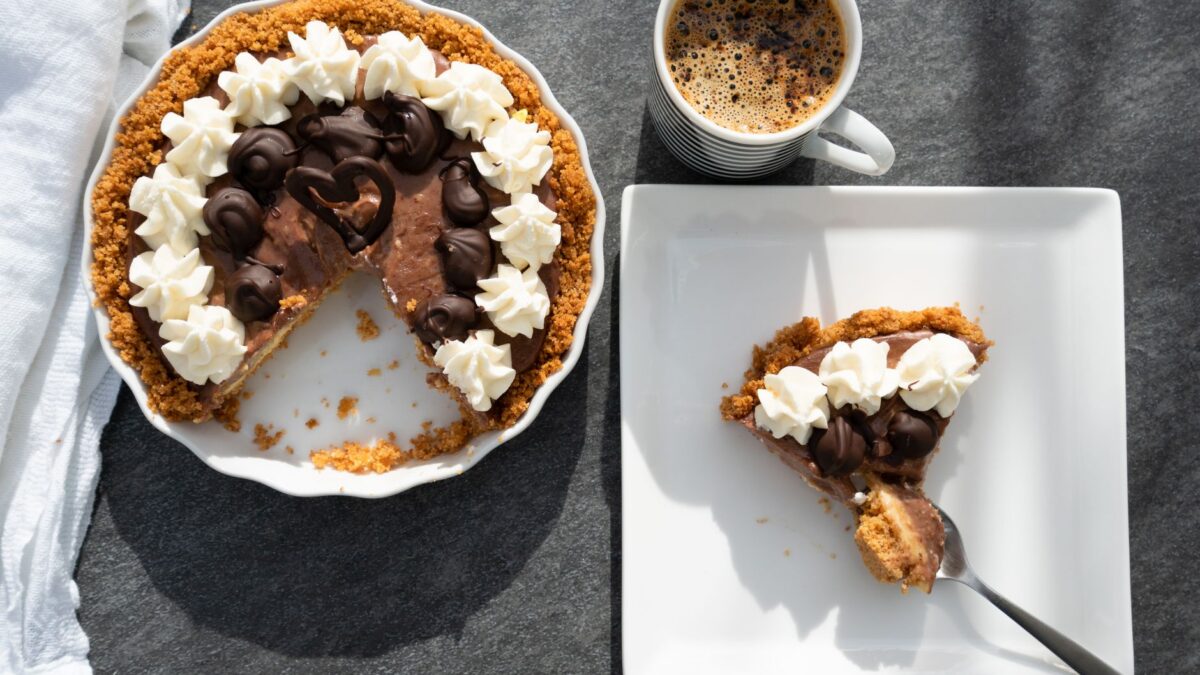
A standard graham cracker crust for a 9-inch pie plate takes 1 1/2 cups (about 150 g) of fine graham cracker crumbs, 1/4 cup (50 g) of sugar and 5 to 6 tablespoons (70 to 85 g) of melted butter. Baked at 350°F (175°C) for 8 to 10 minutes, it sets firm and tastes toasted. Left unbaked, it needs at least an hour in the refrigerator and stays softer and more crumbly.
The same ratio scales up or down for deep-dish plates, springform pans and 9×13-inch pans, and the choice between baked and no-bake depends mostly on the filling.
What is the basic graham cracker crust ratio?
The working ratio is roughly 6 parts crumbs to 1 part sugar to 2 parts butter by volume, or about 3 parts crumbs to 1 part sugar to 1 1/2 parts butter by weight. For one 9-inch standard pie plate that means:
- 1 1/2 cups (about 150 g) fine graham cracker crumbs, which is about 10 to 12 full cracker sheets
- 1/4 cup (50 g) granulated sugar, or less if the crackers are already sweet
- 5 to 6 tablespoons (70 to 85 g) unsalted butter, melted
- A pinch of salt if you use unsalted butter
Mix the crumbs, sugar and salt first, then pour in the butter and stir until every crumb is damp. The mixture should look like wet sand and hold together when you squeeze a handful. If it falls apart, add butter 1 tablespoon at a time. If butter pools in the bowl, add a few more crumbs.
Should you bake a graham cracker crust or use it no-bake?
Bake the crust when the filling will be baked too, or when you want a firmer shell that slices cleanly. Use a no-bake crust for fillings that only set in the refrigerator, such as icebox pies, mousse and no-bake cheesecake.
Here is how the two methods differ:
- Baked: 350°F (175°C) for 8 to 10 minutes, until fragrant and a shade darker at the edges. The sugar melts and binds the crumbs, so the crust holds its shape and resists going soggy.
- No-bake: press the crust into the pan and chill it for at least 1 hour, or freeze it for 15 to 20 minutes. Only the butter holds it together, so it softens at room temperature and crumbles more when cut.
- Filled and baked together: for baked cheesecake or custard pies, many recipes pre-bake the crust for 8 to 10 minutes before the filling goes in. This keeps the bottom crisper under a wet filling.
Let a baked crust cool completely before adding a cold filling. A warm crust melts whipped cream and makes gelatin or pudding fillings weep. The site’s guide to blind baking a pie crust covers the pastry version of this step; graham crusts do not need pie weights.
How much crust mixture do different pan sizes need?
Scale the recipe by the area of the pan bottom plus how far up the sides you press it. These amounts are common starting points:
- 8-inch pie plate: about 1 1/4 cups (125 g) crumbs, 3 tablespoons sugar, 4 to 5 tablespoons butter
- 9-inch standard pie plate: 1 1/2 cups (150 g) crumbs, 1/4 cup sugar, 5 to 6 tablespoons butter
- 9-inch deep-dish pie plate: about 2 cups (200 g) crumbs, 1/3 cup (65 g) sugar, 7 to 8 tablespoons butter
- 9-inch springform pan, bottom only: 1 1/2 cups (150 g) crumbs; bottom and 1 inch up the sides: about 2 cups (200 g)
- 9×13-inch pan, bottom only: about 2 1/2 cups (250 g) crumbs, 1/3 cup sugar, 8 to 10 tablespoons butter
- 8-inch square pan, bottom only: about 1 1/2 cups (150 g) crumbs
For a pan size not listed here, the baking pan size converter compares the area of two pans so you can multiply the crumb amount by the same factor. For mini cheesecakes in a muffin tin, plan on 1 to 1 1/2 tablespoons of crumb mixture per standard cup; the site’s chart of mini, standard and jumbo muffin pan sizes helps if you use a different cup size.
How do you press the crust so it does not crumble?
Pack the crumbs firmly and evenly, starting with the sides. Dump the mixture into the pan, push some up the sides with your fingers, then press the bottom flat with the base of a measuring cup or a flat-bottomed glass. Run the cup around the inside edge where the side meets the bottom, because that corner is where crusts usually stay thin and loose.
Aim for an even layer about 1/4 inch thick. Thick corners stay underbaked and greasy, and thin patches break when you slice.
Why is a graham cracker crust soggy, crumbly or greasy?
Most problems come from the butter ratio or from skipping the chill or bake.
- Crumbly when sliced: too little butter, crumbs too coarse, or the crust was not packed hard enough. A no-bake crust that was not chilled long enough also falls apart.
- Greasy or hard: too much butter. The extra fat pools at the bottom and sets into a hard layer once chilled.
- Soggy: a wet filling sat on an unbaked crust for too long. Pre-baking helps, and so does adding the filling close to serving time for no-bake pies.
- Burnt edges: the oven ran hot or the crust baked too long. Graham crusts brown fast because of the sugar, so check at 8 minutes.
- Stuck to the plate: a glass or ceramic plate with no grease. Dipping the bottom of the pie plate in warm water for a minute before slicing loosens the butter.
Can you swap the crumbs, sugar or butter?
Yes, within limits. Other dry, crisp cookies work at the same weight: vanilla wafers, gingersnaps, shortbread or chocolate wafers. Cream-filled sandwich cookies need less butter, about 3 to 4 tablespoons for 1 1/2 cups of crumbs, because the filling adds fat. Brown sugar in place of white sugar gives a slightly softer, more caramel-tasting crust. Coconut oil can replace butter one for one, though the crust will be firmer straight from the refrigerator.
Gluten-free graham-style crackers behave like regular ones when ground fine. Check every label if you bake for someone with a wheat or nut allergy, since many cookie crumbs are processed alongside both.
Quick answers
How many graham crackers make 1 1/2 cups of crumbs?
About 10 to 12 full graham cracker sheets, crushed fine, give 1 1/2 cups (about 150 g) of crumbs. Store-bought crumbs measure the same.
Can you make a graham cracker crust ahead of time?
Yes. A baked or pressed crust keeps, covered, for 1 to 2 days at room temperature or in the refrigerator, and for up to 3 months in the freezer. Pies with dairy, egg or cream fillings belong in the refrigerator; FoodSafety.gov has the federal guidance on cold storage.
Do you need to grease the pan for a graham cracker crust?
No. The butter in the crust keeps it from sticking in most pans. A springform pan with a removable base releases most easily.
Can you skip the sugar?
Yes, but an unsweetened crust holds together less well, because melted sugar is part of what binds a baked crust. Add an extra tablespoon of butter if you leave the sugar out.