Classic Apple Pie: Best Apples, Thickening and No Soggy Bottom
Classic apple pie works best with a mix of firm tart and sweet apples and a starch thickener. The recipe, bake times and soggy bottom fixes are below.
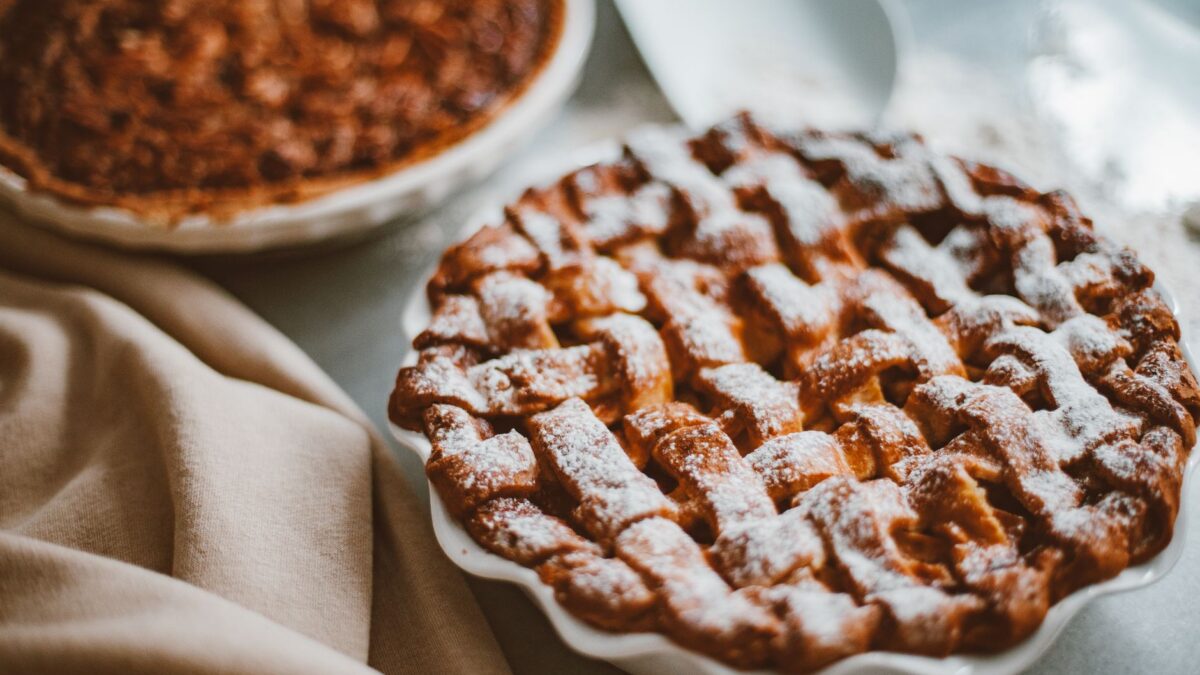
A classic apple pie is a double-crust 9-inch (23 cm) pie filled with about 2.5 to 3 pounds (1.1 to 1.4 kg) of sliced firm apples, sugar, spice and a starch thickener, baked until the juices bubble thickly through the vents. The best apples for pie hold their shape and balance sweet with tart: Granny Smith, Honeycrisp, Braeburn, Jonagold, Golden Delicious and Pink Lady are reliable, and a mix of two or three works better than one. A soggy bottom is prevented by baking on a low rack in a hot oven, using enough thickener and letting the pie cool for several hours before slicing.
Ingredients
For the double crust
- 2 1/2 cups (315 g) all-purpose flour
- 1 tablespoon (12 g) granulated sugar
- 1 teaspoon (6 g) fine salt
- 1 cup (2 sticks, 226 g) cold unsalted butter, cut into cubes
- 6 to 8 tablespoons (90 to 120 ml) ice water
For the filling
- 6 to 8 medium apples, about 2.5 to 3 pounds (1.1 to 1.4 kg), enough for about 7 to 8 cups sliced
- 2/3 to 3/4 cup (135 to 150 g) granulated sugar, or part brown sugar
- 1/4 cup (32 g) all-purpose flour, or 2 to 3 tablespoons (16 to 24 g) cornstarch
- 1 tablespoon (15 ml) lemon juice
- 1 teaspoon (3 g) ground cinnamon
- 1/4 teaspoon ground nutmeg
- 1/4 teaspoon fine salt
- 1 to 2 tablespoons (14 to 28 g) butter, cut into small pieces
- 1 egg beaten with 1 tablespoon (15 ml) milk or water, and coarse sugar for the top
Steps
- Whisk the flour, sugar and salt for the crust. Cut or rub in the cold butter until the largest pieces are about the size of peas.
- Sprinkle in ice water a tablespoon at a time, tossing with a fork, until the dough holds together when squeezed. Divide into two discs, wrap and chill at least 1 hour, or up to 2 days.
- Peel, core and slice the apples about 1/4 inch (6 mm) thick. Toss with the lemon juice, sugar, thickener, spices and salt.
- Place a rack in the lower third of the oven, set a sheet pan on it and heat to 425°F (220°C).
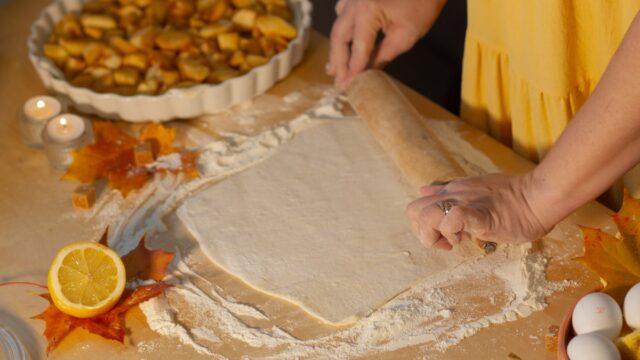
- Roll one disc into a 12-inch (30 cm) circle and ease it into a 9-inch (23 cm) pie plate without stretching. Chill while you roll the second disc.
- Pile the apples into the crust, mounding them in the center, and leave most of the loose liquid in the bowl. Dot with butter.
- Cover with the top crust or a lattice, trim to a 1/2-inch (1 cm) overhang, fold under and crimp. Cut 4 to 6 vents in a solid top. Chill the assembled pie for 15 to 20 minutes.
- Brush with egg wash, sprinkle with coarse sugar and bake on the hot sheet pan for 20 minutes.
- Lower the oven to 375°F (190°C) and bake another 35 to 50 minutes, until the crust is deep golden and thick juices bubble slowly through the vents. Cover the edges with foil or a pie shield if they brown too fast.
- Cool on a rack for at least 3 to 4 hours so the filling sets before slicing.
Which apples are best for apple pie?
The best apples for apple pie are firm varieties that keep their shape in the oven and have enough acidity to balance the sugar. Good choices include:
- Granny Smith: very tart and firm; the classic base, often mixed with a sweeter apple.
- Honeycrisp: sweet-tart and crisp, holds slices well.
- Braeburn and Jonagold: balanced flavor and firm texture.
- Golden Delicious: sweet and mellow; softens more but stays in pieces.
- Pink Lady and Northern Spy: firm and tangy, traditional pie apples.
Apples such as McIntosh and Red Delicious tend to break down into sauce or turn mealy, so use them only as a small part of a mix if you like a softer filling.
How do you thicken apple pie filling?
Apple pie filling is thickened with flour, cornstarch or tapioca, and it only sets properly when the juices reach a full bubble in the oven. Each thickener behaves a little differently:
- All-purpose flour: forgiving and easy, gives a slightly opaque, soft set. Use about 1/4 cup (32 g).
- Cornstarch: stronger and clearer. Use 2 to 3 tablespoons (16 to 24 g); it needs to bubble to thicken fully.
- Instant or quick-cooking tapioca: glossy and clear, good for very juicy apples. Use 2 to 3 tablespoons, ideally ground fine so no pearls show.
Juicy apples, more sugar and a lattice top all mean more liquid, so lean toward the higher amount. Another method is to precook the apples briefly on the stove or let the sugared slices sit for an hour, drain the juice, reduce that juice to a syrup and stir it back in before filling the crust.
How do you avoid a soggy bottom crust?
A soggy bottom crust is avoided by sending strong heat to the base of the pie early and by keeping excess liquid out of the filling. The main fixes:
- Bake on the lowest third of the oven, on a preheated sheet pan or baking stone.
- Start at 425°F (220°C) so the bottom sets before the fruit releases most of its juice.
- Use a glass or metal pie plate; glass lets you check that the bottom is browned.
- Leave pooled juice in the bowl instead of pouring it into the crust.
- Bake long enough: pale, barely bubbling pies are underbaked underneath.
- Cool fully on a wire rack so steam can escape, the same principle behind why muffins get soggy bottoms.
Blind baking the bottom crust is not usual for a double-crust apple pie, but brushing the bottom crust with a little beaten egg white before filling can add a thin protective layer. In a convection oven, lower the temperature by about 25°F (15°C) and check early; the guide to baking in a convection oven explains the adjustments.
Variations
- Dutch apple pie: replace the top crust with a crumb topping of flour, brown sugar, butter and cinnamon.
- Caramel apple pie: use brown sugar in the filling and drizzle caramel sauce over the apples before closing.
- Cheddar crust: work a little finely grated sharp cheddar into the crust dough, a traditional pairing in New England.
- Cranberry apple: replace about 1 cup of the apples with fresh cranberries and add a little more sugar.
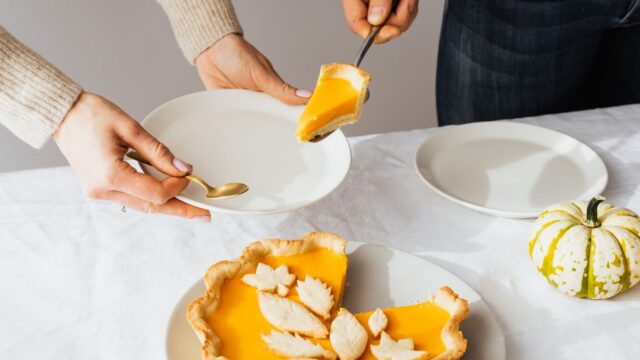
For a full holiday table, the same oven can bake a classic pumpkin pie the day before.
How should apple pie be stored?
Apple pie can be kept loosely covered at room temperature for up to 2 days, then refrigerated for up to about 2 more days. Reheat slices at 350°F (175°C) for 10 to 15 minutes to re-crisp the crust. A baked pie freezes well for 3 to 4 months wrapped tightly; an unbaked assembled pie can be frozen and baked straight from frozen, adding about 20 to 30 minutes to the bake time.
Troubleshooting
- Runny filling: the pie was cut while warm, the juices never bubbled, or there was too little thickener for juicy apples.
- Gap under the top crust: the apples shrank as they baked; mound them high, slice evenly, or precook them briefly.
- Mushy apples: a soft variety was used, or the slices were too thin.
- Tough crust: too much water or too much handling; keep the dough cold and mix only until it holds together.
- Crust shrank in the plate: the dough was stretched or not chilled before baking.
Quick answers
How do you know when apple pie is done?
Apple pie is done when the crust is deep golden brown and thick juices bubble slowly through the vents or lattice, not just at the edges. A knife slid through a vent should meet tender but not mushy apples.
Should apples be peeled for pie?
Peeling is traditional because the skins turn tough and chewy during baking. Unpeeled slices are safe to use but change the texture.
How long should apple pie cool before cutting?
Let apple pie cool for at least 3 to 4 hours. The thickened juices continue to set as the pie cools, so a hot pie will run even when properly baked.