Why Are My Cookies Dry and Crumbly? Flour, Bake Time and Dough Fixes
Dry, crumbly cookies usually come from too much flour, too little fat or egg, or too long in the oven. Here is how to find the cause and fix the dough.
Cookies turn dry and crumbly when the dough has too much flour, too little fat, sugar or egg, or when the cookies spend too long in the oven. Flour is the most common culprit, because a cup scooped straight from the bag can weigh well over the 120 to 125 grams most recipes assume. Fix the dough with a spoonful of liquid or egg, and pull the next batch a minute or two earlier.
Is there too much flour in my dough?
Very likely, if the dough looked stiff or dusty before baking. Dipping a measuring cup into a flour bag packs the flour down, and the cup can end up holding noticeably more than the recipe intended. Extra flour soaks up the water and fat in the dough, so the cookies spread less and bake up dense and sandy.
Two habits prevent it. Weigh the flour on a kitchen scale, using the gram amount in the recipe if there is one. Otherwise, fluff the flour with a spoon, spoon it into the cup and level the top with a knife. The cups to grams converter gives gram equivalents for common baking ingredients.
Could the cookies be overbaked?
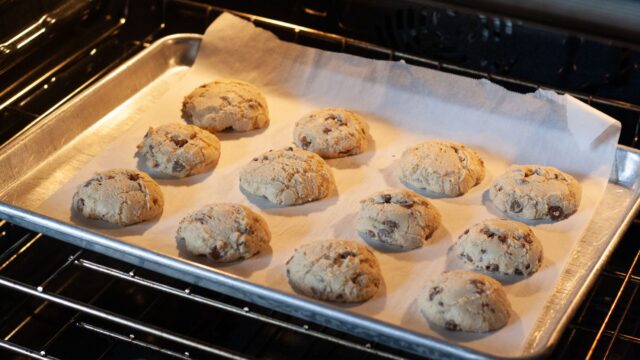
Yes, and the margin is small. Most drop cookies bake at 350°F (175°C), and they keep cooking on the hot pan after they leave the oven. Cookies that look fully done in the oven are often overdone by the time they cool. Take them out when the edges are set and golden and the centers still look slightly soft, then leave them on the baking sheet for a few minutes before moving them to a rack.
Typical times for different cookie types are in the guide on how long to bake cookies at 350°F. Thin, small cookies reach the end of that range faster than thick ones, so check them early.
Does the oven temperature matter?
It does. Many home ovens run hotter or cooler than the dial says, and a hot oven dries the edges before the middle sets. An inexpensive oven thermometer on the middle rack shows the real temperature. Bake one sheet at a time on the center rack, and use a light-colored pan, because dark pans brown the bottoms faster and dry them out.
Is there enough fat, sugar and egg?
Butter, sugar and eggs keep cookies tender and hold the dough together. Cutting the butter or sugar in a recipe, using a smaller egg than the recipe calls for, or swapping in a low-fat spread leaves the dough short on moisture. Sugar attracts water and softens the crumb, so lowering it makes cookies drier and paler. Brown sugar adds more moisture than white sugar, which is why recipes with a lot of brown sugar tend to bake up chewier.
If the dough was too cold or the butter was not creamed with the sugar, it may also look crumbly in the bowl. Let it sit at room temperature for a few minutes and work it with your hands before judging it.
How do I fix dough that is already dry?
Work in moisture a little at a time, and stop as soon as the dough holds together when you squeeze it:
- Add one tablespoon of milk, or a beaten egg yolk, to the bowl.
- Mix on low speed or by hand until just combined.
- Squeeze a small piece. If it still falls apart, add another teaspoon or two of milk.
- Bake a test cookie before baking the whole tray.
Do not keep adding flour to a dough that crumbles, since that makes it worse. For cut-out and rolled dough that cracks at the edges, let it warm up for a few minutes before rolling, as covered in the guide to Linzer cookie dough.
Can I rescue cookies that are already baked?
Partly. Store dry cookies in an airtight container with a slice of fresh bread for a day, and the cookies take up some of the moisture. This softens them but does not fix the texture, so adjust the recipe the next time. If the problem is the opposite, with cookies that bake up puffy and soft, see why cookies turn cakey.
Quick answers
Why are my cookies crumbly after cooling?
Overbaking, too much flour and too little fat or egg are the usual reasons. Cookies also firm up as they cool, so a cookie that seems soft out of the oven is correct.
Can I add milk to cookie dough?
Yes, a tablespoon at a time. Milk adds moisture without changing the flavor much, but too much will make the cookies spread thin.
Should I chill the dough?
Chilling helps butter-heavy dough hold its shape and spread less. It does not add moisture, so it will not cure a dough that is already too dry.
How should I store cookies so they stay soft?
Keep them in an airtight container at room temperature once they have cooled completely, and do not mix crisp and soft types in the same container.