Why Are My Cookies Cakey? Flour, Eggs and Leavening Fixes
Cakey cookies usually come from too much flour, too much egg white or too much leavening. Find the cause in your dough and fix it with simple changes.
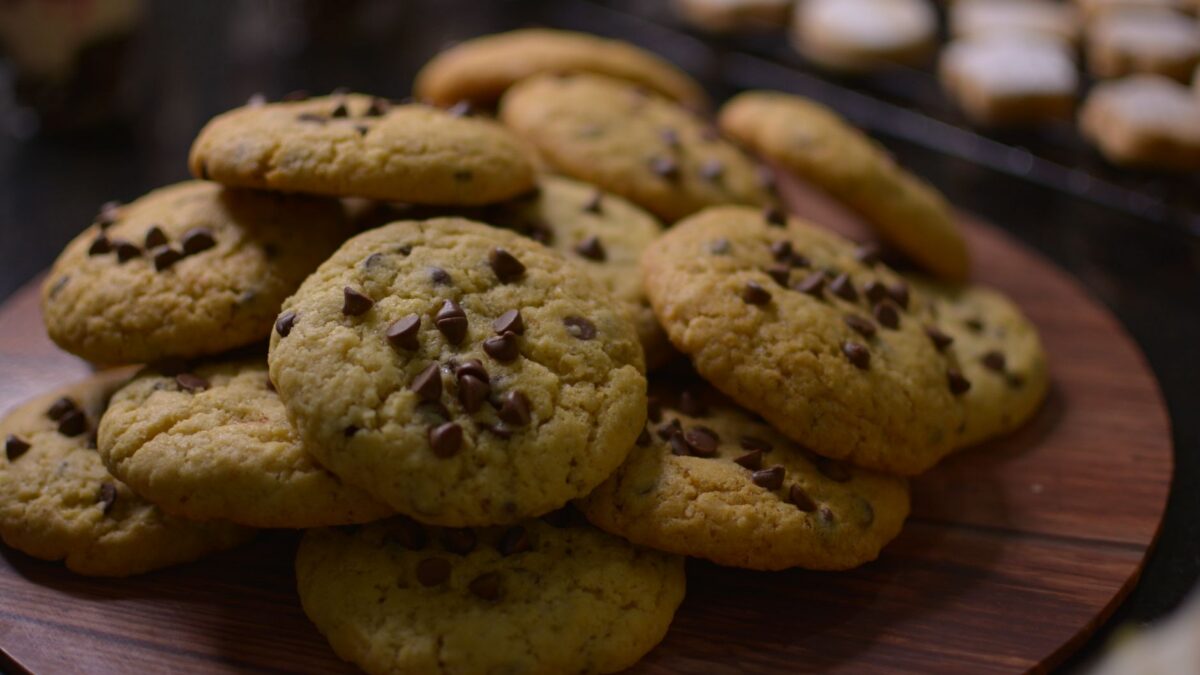
Cookies turn out cakey when the dough holds too much flour, too much egg (especially white), too much leavening or too much air from long creaming. Each of these makes the dough rise and set before it can spread and turn dense and chewy. Measuring flour by weight, using one whole egg plus a yolk, and checking the amount of baking powder or soda fix most cases.
The sections below go through each cause, how to spot it and what to change in the next batch.
How much flour makes cookies cakey?
Too much flour is the most common cause. Scooping a measuring cup straight into the bag packs the flour down, and the cup can end up holding far more than the recipe intends. A cup of all-purpose flour usually weighs about 120 to 125 grams when spooned and leveled, and a packed scoop can be noticeably heavier.
Extra flour soaks up the butter and moisture in the dough, so the cookie stays tall and tastes dry and bready. If the dough feels stiff and crumbly before baking, flour is the likely culprit.
- Stir the flour in its container, spoon it lightly into the cup and sweep the top level with a knife.
- Better still, weigh it. The cups to grams converter gives standard weights for flour, sugar and butter.
- Use all-purpose flour unless the recipe says otherwise. Cake flour has less protein and gives a softer, more cake-like crumb.
Do eggs make cookies cakey?
Yes. Egg whites add water and protein that puff up in the oven, and more egg means more lift and a softer, spongier crumb. Yolks carry fat and emulsifiers, which make cookies richer and chewier.
If a recipe calls for two large eggs and your cookies are cakey, try one whole egg plus one extra yolk in place of the second egg. Using a larger egg than the recipe expects, or an extra egg to rescue a dry dough, has the same effect as adding more white. When you scale a recipe up or down, eggs are the ingredient most often rounded the wrong way, and the guide to halving or doubling a baking recipe covers how to handle them.
Can baking powder or baking soda cause cakey cookies?
Yes, and baking powder is the bigger risk. Baking powder is made to give lift, which suits cakes and muffins but pushes cookies upward instead of letting them spread. Baking soda also helps cookies brown and spread a little, but too much leaves a soapy taste and an uneven texture.
Check the recipe for both and make sure you did not swap one for the other. The two are not interchangeable teaspoon for teaspoon, because baking powder is much weaker than soda. If a drop-cookie recipe asks for baking powder and you want a flatter, chewier cookie, replacing it with a smaller amount of baking soda is a common adjustment, though results vary with the other ingredients. The baking powder per cup of flour ratios show typical amounts for different bakes, so you can see when a cookie recipe is leaning toward a cake.
Does creaming butter and sugar too long make cookies cakey?
Yes. Beating butter and sugar for a long time whips air into the dough. That air expands in the oven and gives a lighter, cakier cookie. A few minutes of creaming is enough for most recipes, and it should stop once the mixture looks pale and fluffy.
Butter temperature matters as well. Butter that is very soft or partly melted holds air poorly, while cold butter creamed hard traps more of it. Butter that is cool but pliable, around the point where a finger leaves a dent without sinking in, is the usual target. Melted butter gives a denser, chewier cookie because it carries no whipped air at all.
Do sugar type and amount change the texture?
Yes. Sugar melts as the cookie bakes and helps it spread, and it holds on to moisture. Too little sugar gives a cookie that sets early and stays puffy. Brown sugar contains more moisture than white, so using more brown sugar than white moves the result toward soft and chewy.
Do not cut the sugar in a recipe to make it less sweet and expect the same texture. The cookie will rise more and spread less. If cookies are already puffy, see this guide to puffy cookies that did not spread for related fixes.
Can dough temperature and oven heat make cookies cakey?
Yes. Cold dough spreads slowly, and the edges and center set while the cookie is still thick. A short chill is useful for stopping runaway spreading, but a long chill on an already stiff dough can leave cookies tall. Let very cold dough sit at room temperature for a few minutes before scooping.
An oven that runs cool bakes cookies slowly, and an oven that runs hot sets the outside before the middle can flatten. Most drop cookies bake at around 350°F (175°C) and a cheap oven thermometer shows whether your dial is accurate. The cookie bake times at 350°F give typical ranges for drop, rolled and bar cookies.
A quick checklist for the next batch
- Weigh the flour, or spoon and level it.
- Replace one whole egg with a yolk if the dough is eggy.
- Confirm you used baking soda or baking powder as written, and the right spoon.
- Cream butter and sugar only until combined and pale.
- Add a little more brown sugar and less white if you want chew.
- Bake one test cookie first, then adjust the dough before baking the whole tray.
Quick answers
Why are my chocolate chip cookies cakey and not chewy?
Usually too much flour or too much egg white. Weigh the flour, use an extra yolk in place of one egg and use more brown sugar than white. Melted butter also pushes the texture toward dense and chewy.
Can I fix cakey dough before baking?
Often, yes. Bake one cookie as a test. If it is puffy, mix a spoonful of milk or a beaten yolk into the remaining dough, a little at a time, and test again. Do not add more leavening.
Is a cakey cookie ever intentional?
Yes. Some recipes, such as pumpkin cookies and soft frosted cookies, are meant to be light and cake-like. They use more moisture and often baking powder on purpose.
Does baking time change how cakey a cookie is?
Slightly. Overbaking dries cookies out and makes them taste more bready, so pull them when the edges are set and the center still looks a little soft. They finish firming on the hot tray.