Why Didn’t My Cookies Spread? Causes of Puffy Cookies and 8 Fixes
Cookies stay puffy and domed when the dough has too much flour, is too cold or uses little butter or sugar. Find each cause and how to bake flatter cookies.
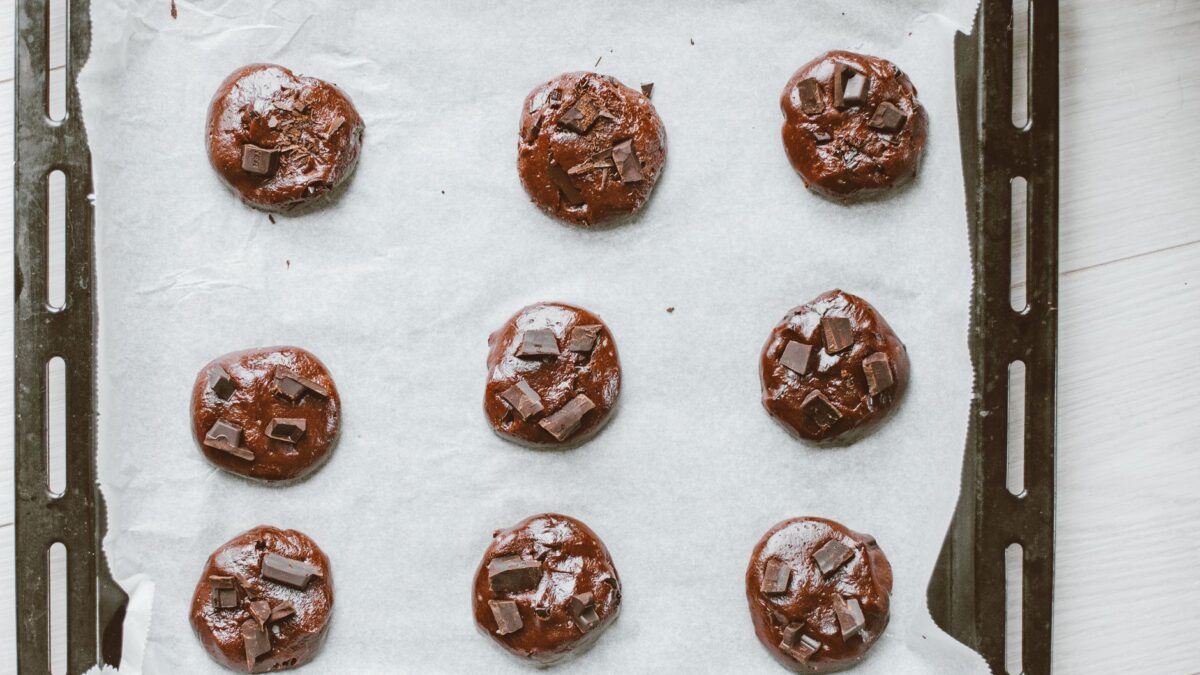
Cookies that don’t spread and bake up puffy or domed usually have too much flour, dough that is too cold, too little butter or sugar, or extra leavening. Overmeasured flour is the most common cause: scooping flour straight from the bag with a cup can pack in noticeably more than the recipe intends. Spooning flour into the cup and leveling it, letting chilled dough warm slightly and flattening the dough balls before baking will give flatter, wider cookies.
What makes cookies spread in the oven?
Cookies spread when the fat melts and the sugar dissolves before the flour and eggs set the structure. Butter melts at a low temperature, so a butter dough begins to loosen soon after it goes into the oven. Sugar, especially white sugar, turns syrupy as it heats and lets the dough flow. Flour and eggs do the opposite: as they heat, they firm up and hold the cookie’s shape.
The final shape depends on the race between melting and setting. When setting wins too early, the cookie stays tall. The reverse problem is covered in our guide to why cookies spread too much and turn out flat.
Did I use too much flour?
Too much flour is the first thing to check, because a small excess makes a stiff dough that barely moves in the oven. A cup of all-purpose flour should weigh about 4.25 oz (120 g) when spooned and leveled. Scooping with the measuring cup can add a good deal more.
- Fluff the flour in its container, spoon it into the cup and level the top with a straight edge.
- Weigh flour on a kitchen scale if the recipe gives grams. This is the most consistent method.
- Bread flour has more protein than all-purpose and makes chewier, taller cookies. Use the flour the recipe names.
Was my dough too cold?
Dough straight from the refrigerator or freezer spreads less, because the butter takes longer to melt while the edges are already setting. Chilling is useful when a dough spreads too much, but some recipes chill longer than the dough needs.
If cold dough gives you puffy cookies, let the scooped balls sit at room temperature for 10 to 15 minutes before baking. For frozen dough balls, add a minute or two to the bake time instead of baking them straight from the freezer at a lower temperature. Butter that was too firm when you creamed it can also leave the dough dense; softened butter should give slightly when pressed but still hold its shape, around 65°F (18°C).
Is the fat or sugar the problem?
The type and amount of fat and sugar change spread more than most other ingredients. Small swaps in either can turn a flat cookie into a domed one.
- Shortening melts at a higher temperature than butter, so cookies made with shortening, or with part shortening, stay taller.
- Margarine and spreads with less fat contain more water and behave differently from butter. Use real butter or a stick product meant for baking.
- Cutting the sugar in a recipe reduces spread. Sugar is part of the structure in cookies, so lowering it changes texture as well as taste.
- Brown sugar holds more moisture than white sugar and gives a softer, sometimes thicker cookie. A higher share of white sugar helps a cookie spread and crisp at the edges.
- Melted butter gives a flatter, chewier cookie than creamed butter. Some recipes use it for exactly that reason.
Could the leavening or eggs be to blame?
Baking powder, extra eggs and extra egg whites all push cookies upward. Baking powder releases gas that lifts the dough, so a recipe that uses it, or too much of it, makes a puffier, cakier cookie. Baking soda tends to give more spread and browning.
- Check that you used baking soda where the recipe says soda. Swapping the two changes both rise and spread.
- Measure leavening with level spoons. A heaping teaspoon is far more than a level one.
- Use the egg size the recipe expects, which in US recipes is usually large. An extra egg or extra yolk adds liquid and protein that set the dough faster.
Does the oven or pan change how cookies spread?
A hot oven sets the outside of the cookie before the butter has time to melt and flow, so an oven running hotter than its dial can leave cookies domed. Most drop cookies bake at 350 to 375°F (175 to 190°C). An oven thermometer shows whether your oven matches its setting.
- Bake on a light-colored aluminum sheet. Dark pans and insulated pans change how fast the bottoms set.
- Parchment paper allows normal spread. Silicone mats grip the dough a little and can keep cookies slightly thicker.
- A greased sheet lets cookies spread more than an ungreased one. Follow the recipe on whether to grease.
- Bake one sheet at a time on the middle rack for even heat.
At high altitude, lower air pressure changes how leavening and moisture behave, and recipes often need less leavening. Your Colorado State University Extension office publishes high-altitude baking adjustments.
How do I get flatter cookies next time?
Start with the measuring and the dough temperature, then adjust shape and ingredients one at a time.
- Measure flour by weight or by the spoon-and-level method.
- Let chilled dough balls warm for 10 to 15 minutes before baking.
- Press each ball down to about half its height with your palm or the bottom of a glass.
- Check your oven temperature with a thermometer.
- Bake on parchment on a light aluminum sheet.
- For a batch already in the oven, tap the pan firmly on the rack a few minutes before the end to settle the domes.
- If the recipe allows, replace some brown sugar with white sugar or use melted butter.
- Cut back extra leavening or eggs only if you added more than the recipe calls for.
Oat cookies follow some different rules because rolled and quick oats absorb liquid at different rates; our article on which oats to use and how to control spread in oatmeal cookies covers them. Raw cookie dough can carry germs from flour and eggs, and the FDA advises against eating it before baking.
Quick answers
Why are my cookies cakey and puffy?
Cakey, puffy cookies usually have too much flour, too much baking powder or extra egg. Check your measurements first, then the leavening.
Should I flatten cookie dough before baking?
Flatten the dough when a recipe makes thick cookies and you want them wider. Pressing the balls halfway down gives a more even, flatter cookie.
Can I fix cookies that are already baked and domed?
Baked cookies cannot be flattened, but they are still good to eat. If they turned out hard as well, see our tips on softening hard cookies and storing them.