Yule Log Cake Sponge: Rolling Without Cracks, Step by Step
A yule log sponge cracks when it is overbaked or rolled cold. Roll it warm in a towel, then fill and reroll. Steps, fixes and storage.
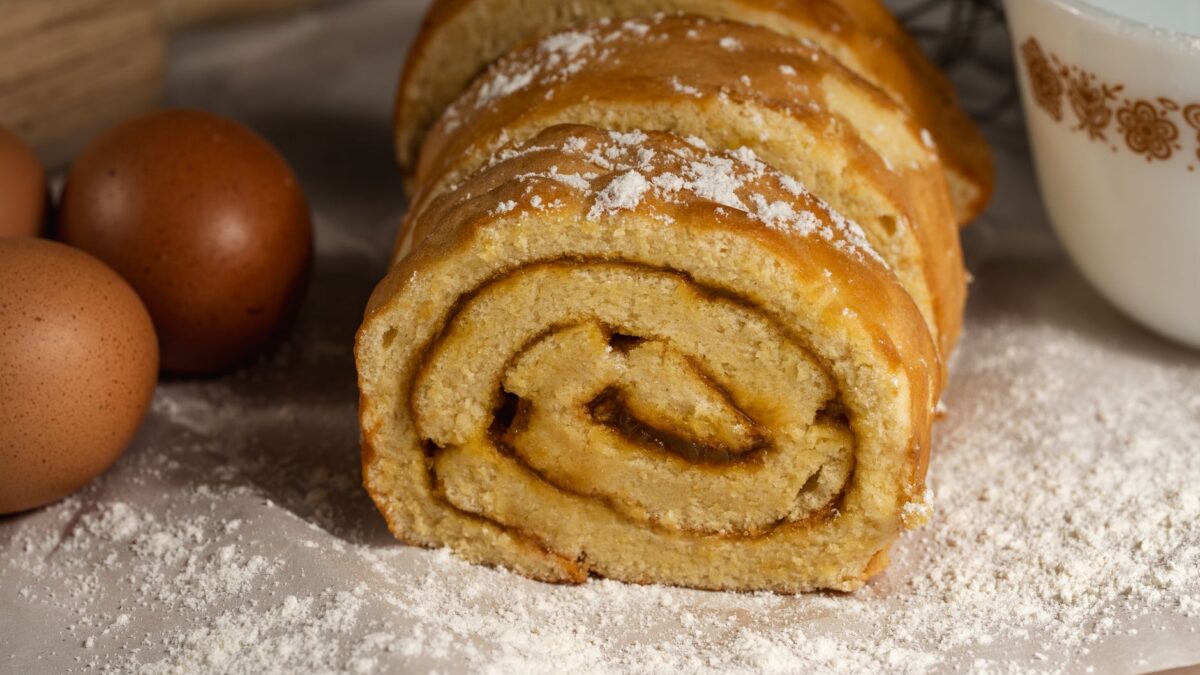
A yule log sponge stays crack free when it is baked just until set, about 10 to 14 minutes in a 350 to 375°F (175 to 190°C) oven, and rolled while still warm. The rolling happens twice: once in a towel to teach the cake its curl, and once around the filling after it has cooled. Most cracks come from an overbaked sponge, a cold roll or a batter that was deflated before it reached the oven.
Why does a sponge crack when it is rolled?
A thin sponge cracks because it has dried out or stiffened before it was bent. Sponge cakes for rolling hold very little fat and a lot of whipped egg, so the structure is mostly air and egg protein. Every extra minute in the oven drives out moisture and makes the crumb less flexible. A cake that cools flat also sets into that shape, and bending it later tears the surface.
The other cause is lost volume. Folding flour into whipped eggs roughly knocks out the air, and a dense sponge is a stiff one. A light batter folded in a few strokes bakes into a pliable sheet.
What pan and batter depth work best?
A jelly roll pan of about 10 by 15 inches (25 by 38 cm) gives a sheet roughly half an inch (1 cm) thick, which is thin enough to bend. Line the pan with parchment paper and grease the paper lightly, because a sponge that sticks tears when you peel it. A larger pan spreads the batter thinner and bakes it faster, so shorten the time and check early.
Spread the batter to the corners with an offset spatula in as few passes as possible. Corners that are thinner than the middle overbake first and become the crisp, brittle edges that crack.
How do you know the sponge is done?
The sponge is done when the top springs back after a light fingertip press and the edges have only just started to pull from the pan. It should be pale golden, not brown. Take it out at that point, since carryover heat keeps cooking the cake for a minute or two.
If the top is dark or the surface feels dry and papery, the cake has gone too far. Next time lower the time by a minute or two rather than the temperature. If a cake dome or crack bothers you in other bakes, why cakes dome and crack on top explains which signs are harmless and which point to an oven problem.
Why roll the cake while it is warm?
Rolling it warm is what makes the final roll possible, because the sponge is at its most flexible right out of the oven. Dust a clean, lint free kitchen towel generously with powdered sugar or unsweetened cocoa. Run a knife around the edge, flip the pan onto the towel, and peel off the parchment gently.
Then roll the sponge up with the towel inside, starting from a short end, and leave it seam side down. The cake sets in that curved shape as it cools, which is why it unrolls later without splitting.
- Bake the sponge just until it springs back.
- Turn it out onto a sugar or cocoa dusted towel within a minute or two.
- Peel off the parchment and roll the sponge and towel together.
- Cool the roll completely, about 30 to 45 minutes.
- Unroll, spread the filling and roll again without the towel.
Cooling time matters here. Warm cake melts a cream filling and makes it leak out the ends, so wait until the rolled sponge feels cool to the touch. The guide on how long to cool cakes before frosting, cutting and wrapping gives timing for other cakes if you are decorating a whole dessert table.
What filling works inside a yule log?
Whipped cream, a custard style buttercream or a firm ganache all work, as long as the filling is soft enough to spread but not runny. Whipped cream sweetened lightly and whipped to stiff peaks is the lightest choice. Buttercream holds its shape at room temperature longer. A filling that is too loose squeezes out when you roll, so chill it briefly if it slumps on the spatula.
Spread the filling in an even layer to within about an inch (2.5 cm) of the edges, leaving a border so it does not push out at the seam. If you want a filling that does not rely on powdered sugar, frosting without powdered sugar covers ermine, whipped cream and glazes that spread well on a thin sponge.
How do you finish the log so it looks like bark?
Cut a short slice from one end at an angle and set it on the side of the log to make a branch stump. Cover the whole cake with chocolate buttercream or ganache, then drag a fork lengthwise through it to make bark ridges. Dust with powdered sugar for snow, or add meringue mushrooms, sugared cranberries or rosemary sprigs.
Trim the ends with a sharp knife for a clean cut. Chilling the frosted log for 30 minutes before slicing keeps the spiral neat.
What if it cracks anyway?
A small crack is easy to hide. Press the edges together, fill gaps with extra frosting and let the bark texture cover the repair. A cake that splits in many places is usually dry, and the guide to why a cake is crumbly lists causes such as overbaking and too much flour. Cream filled logs should stay in the refrigerator, and the USDA’s food safety pages at USDA Food Safety and Inspection Service advise discarding perishable food left out for more than two hours.
Quick answers
Can I make a yule log ahead of time?
Yes. The filled and rolled cake keeps well wrapped in the refrigerator for about two days, and the frosting can go on the day you serve it. Bring it out 15 to 20 minutes before slicing so the chill eases and the crumb softens.
Can I freeze the sponge?
Yes. Roll the cooled sponge with a sheet of parchment instead of the towel, wrap it tightly and freeze it for up to a month. Thaw it in the refrigerator before unrolling and filling.
Why did my sponge stick to the parchment?
The parchment was not greased, or the cake cooled flat in the pan. Peel the paper off while the sponge is warm and pull it back on itself in a low angle, rather than lifting straight up.
Does the sponge need baking powder?
Many classic versions rise on whipped eggs alone, and some add a small amount of baking powder as insurance. If you add it, keep to normal cake ratios as in how much baking powder per cup of flour.