Why Did My Pie Crust Shrink? 8 Causes and How to Keep It in Place
Pie crust shrinks when gluten is overworked, dough is stretched into the pan or skips chilling. See each cause, the fixes and how to rescue a shrunken shell.
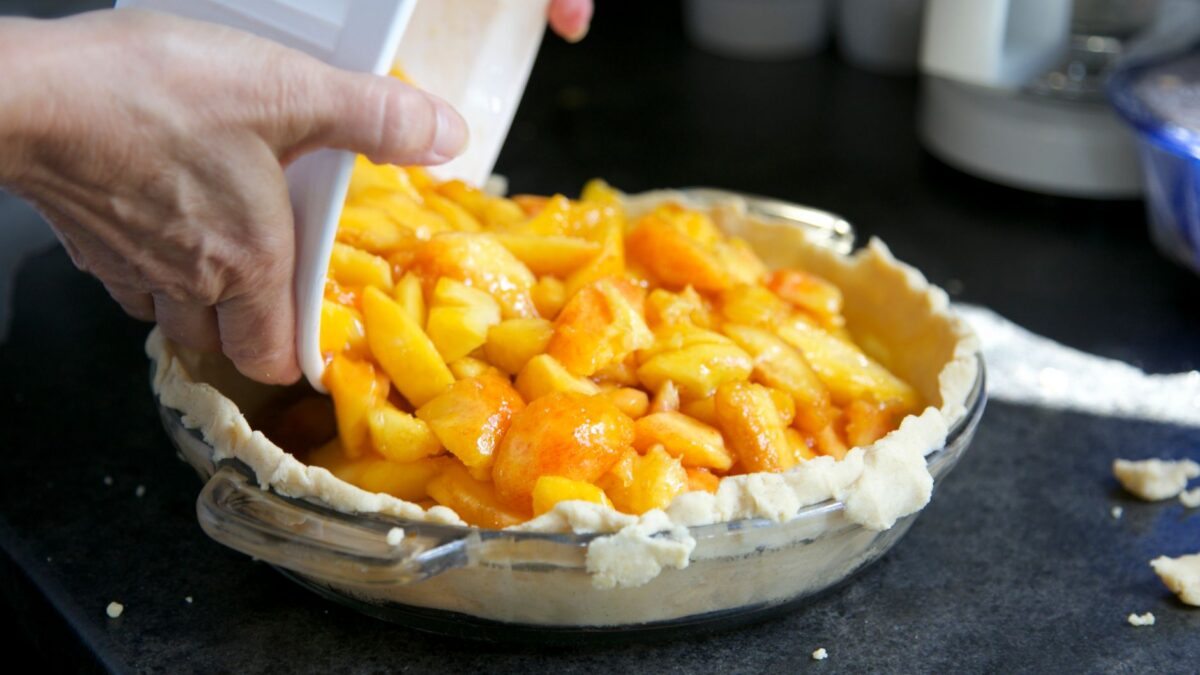
A pie crust shrinks in the oven because the gluten in the dough was stretched or overworked and then pulled back as it heated, and because the dough was too warm when it went in. The usual culprits are stretching the dough to fit the pan, skipping the rest in the fridge, adding too much water and baking an empty shell without weights. Chilling the shaped crust for at least 30 minutes, easing it into the pan instead of pulling it, and supporting the sides during blind baking prevent most shrinkage.
What makes pie crust shrink in the oven?
Gluten is the main cause. When flour meets water and gets mixed or rolled, gluten strands form and behave like rubber bands. Dough that is stretched while you fit it into the pan stays under tension, and once the oven warms it, the strands contract and pull the edges down the sides of the dish.
Fat matters too. Cold butter or shortening holds the layers apart and sets the shape before it melts. If the fat is soft when the crust goes into the oven, it melts before the flour structure firms up, and the sides slide down.
Which mistakes cause the most shrinkage?
These are the common ones, roughly in order of how often they happen:
- Stretching the rolled dough to cover the pan instead of lifting it and letting it drop into the corners.
- Skipping the chill after shaping, so the gluten never relaxes and the fat is warm.
- Mixing or kneading too long, which builds more gluten than a tender crust needs.
- Adding too much water. Wet dough is easy to roll but develops more gluten and shrinks more as the water turns to steam.
- Rolling the dough repeatedly or rerolling scraps into the main crust.
- Blind baking without pie weights, so nothing holds the sides up while they set.
- Trimming the dough flush with the rim, which leaves no extra to lose.
- Baking at too low a temperature, so the fat melts long before the crust sets.
How do you fit dough into the pan without stretching it?
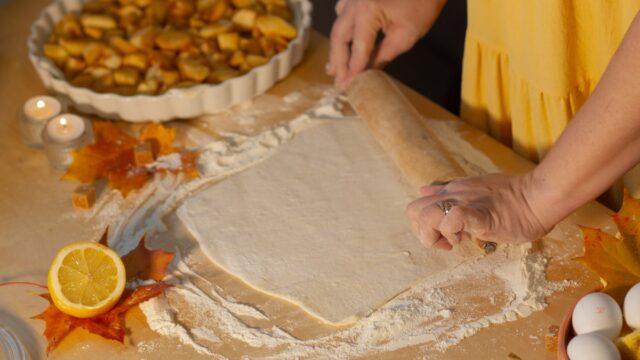
Roll the dough about 2 to 3 inches (5 to 8 cm) wider than the top of the pan, so it covers the bottom, the sides and leaves an overhang. Loosely roll it around the rolling pin or fold it into quarters, then unroll or unfold it over the dish.
Lift the edges with one hand and use the other to nudge the dough down into the corner where the bottom meets the side. The dough should settle in with a little slack. If you have to pull it to reach the rim, the circle is too small; reroll it rather than stretching.
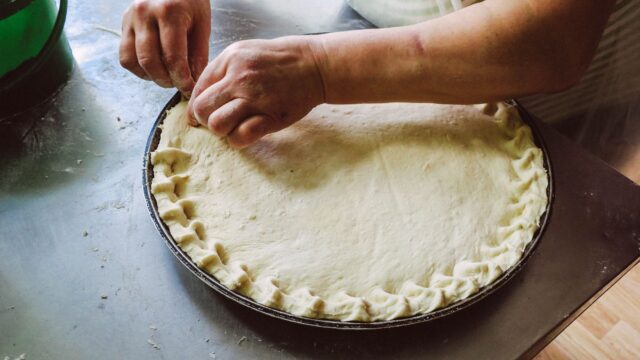
Trim the overhang to about 1/2 to 1 inch (1 to 2.5 cm), fold it under and crimp it so the edge sits on top of the rim. A crimped edge resting on the rim has something to hang on to, and it hides small amounts of shrinkage.
How long should pie dough chill before baking?
Chill the dough twice. After mixing, wrap the disk and refrigerate it for at least 1 hour, or up to 2 days, so the flour hydrates evenly and the gluten relaxes. Our guide to mixing, chilling and rolling an all-butter crust covers that first rest in detail.
After shaping and crimping, chill the crust in the pan again for at least 30 minutes in the fridge, or 15 to 30 minutes in the freezer. The shaped crust should feel firm and cold to the touch before it goes into the oven. This second chill does the most to stop shrinkage because it relaxes any tension created while fitting the dough.
How do you stop a crust from shrinking during blind baking?
Support the sides until the dough has set. Line the chilled crust with parchment or foil, pressing it into the corners, and fill it to the top with pie weights, dried beans or granulated sugar. Weights that reach only the bottom let the sides slump. Prick the bottom with a fork (docking) so steam can escape without puffing it up.
Bake in a hot oven, commonly 375 to 425°F (190 to 220°C), until the edges look dry and start to color, often about 15 to 20 minutes. Remove the weights and liner, then bake a few minutes longer for a partly baked crust or until golden for a fully baked one. The steps, times and temperatures are in our guide on how to blind bake a pie crust without slumping.
Some bakers also bake the shell upside down on the outside of a second pan, or sandwich it between two matching pie plates, which holds the sides in place the same way weights do.
Does the dough recipe affect shrinkage?
Yes. Use only as much ice water as the dough needs to hold together when squeezed; add it a tablespoon at a time and stop as soon as the dough clumps. All-butter dough tends to shrink a little more than dough made with some shortening, because butter contains water and melts at a lower temperature. A small amount of acid such as vinegar or lemon juice is a traditional addition, though it does not replace chilling.
Mix only until the fat is in pea-sized pieces and the dough barely comes together. Visible streaks and bits of fat are a good sign. A food processor works, but pulse it rather than letting it run.
Can you fix a pie crust that already shrank?
A crust that shrank a little can still be used. If the sides dropped by less than about 1/2 inch (1 cm), fill it to slightly below the new edge and bake as planned. For a cracked or thin spot, press a small piece of raw dough scrap over it, brush with beaten egg and return it to the oven for a few minutes to seal.
A shell that shrank badly is better kept for a filling that does not need tall sides, such as a no-bake cream or pudding filling, or broken up and used as a crumb topping. For the next pie, roll a larger circle and give the shaped crust a longer chill. Shaped, unbaked crusts also freeze well, and our article on which pies freeze well and how to thaw them explains how to store them.
Quick answers
Should I grease the pie pan?
No. Pie dough has enough fat to release from the pan. Grease makes the sides more likely to slide down as the crust bakes.
Does the type of pie pan matter?
Glass and metal pans both work. Metal heats faster and sets the crust sooner, while glass lets you see how brown the bottom is. Dark pans brown faster, so watch the bake time.
Why did my crust shrink even though I chilled it?
The dough was probably stretched while fitting it into the pan, held too much water, or was blind baked without weights filling it to the top. Chilling relaxes some tension but cannot undo heavy stretching.
Can I roll out cold dough straight from the fridge?
Let a firm disk sit at room temperature for 5 to 10 minutes so it rolls without cracking. Dough that has been out long enough to feel soft should go back in the fridge before shaping.