Why Is My Cake Crumbly? Causes and Fixes for Cake That Falls Apart
A crumbly cake usually has too much flour, too little fat or moisture, or too much baking time. Causes, fixes and ways to save a cake that falls apart.
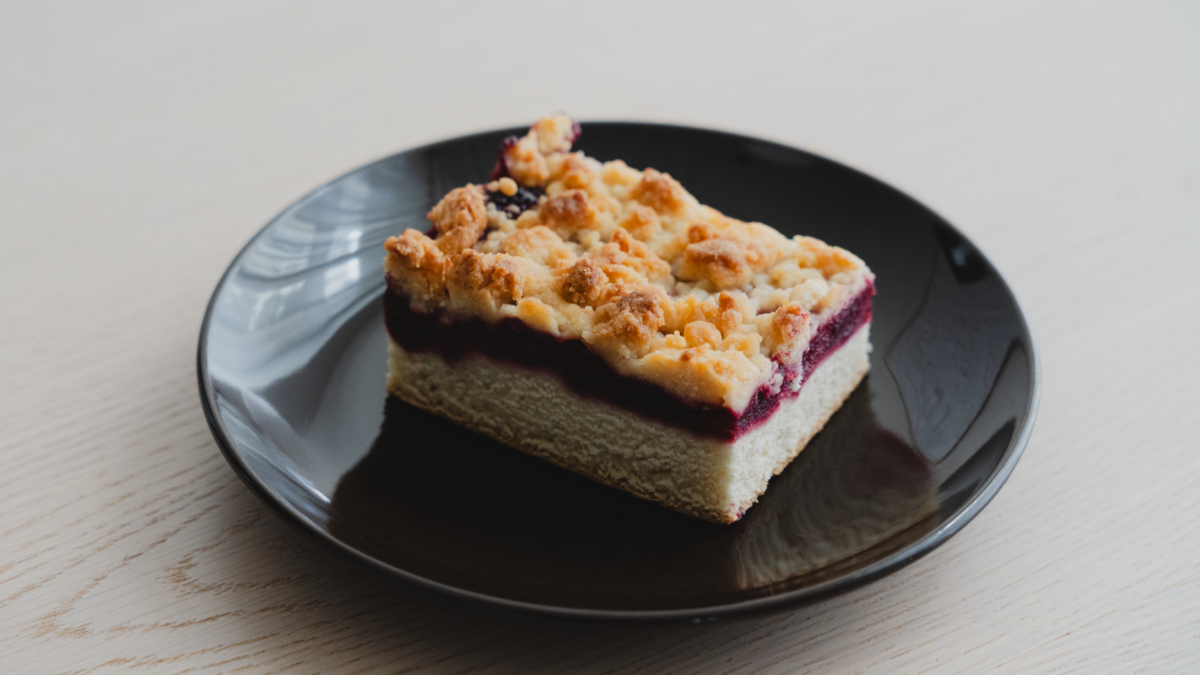
A cake that crumbles when cut usually has too much flour, too little fat, egg or liquid, or has baked too long. Cutting the cake while it is still warm, or using too much baking powder, can also make the crumb break apart.
Most of these causes show up in the measuring bowl or the oven, so they are easy to correct next time. A cake that has already crumbled can still be saved.
Is too much flour the most common cause?
Too much flour is a frequent cause, because scooping a measuring cup straight into the bag packs in extra. A cup of all-purpose flour weighs roughly 120 to 125 grams when spooned and leveled, and a packed scoop can weigh noticeably more. Extra flour soaks up the liquid and leaves the crumb dry and short.
Weigh the flour with a kitchen scale, or spoon it into the cup and level it with a knife. If the batter looks stiff rather than thick and pourable, it probably has too much flour or too little liquid.
Can too little fat, egg or liquid make a cake crumble?
Yes. Fat tenderizes the crumb, eggs bind it, and milk or other liquid hydrates the flour. If a recipe has been cut back on butter, oil or eggs, the cake loses structure and falls apart.
- Use large eggs unless the recipe says otherwise, since small eggs add less binder and moisture.
- Measure liquids in a liquid measuring cup at eye level.
- Avoid swapping in low-fat substitutes without a tested conversion.
Does overbaking make a cake crumbly?
Overbaking dries the cake from the edges inward, and a dry cake breaks into crumbs instead of slices. Most layer and loaf cakes bake between 325°F and 350°F (165°C to 175°C). A cake is done when a toothpick comes out with a few moist crumbs and the center springs back; a thermometer in the middle reads about 200 to 210°F (93 to 99°C).
Ovens often run hotter or cooler than the dial, so an inexpensive oven thermometer is worth having. If the edges are dark before the center is set, the oven is probably too hot. Our guide to why a cake is dry covers this in more detail.
Can too much baking powder or baking soda cause crumbling?
Yes. Too much leavening makes the batter rise fast and then collapse, which leaves a coarse, open crumb that falls apart. Use the amount the recipe gives, level the spoon, and check that the baking powder is not old. If the center also sinks, read why a cake sinks in the middle.
Does mixing or cooling affect the crumb?
Both do. Undermixed batter leaves pockets of dry flour that bake into crumbly spots. Butter that is not creamed with the sugar long enough holds less air, and the cake bakes up dense and short. Mix until no dry streaks remain, then stop. Overmixing builds gluten and gives a tough cake, so the goal is just combined.
Warm cake is fragile. Let a cake cool in the pan for about 10 to 15 minutes, turn it out onto a rack, and cool it fully before slicing or frosting. Chilling a butter cake for 20 to 30 minutes before cutting firms the crumb. Cut with a long serrated or thin sharp knife, and wipe the blade clean between slices.
If the cake is wet or heavy rather than dry, see why a cake is wet or raw in the middle.
Can ingredient temperature or the type of flour be the problem?
Both can contribute. Cold eggs and milk do not blend smoothly into creamed butter, and a curdled, uneven batter bakes into a patchy crumb. Take eggs, butter and dairy out of the refrigerator about an hour before mixing, or follow the temperature the recipe states.
The flour matters as well. Cake flour is lower in protein and gives a softer, finer crumb, while all-purpose flour gives a slightly sturdier one. Substituting one for the other by volume changes the amount of flour in the batter, so weigh it when you swap. Whole-wheat or gluten-free flour blends absorb more liquid and often need a recipe written for them.
How do I save a cake that already fell apart?
Crumbled cake is still good to eat, and there are several ways to use it:
- Brush the layers with simple syrup (equal parts sugar and water, heated until the sugar dissolves and cooled) to add moisture.
- Apply a thin crumb coat of frosting, chill it, then add the final layer. The frosting glues loose crumbs in place.
- Layer broken cake with whipped cream and fruit in glasses to make a trifle.
- Mix crumbs with a few spoonfuls of frosting, roll them into balls and chill them for cake pops.
Store cakes with cream cheese or whipped cream frosting in the refrigerator, as described on foodsafety.gov.
Quick answers
Why is my cake crumbly but also greasy?
Too much fat or butter that was too warm when creamed can make a greasy, crumbly cake. Measure fat exactly and use butter that is softened but still cool to the touch.
Why are my muffins crumbly too?
The same causes apply to muffins: too much flour, too little moisture and overbaking. Our list of eight causes of crumbly muffins has the fixes.
Can I fix a crumbly cake after it has baked?
You cannot change the crumb, but syrup, frosting and trifle layers hide it and add moisture. For the next cake, check the flour weight, the oven temperature and the bake time first.